%2C_Kalloni%2C_Lesvos%2C_Greece%2C_19.04.2015_(16773748434).jpg&width=800)





Eurasian Scops-Owl
Otus scops
The Eurasian Scops-Owl is a small, fluffy owl with big eyes and a soft, gray-brown body. They are great at hiding in trees during the day and come out at night to hunt for insects and small animals.
Habitat: Forests
The Eurasian Scops-Owl is a small, stocky owl with mottled grey-brown plumage, providing excellent camouflage. It has striking bright yellow eyes and small ear tufts that can be raised or flattened. Its delicate patterning distinguishes it from larger, more uniformly colored owls.
Category
BirdsRarity
Common
Danger
1/5 · Very low
Snaps
Be the first to snap!
Its soft "boo" call helps these tiny owls find each other in the dark!
Scops-Owls can puff themselves up to look bigger when a predator gets too close.
These owls fly thousands of miles from Europe to Africa for winter vacation.
They often make their nests in old woodpecker holes high up in trees.
Eurasian Scops-Owls can compress their feathers and stretch their body, mimicking a tree branch to hide from predators.
Eurasian Scops-Owls have specialized wing feathers that enable nearly silent flight, helping them surprise their prey.
Eurasian Scops-Owls have large eyes with many rods, giving them incredible night vision to hunt in the dark.
A small but fierce hunter, it mostly eats creepy crawlies, moths, and other small insects.
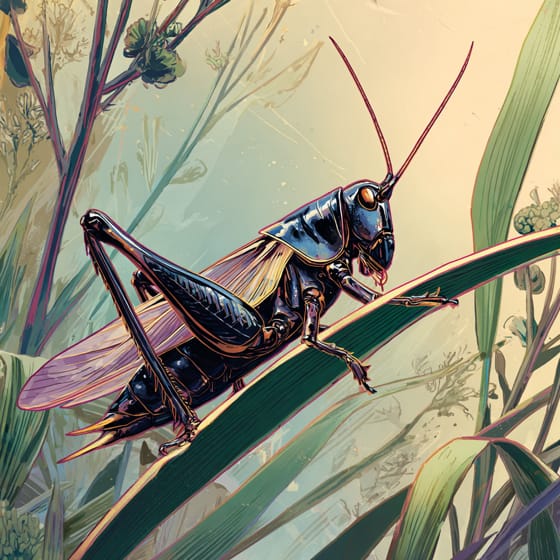
Gryllus campestris
A primary insect food source.

Melolontha melolontha
Frequently preyed upon during its flight season.
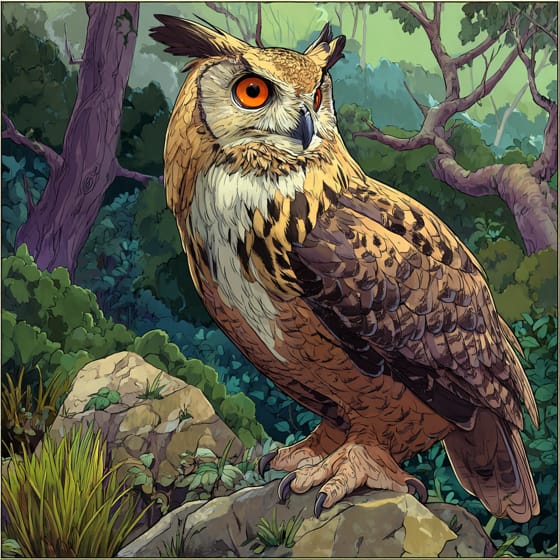
Bubo bubo
A larger owl that preys on smaller owl species.
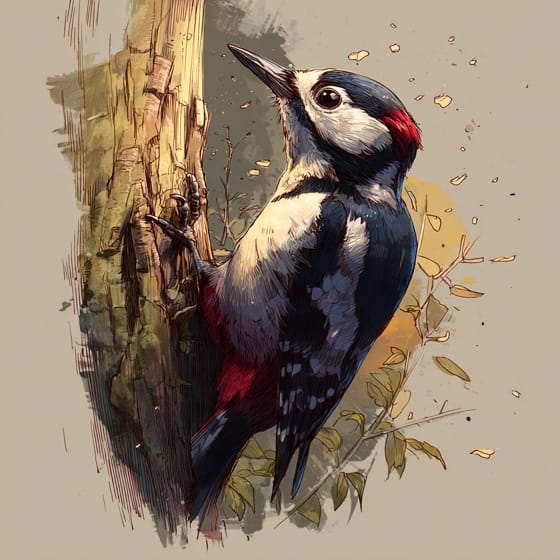
Dendrocopos major
Utilizes old woodpecker holes for nesting.
Feathered describes animals, primarily birds, possessing a covering of feathers.
Solitary animals live alone for most of their lives, only interacting with others for mating or parental care.
Camouflaged describes organisms that possess coloring or patterns that allow them to blend into their environment.
This trait identifies organisms whose diet primarily consists of insects and other small invertebrates.

An ambush predator hunts by patiently waiting and concealing itself, then launching a sudden attack when unsuspecting prey comes within range.

Forest habitats are terrestrial environments dominated by dense tree cover, supporting a high diversity of plant and animal life.

Nocturnal animals are primarily active during the nighttime hours, typically resting or sleeping during the day.
No aliases listed yet.
Danger
1/5 · Very low
Always observe owls from a distance and do not disturb them in their homes.
The easiest way to identify Eurasian Scops-Owl is to use the Snappit nature identifier app.
19-21 cm
47-54 cm
0.06-0.135 kg
6-8 years
A small but fierce hunter, it mostly eats creepy crawlies, moths, and other small insects.
Forests
Ambush
Zoom in to split clusters and explore where this object has been snapped.
Recent snaps will appear here as new observations are added.
Take the discovery with you
Snap it with Snappit to identify it, learn what makes it special, and add the discovery to your collection.




.jpg&width=800)







