





Frémont Cottonwood
Populus fremontii
The Frémont Cottonwood is a tall tree with big, heart-shaped leaves. It grows near rivers and loves sunny places. This tree provides shade and homes for many animals.
Habitat: Wetlands
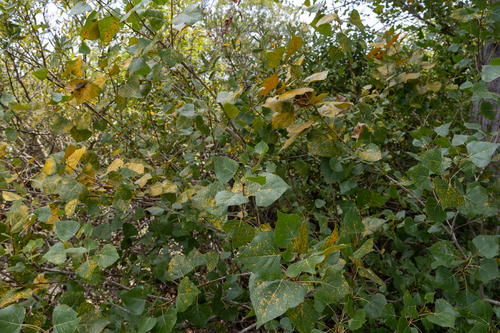
The Frémont Cottonwood has large, bright green, triangular to heart-shaped leaves that turn brilliant golden-yellow in autumn. Its deeply furrowed, grayish bark often reveals a yellow inner layer on mature trunks. It produces abundant fluffy, white, cotton-like seeds in summer.
Category
PlantsRarity
Common
Danger
1/5 · Very low
Snaps
1
Its leaves flutter loudly in the wind, sounding like distant rain.
Native Americans used its bark for medicine and its wood for drums!
The famous Lewis and Clark expedition recorded these towering trees!
This tree is a 'pioneer' species, often the first to grow in disturbed areas.
Frémont Cottonwood has incredibly deep roots that help it find crucial water, even in dry riverbeds.
Frémont Cottonwood can grow super fast, quickly providing shade and shelter in new riparian areas.
Frémont Cottonwood releases thousands of fluffy seeds that fly on the wind to find new homes.
Castor canadensis
eats its bark and uses branches for dams
.jpg&width=800)
Coccyzus americanus
nests in its dense canopy near water

Papilio rutulus
larvae feed on its leaves

Bubo virginianus
roosts and nests in its tall branches
Deciduous plants periodically shed all their leaves, typically during autumn or dry seasons.
Shade tolerant plants are adapted to grow and thrive in areas with low light levels, requiring less direct sunlight.
Broadleaf trees are angiosperms characterized by flat, wide leaves that are typically shed annually in temperate climates.
Describes plants that are particularly attractive and beneficial to a wide range of pollinating organisms.

Rapid growing plants exhibit accelerated growth rates, quickly increasing in size and biomass within a short period.

Timber refers to wood that has been prepared for use in building and carpentry.

This habitat trait identifies species found in wetlands, which are areas of land saturated with water, either permanently or seasonally, including marshes, swamps, and bogs.
No aliases listed yet.
Danger
1/5 · Very low
Stay away from the tree's branches and seeds, as they can be messy.
The easiest way to identify Frémont Cottonwood is to use the Snappit nature identifier app.
1500-3500 cm
1000-2500 cm
Spring
Yes
None
Perennial
Wind
Zoom in to split clusters and explore where this object has been snapped.
Jun 6, 2026
Venice Canal Historic DistrictPhoto attribution
(c) Roberto Daniel Avila, some rights reserved (CC BY)
License: CC BY 4.0 ↗
Image may be shown cropped inside the card frame.

California, US
You might spot Western Gull, Snowy Egret, and Willet.
View guide →

Utah, US
You might spot Showy Milkweed and Black-Spotted Lady Beetles.
View guide →

California, US
You might spot Duck, American Coot, and Canada Goose.
View guide →

California, US
You might spot California Wild Rose and California Wild Grape.
View guide →

Arizona, US
You might spot Desert Cottontail, Yellow-Rumped Warbler, and Black Phoebe.
View guide →
Take the discovery with you
Snap it with Snappit to identify it, learn what makes it special, and add the discovery to your collection.








.jpg&width=800)


_001.jpg&width=800)



