_Epilobium_ciliatum_-_flowers.jpg&width=800)





fringed willowherb
Epilobium ciliatum
Fringed willowherb is a pretty flower with soft, pink petals that bloom in summer. It loves to grow near water and can often be seen in meadows and along streams.
Habitat: Wetlands
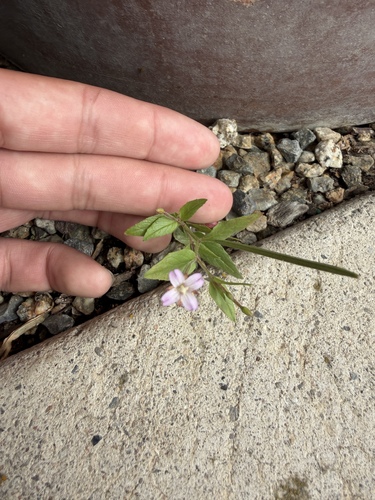
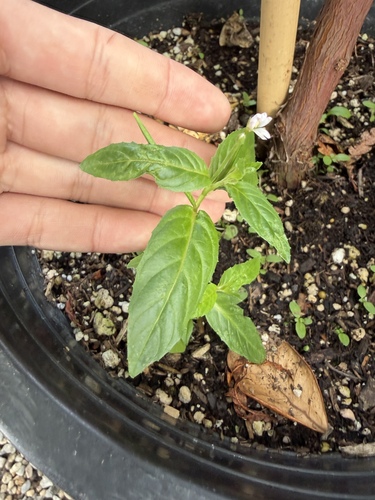
The fringed willowherb has slender, upright stems topped with small, pinkish-purple flowers, each featuring four deeply notched petals. Its lance-shaped leaves are often hairy along their edges, giving a slightly 'fringed' appearance.
Category
PlantsRarity
Common
Danger
1/5 · Very low
Snaps
4
Its long, slender seed pods split open to release hundreds of tiny, parachute-like seeds!
The young leaves and shoots are edible, tasting a bit like mild spinach or lettuce!
This plant is often one of the very first to grow in recently cleared or disturbed areas!
You can sometimes find it growing right out of cracks in pavements or even walls!
Fringed willowherb has seeds with a fluffy 'parachute' that helps them float on the wind to spread far and wide.
This plant can rapidly grow in disturbed soil, helping it quickly take over bare ground after disruptions.
Fringed willowherb can also spread using underground stems, helping it form dense patches and persist.
Apis mellifera
collects nectar and pollen from flowers.
Bombus impatiens
feeds on nectar and pollen, aiding reproduction.

Arion ater
grazes on the leaves and young shoots.
Deciduous plants periodically shed all their leaves, typically during autumn or dry seasons.
Flowering plants are any plants that produce flowers as part of their reproductive cycle.
Summer blooming plants produce their flowers during the summer season, often providing vibrant color when many other plants have finished.
Describes plants that are particularly attractive and beneficial to a wide range of pollinating organisms.

Rapid growing plants exhibit accelerated growth rates, quickly increasing in size and biomass within a short period.

This habitat trait identifies species found in wetlands, which are areas of land saturated with water, either permanently or seasonally, including marshes, swamps, and bogs.
No aliases listed yet.
Danger
1/5 · Very low
Always look but don't touch flowers without asking an adult first.
The easiest way to identify fringed willowherb is to use the Snappit nature identifier app.
10-150 cm
20-60 cm
0.5-1 cm
Summer-fall
Yes
None
Perennial
Zoom in to split clusters and explore where this object has been snapped.
Jun 5, 2026
Sherman Library and GardensPhoto attribution
(c) Ike Ikemori, some rights reserved (CC BY)
License: CC BY 4.0 ↗
Image may be shown cropped inside the card frame.
Jun 5, 2026
Sherman Library and GardensPhoto attribution
(c) Ike Ikemori, some rights reserved (CC BY)
License: CC BY 4.0 ↗
Image may be shown cropped inside the card frame.

California, US
You might spot Great Blue Heron, Western Gull, and Coyote.
View guide →

New York, US
You might spot Pitch Pine, Great Egret, and Monarch.
View guide →

California, US
You might spot Great Blue Heron, Anna's Hummingbird, and Red-Tailed Hawk.
View guide →

California, US
You might spot Western Gull, Great Blue Heron, and Anna's Hummingbird.
View guide →

California, US
You might spot Sunburst Anemone and Striped Shore Crab.
View guide →
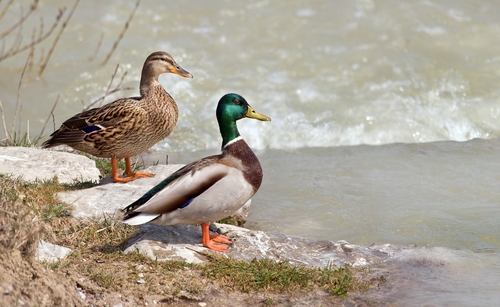
Washington, US
You might spot Duck, American Coot, and Canada Goose.
View guide →
Take the discovery with you
Snap it with Snappit to identify it, learn what makes it special, and add the discovery to your collection.







.jpg&width=800)



_001.jpg&width=800)




