_Veronica_chamaedrys_-_Plant_Habit.jpg&width=800)





Germander Speedwell
Veronica chamaedrys
Germander Speedwell is a pretty little flower with bright blue petals. It often grows in grassy places and is loved by butterflies and bees. This flower is a cheerful sight in springtime!
Habitat: Grasslands
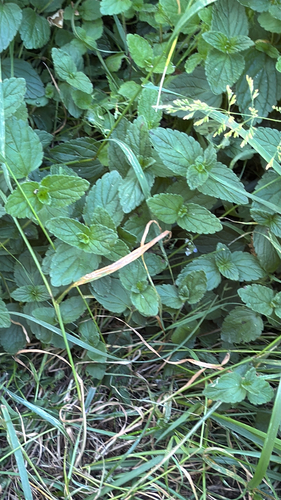
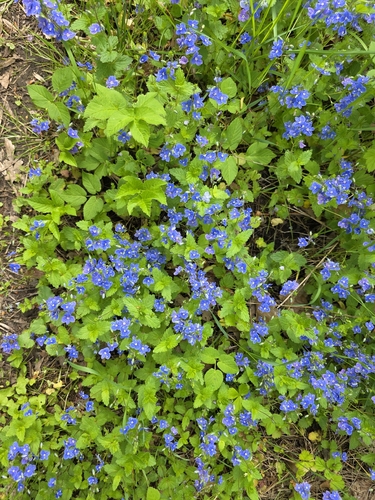
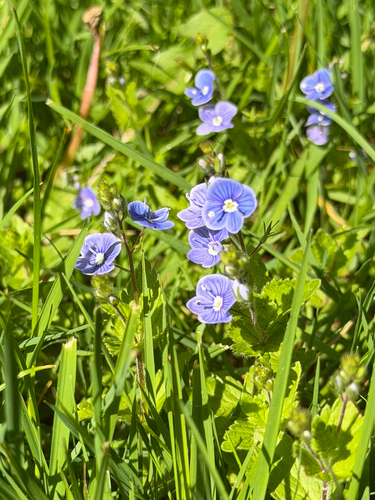
The Germander Speedwell has striking blue flowers with four petals, the lower one noticeably narrower, often marked with dark veins. Its stems and heart-shaped leaves are covered in fine hairs, giving it a soft, slightly fuzzy look. This low-growing plant forms spreading mats.
Category
PlantsRarity
Common
Danger
1/5 · Very low
Snaps
15
Ancient people called it 'Eye of the Virgin' because its bright blue flowers close so quickly.
Each flower has a white 'landing strip' for tiny insect pollinators to guide them to the nectar.
Its name 'Speedwell' comes from old English, meaning 'farewell,' perhaps because its petals drop fast!
Some say its closing flowers can predict rain, like a tiny blue weather station!
Germander Speedwell can quickly close its delicate flowers to protect pollen from rain or even at night.
It has underground stems (rhizomes) that help it spread rapidly, creating new plants and forming dense patches.
Its stems and leaves are covered in fine hairs, which can deter some small herbivores or help reduce water loss.
Apis mellifera
Gathers nectar and pollen from its flowers.
Bombus terrestris
Visits its flowers for nectar.
Mellicta athalia
Its larvae feed on the leaves of the plant.

Helix aspersa
Snails and slugs may graze on its foliage.
Flowering plants are any plants that produce flowers as part of their reproductive cycle.
Spring blooming plants produce their flowers during the spring season, often signifying the end of winter and the start of new growth.
Fragrant flowers emit a pleasant aroma, often to attract pollinators or for defense.
Colorful describes organisms or objects displaying a wide range of bright and distinct colors.

Edible plants are those parts of a plant that are considered safe for human consumption.

Grassland habitats are terrestrial biomes dominated by grasses and herbaceous plants, supporting a variety of grazing animals.

Describes plants that are particularly attractive and beneficial to a wide range of pollinating organisms.

Rapid growing plants exhibit accelerated growth rates, quickly increasing in size and biomass within a short period.
No aliases listed yet.
Danger
1/5 · Very low
Always look but don't pick flowers, so they can keep growing for everyone to enjoy.
The easiest way to identify Germander Speedwell is to use the Snappit nature identifier app.
10-30 cm
20-50 cm
0.8-1.5 cm
Spring, Summer
Yes
None
Perennial
Zoom in to split clusters and explore where this object has been snapped.
Jun 5, 2026
Berry Botanic GardenPhoto attribution
(c) Cris Waller, some rights reserved (CC BY)
License: CC BY 4.0 ↗
Image may be shown cropped inside the card frame.
May 17, 2026
Zoologická zahrada Děčín - Pastýřská stěnaPhoto attribution
no rights reserved
License: CC0 1.0 ↗
Image may be shown cropped inside the card frame.
May 2, 2026
Volunteer ParkPhoto attribution
no rights reserved
License: CC0 1.0 ↗
Image may be shown cropped inside the card frame.

Oregon, US
You might spot Duck, Pacific Trillium, and Wood Duck.
View guide →

Michigan, US
You might spot Yellow Lady's Slipper and Ring-Billed Gull.
View guide →

Massachusetts, US
You might spot Hemlock Woolly Adelgid, Eastern Newt, and Red Trillium.
View guide →

Vermont, US
You might spot Northern Cardinal, Wood Frog, and White-Breasted Nuthatch.
View guide →

New York, US
You might spot Pine Grosbeak, Hydrangea Leaftier Moth, and Brown Trout.
View guide →
.jpg)
Ústí nad Labem Region, CZ
You might spot Bears, South American Tapir, and Macaques.
View guide →
Take the discovery with you
Snap it with Snappit to identify it, learn what makes it special, and add the discovery to your collection.








.jpg&width=800)


_001.jpg&width=800)



