





Glaucous Honeysuckle
Lonicera dioica
Glaucous Honeysuckle is a lovely shrub with sweet-smelling flowers. It attracts bees and butterflies, making gardens colorful and lively!
Habitat: Forests
The Glaucous Honeysuckle is a climbing vine with distinctive bluish-green (glaucous) leaves, often fused together at the stem tips. Its tubular flowers are yellowish-green to purplish-red, appearing in whorls. Bright red berries follow the blooms, making it quite eye-catching.
Category
PlantsRarity
Common
Danger
1/5 · Very low
Snaps
Be the first to snap!
Hummingbirds love to visit its flowers, sipping sweet nectar with their long tongues!
Its powdery leaves look frosted, giving it a unique bluish-green glow!
The top pair of leaves are fused, looking like a cup holding the flower cluster!
This vine can grow from sunny rocks to shady forests, showing it's super adaptable!
Glaucous Honeysuckle has pairs of leaves that fuse around the stem, sometimes collecting rainwater like tiny cups for the plant to drink.
This honeysuckle can climb trees and shrubs using its twining stems to reach essential sunlight in crowded forest understories.
Glaucous Honeysuckle produces bright red berries that attract birds, helping the plant spread its seeds far and wide.

Bombus impatiens
collects nectar and pollen from flowers

Archilochus colubris
sips nectar, aiding flower pollination
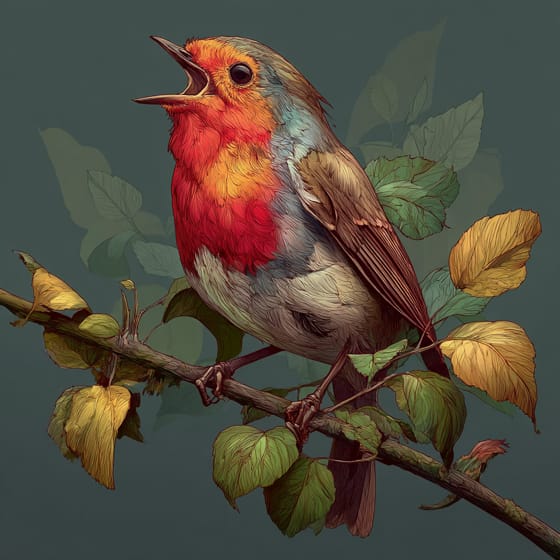
Turdus migratorius
eats its bright red berries, spreading seeds
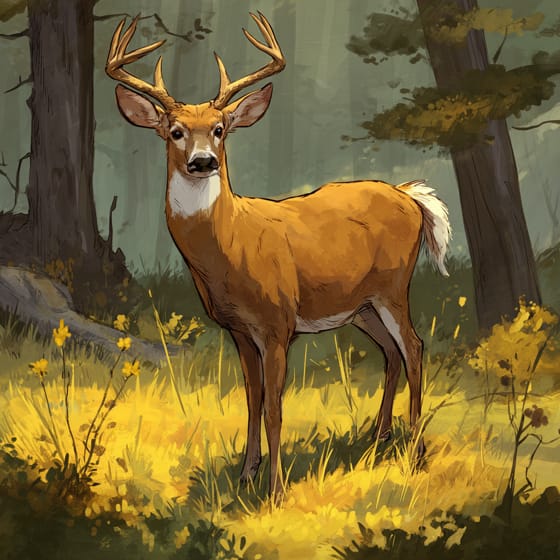
Odocoileus virginianus
browses on young leaves and stems
Aromatic plants produce and emit fragrant volatile organic compounds, often for defense or to attract pollinators.
Deciduous plants periodically shed all their leaves, typically during autumn or dry seasons.
Flowering plants are any plants that produce flowers as part of their reproductive cycle.
A shrub is a woody plant smaller than a tree, typically with multiple stems branching from or near the ground.

Summer blooming plants produce their flowers during the summer season, often providing vibrant color when many other plants have finished.

Fragrant flowers emit a pleasant aroma, often to attract pollinators or for defense.

Fruit-bearing plants produce fruits, which are the mature ovaries of flowering plants containing seeds.

Describes plants that are particularly attractive and beneficial to a wide range of pollinating organisms.

Forest habitats are terrestrial environments dominated by dense tree cover, supporting a high diversity of plant and animal life.
No aliases listed yet.
Danger
1/5 · Very low
Always check with an adult before touching or tasting any plants.
The easiest way to identify Glaucous Honeysuckle is to use the Snappit nature identifier app.
100-300 cm
50-200 cm
2-3 cm
Late spring to early summer
No
Mild
Perennial
Zoom in to split clusters and explore where this object has been snapped.
Recent snaps will appear here as new observations are added.
Take the discovery with you
Snap it with Snappit to identify it, learn what makes it special, and add the discovery to your collection.






.jpg&width=800)


_001.jpg&width=800)




