




goat's rue
Tephrosia virginiana
Goat's rue is a lovely plant with pretty purple flowers. It grows in fields and is known for its special ability to help the soil by adding nutrients.
Habitat: Grasslands
The goat's rue has distinctive pea-like flowers, often bicolored with yellowish-white upper petals and purplish-pink lower petals. Its stems and compound leaves are covered in soft, silvery hairs, giving the plant a unique fuzzy appearance and a silvery-green hue.
Category
PlantsRarity
Common
Danger
1/5 · Very low
Snaps
15
Indigenous peoples historically used parts of goat's rue to make traditional medicines.
Its common name comes from an old belief that goats liked to eat this plant!
Many species of bees and butterflies visit its colorful flowers to sip sweet nectar.
The plant's seed pods burst open to fling their seeds far away, spreading new plants!
This plant has a deep taproot that helps it find water far underground, allowing it to survive in dry, sunny places.
Goat's rue can produce natural compounds that act as insecticides, helping to protect itself from hungry bugs.
Bombus impatiens
Visits flowers for nectar.
Apis mellifera
Gathers nectar from blooms.
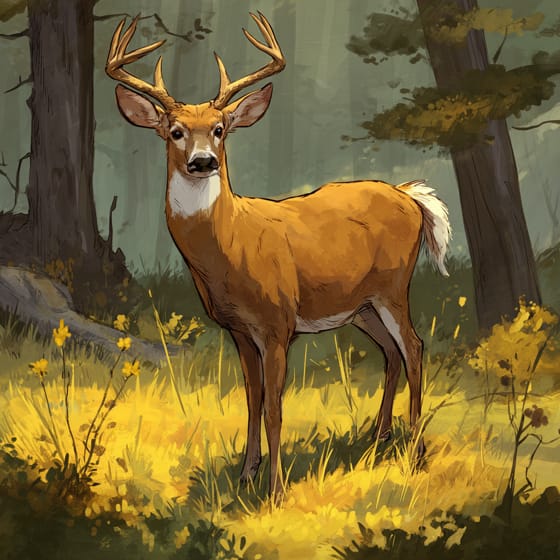
Odocoileus virginianus
Deer may browse the foliage.
Strymon melinus
Caterpillars feed on its leaves.
Deciduous plants periodically shed all their leaves, typically during autumn or dry seasons.
Flowering plants are any plants that produce flowers as part of their reproductive cycle.
Describes organisms capable of converting atmospheric nitrogen into compounds usable by plants.
Summer blooming plants produce their flowers during the summer season, often providing vibrant color when many other plants have finished.

Medicinal plants possess chemical compounds that can be used for therapeutic purposes to treat illnesses or maintain health.

Grassland habitats are terrestrial biomes dominated by grasses and herbaceous plants, supporting a variety of grazing animals.

Describes plants that are particularly attractive and beneficial to a wide range of pollinating organisms.
No aliases listed yet.
Danger
1/5 · Very low
Always check with an adult before touching or picking any plants.
The easiest way to identify goat's rue is to use the Snappit nature identifier app.
30-90 cm
20-60 cm
1-2 cm
Summer
No
Mild
Perennial
Zoom in to split clusters and explore where this object has been snapped.

Missouri, US
You might spot Painted-Cup Paintbrush and Great Spangled Fritillary.
View guide →

Wisconsin, US
You might spot Sundial Lupine, Canadian Lousewort, and Cream Wild-Indigo.
View guide →

New York, US
You might spot Sand Tiger Shark, African Penguin, and Sea Lion.
View guide →

South Carolina, US
You might spot Northern Mockingbird, Yaupon Holly, and Heavenly Bamboo.
View guide →

Indiana, US
You might spot Painted Turtle and Virginia Springbeauty.
View guide →

Illinois, US
You might spot Common Eastern Bumble Bee and White-Tailed Deer.
View guide →
Take the discovery with you
Snap it with Snappit to identify it, learn what makes it special, and add the discovery to your collection.







.jpg&width=800)



_001.jpg&width=800)




