





Great Plains yucca
Yucca glauca
The Great Plains yucca is a tall plant with sharp, pointy leaves and beautiful white flowers. It grows in dry areas and is great at surviving with little water!
Habitat: Grasslands
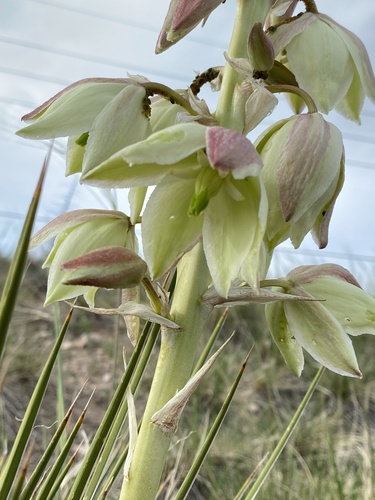
The Great Plains yucca has a striking rosette of stiff, blue-green, sword-like leaves, each tipped with a sharp point. From its center, a tall, woody stalk emerges, bearing creamy white, bell-shaped flowers that hang gracefully.
Category
PlantsRarity
Common
Danger
2/5 · Low
Snaps
4
Ancient people wove its tough fibers into strong ropes and even sandals!
Its super long roots reach deep for water in dry, desert places!
Many parts of the yucca plant, like flowers and fruit, are safe to eat!
Yucca moths are its only pollinator, laying eggs inside its flowers!
Great Plains yucca has a deep taproot that helps it reach underground water, surviving in very dry environments.
Great Plains yucca has a unique relationship with the yucca moth, relying on it for pollination to make seeds.
Great Plains yucca has sharp, pointed leaves that help it defend against hungry animals trying to eat it.
Tegeticula yuccasella
Essential for plant reproduction, moth lays eggs in flowers.
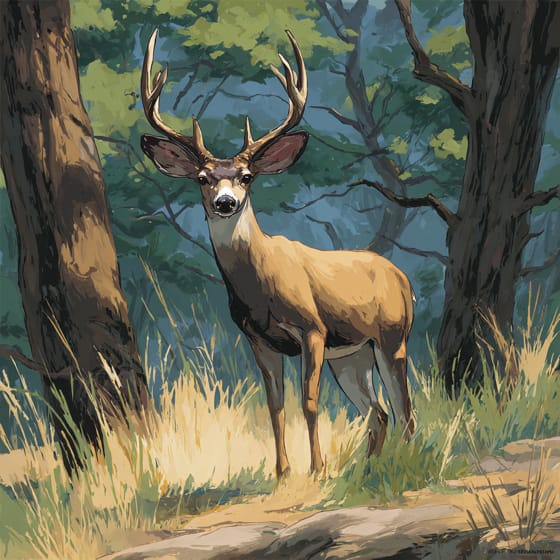
Odocoileus hemionus
Deer browse on tender flower stalks and young leaves.
Dipodomys ordii
Finds refuge under the plant's spiky leaves.
Flowering plants are any plants that produce flowers as part of their reproductive cycle.
Summer blooming plants produce their flowers during the summer season, often providing vibrant color when many other plants have finished.
Evergreen plants retain their foliage throughout the year, never shedding all their leaves at once.
Medicinal plants possess chemical compounds that can be used for therapeutic purposes to treat illnesses or maintain health.

Drought-tolerant plants can survive and flourish in conditions with limited water availability.

Grassland habitats are terrestrial biomes dominated by grasses and herbaceous plants, supporting a variety of grazing animals.

Describes plants that are particularly attractive and beneficial to a wide range of pollinating organisms.

This trait characterizes organisms with an exceptionally long lifespan compared to others of their kind.

Possessing sharp, pointed projections or spines on the body or surface.

Describes a species whose presence and role have a disproportionately large effect on its environment.
No aliases listed yet.
Danger
2/5 · Low
Watch out for the sharp leaves! It's best to look but not touch.
The easiest way to identify Great Plains yucca is to use the Snappit nature identifier app.
100-200 cm
60-90 cm
3-5 cm
Late spring to early summer
Yes
Mild
Perennial
Zoom in to split clusters and explore where this object has been snapped.
Jun 4, 2026
Cheyenne Botanic GardensPhoto attribution
(c) Harry Podschwit, some rights reserved (CC BY)
License: CC BY 4.0 ↗
Image may be shown cropped inside the card frame.
Dec 21, 2016
Metropolitan Park Bathhouse and Pool Historic DistrictPhoto attribution
(c) CK2AZ, some rights reserved (CC BY)
License: CC BY 4.0 ↗
Image may be shown cropped inside the card frame.

Kansas, US
You might spot Cliff Swallow and Desert Prince's Plume.
View guide →

New Mexico, US
You might spot Sunflower, Sideoats Grama, and Tree Cholla.
View guide →

Montana, US
You might spot Bighorn Sheep and Curlleaf Mountain Mahogany.
View guide →

Nebraska, US
You might spot Canada Goose, Blue Dasher, and Eastern Pondhawk.
View guide →

Wyoming, US
You might spot Hunt's Bumble Bee and Two-Spotted Bumble Bee.
View guide →

Colorado, US
You might spot Mule Deer, Woodhouse's Scrub-Jay, and Black-Billed Magpie.
View guide →
Take the discovery with you
Snap it with Snappit to identify it, learn what makes it special, and add the discovery to your collection.








.jpg&width=800)



_001.jpg&width=800)


