





green false hellebore
Veratrum viride
Green false hellebore is a tall plant with big, green leaves and pretty green flowers. It grows in wet areas and is known for its unique look, making it a special find in nature!
Habitat: Wetlands
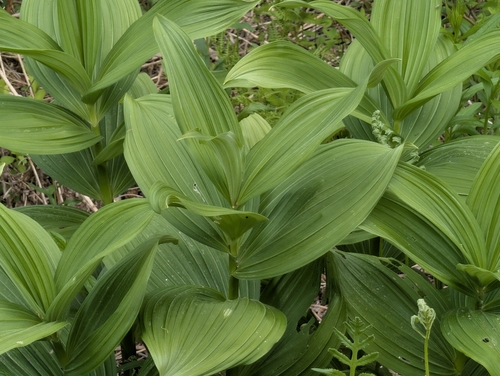
The green false hellebore is a striking tall plant, featuring a stout stem and large, deeply pleated oval leaves arranged spirally. Its numerous star-shaped, greenish-yellow flowers grow in a tall, branched cluster at the top, distinguishing it from many other forest plants.
Category
PlantsRarity
Common
Danger
5/5 · Extreme
Snaps
22
Ancient indigenous peoples sometimes used its potent extracts for making poisonous arrows.
Even animals like deer know to avoid eating this plant due to its deadly toxins!
It's called 'false' because it's not a true hellebore, despite sharing a similar look!
Touching this plant's sap can cause skin irritation, so it's best to admire from a distance!
Green false hellebore produces powerful toxic alkaloids that help it defend against most hungry animals.
It has a large rhizome (underground stem) that stores energy, helping it survive harsh winters and regrow.
Its wide, pleated leaves are like natural funnels, designed to efficiently collect rainwater and dew.
Eristalis tenax
Collects nectar and pollen from its flowers.
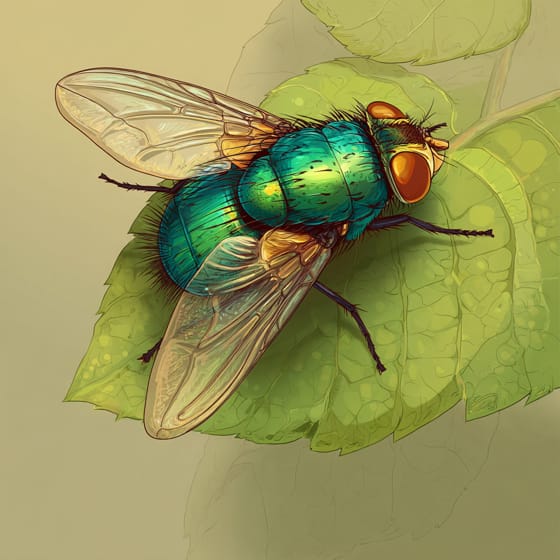
Lucilia sericata
Visits its flowers, attracted by pollen and nectar.
Puccinia veratri
Causes rust disease on its leaves and stems.
Bell-shaped flowers possess petals fused or arranged to form a cup-like or campanulate structure resembling a bell.
Flowering plants are any plants that produce flowers as part of their reproductive cycle.
Ornamental plants are cultivated primarily for their aesthetic appeal, enhancing landscapes and gardens with their attractive foliage, flowers, or form.
Biennial plants complete their life cycle over two growing seasons, typically forming foliage in the first year and flowering/seeding in the second.

Shade tolerant plants are adapted to grow and thrive in areas with low light levels, requiring less direct sunlight.

Forest habitats are terrestrial environments dominated by dense tree cover, supporting a high diversity of plant and animal life.

This habitat trait identifies species found in wetlands, which are areas of land saturated with water, either permanently or seasonally, including marshes, swamps, and bogs.

Toxic organisms contain substances that are poisonous and can cause adverse effects upon exposure.

Poisonous organisms produce toxins that can cause harm when ingested, inhaled, or absorbed through contact.

Endangered status indicates a species is at a very high risk of extinction in the wild in the near future.
No aliases listed yet.
Danger
5/5 · Extreme
Don't touch or eat any part of this plant, as it can be harmful.
The easiest way to identify green false hellebore is to use the Snappit nature identifier app.
50-150 cm
30-60 cm
1-2 cm
Late spring to mid-summer
No
Deadly
Perennial
Zoom in to split clusters and explore where this object has been snapped.
May 27, 2026
Lyme Common Historic DistrictPhoto attribution
(c) Nick Kleinschmidt, some rights reserved (CC BY)
License: CC BY 4.0 ↗
Image may be shown cropped inside the card frame.

Connecticut, US
You might spot Bold Jumping Spider and American Tuliptree.
View guide →

Maryland, US
You might spot American Cancer-Root and Rue Anemone.
View guide →

Montana, US
You might spot Bighorn Sheep and Mountain Goat.
View guide →

Connecticut, US
You might spot Osprey, Diamondback Terrapin, and Monarch.
View guide →

Pennsylvania, US
You might spot Painted Trillium, Eastern Newt, and Christmas Fern.
View guide →

Rhode Island, US
You might spot Great Blue Heron, Painted Turtle, and Sensitive Fern.
View guide →
Take the discovery with you
Snap it with Snappit to identify it, learn what makes it special, and add the discovery to your collection.







.jpg&width=800)



_001.jpg&width=800)



