





Greene's mountain ash
Sorbus scopulina
Greene's mountain ash is a beautiful tree that grows in the mountains. It has lovely clusters of bright berries and can grow quite tall, making it a special sight in nature.
Habitat: Mountain regions
The Greene's mountain ash is a small tree or shrub with compound leaves featuring many deeply serrated leaflets. It showcases flat-topped clusters of creamy-white flowers in late spring, followed by striking bright orange-red berries that persist into winter.
Category
PlantsRarity
Common
Danger
2/5 · Low
Snaps
1
It thrives on rocky mountain slopes where most other trees struggle!
Its tart berries, loved by birds, can be cooked into yummy human jams!
Some folklore claims its wood protects against lightning and evil spirits!
This 'ash' isn't a true ash; it's actually a member of the rose family!
Greene's mountain ash can endure freezing temperatures, thriving in high-elevation and cold mountainous environments.
Greene's mountain ash has roots that allow it to grow in rocky, nutrient-poor soils where other plants struggle.
Greene's mountain ash has persistent, vitamin-rich berries that provide a crucial food source for birds in winter.

Turdus migratorius
Consumes its nutrient-rich berries in fall and winter.
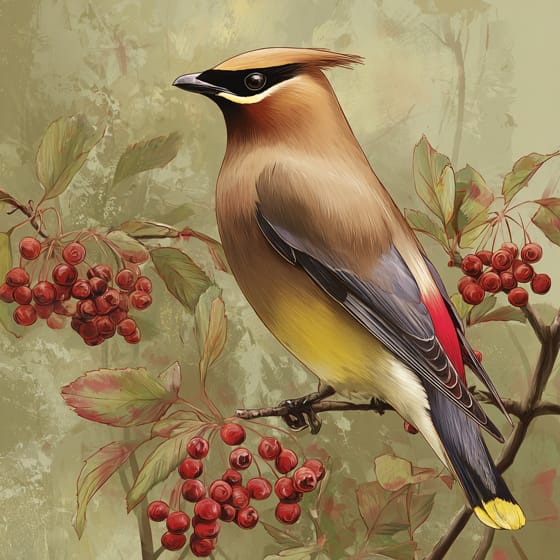
Bombycilla cedrorum
Feeds heavily on its persistent berries, especially in winter.
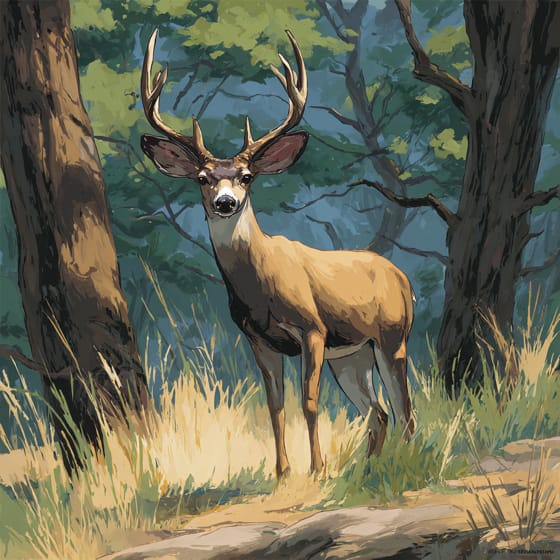
Odocoileus hemionus
Browses on the foliage and twigs of young mountain ash plants.
Apis mellifera
Visits its white flower clusters to collect nectar and pollen.
Deciduous plants periodically shed all their leaves, typically during autumn or dry seasons.
Shade tolerant plants are adapted to grow and thrive in areas with low light levels, requiring less direct sunlight.
Broadleaf trees are angiosperms characterized by flat, wide leaves that are typically shed annually in temperate climates.
Fruit-bearing plants produce fruits, which are the mature ovaries of flowering plants containing seeds.

A fruit tree is a perennial tree that produces fruit, which is edible to humans or animals.

Colorful describes organisms or objects displaying a wide range of bright and distinct colors.

Fall color refers to the seasonal change in foliage pigmentation, primarily in deciduous plants, displaying vibrant hues.

This habitat trait identifies species found in mountainous regions, characterized by high elevation, steep slopes, and varying climate zones.
No aliases listed yet.
Danger
2/5 · Low
Do not eat the berries without asking an adult, as they can be sour!
The easiest way to identify Greene's mountain ash is to use the Snappit nature identifier app.
300-900 cm
150-400 cm
0.5-1 cm
Late spring to early summer
Yes
Mild
Perennial
Zoom in to split clusters and explore where this object has been snapped.

Wyoming, US
You might spot Moose and Yellow-Bellied Marmot.
View guide →

Wyoming, US
You might spot Moose and Yellow-Bellied Marmot.
View guide →

Wyoming, US
You might spot Moose, Arrowleaf Balsamroot, and Creeping Mahonia.
View guide →
Take the discovery with you
Snap it with Snappit to identify it, learn what makes it special, and add the discovery to your collection.








.jpg&width=800)


_001.jpg&width=800)



