





hairy puccoon
Lithospermum caroliniense
The hairy puccoon is a bright yellow flower that grows in fields and along roadsides. Its fuzzy leaves and stems help it stand out in nature, making it a fun plant to discover!
Habitat: Grasslands
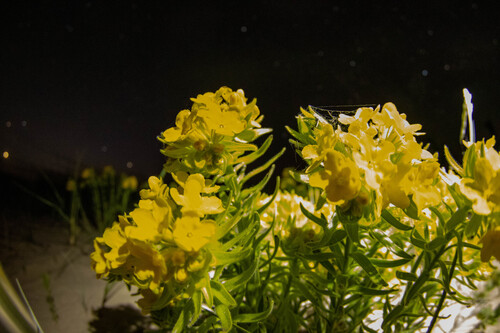
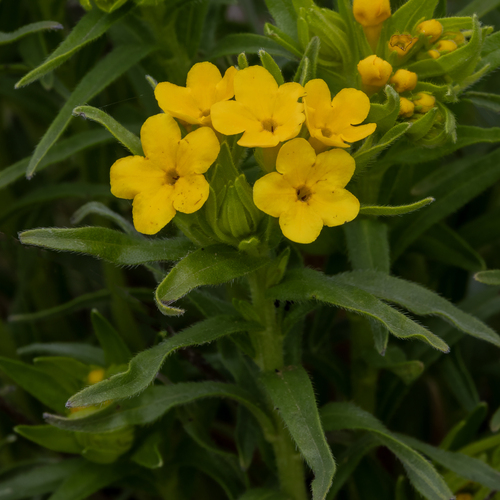
The hairy puccoon has strikingly bright, trumpet-shaped yellow flowers that form loose clusters atop its stems. Its leaves and stems are covered in stiff, bristly hairs, giving the plant a fuzzy, grayish-green appearance distinct from smooth-leaved prairie flowers.
Category
PlantsRarity
Common
Danger
1/5 · Very low
Snaps
12
Its scientific name "Lithospermum" means "stone seed" in Greek, for its incredibly hard seeds!
Sometimes, the flowers will shift their color slightly from bright yellow to a deeper orange as they age!
This plant helps keep sandy soils from blowing away by holding them together with its roots!
You can often spot its bright yellow blooms from a distance in sunny, open fields!
Hairy puccoon has stiff, bristly hairs on its leaves that deter hungry insects, protecting its tender green parts from being munched.
This plant grows an incredibly long taproot, reaching deep into the soil to find water even when conditions on the surface are very dry.
Hairy puccoon produces tiny, hard, stony seeds called nutlets that are protected, helping them survive and sprout after a long winter.
Apis mellifera
gathers nectar and pollen from the vibrant blooms.
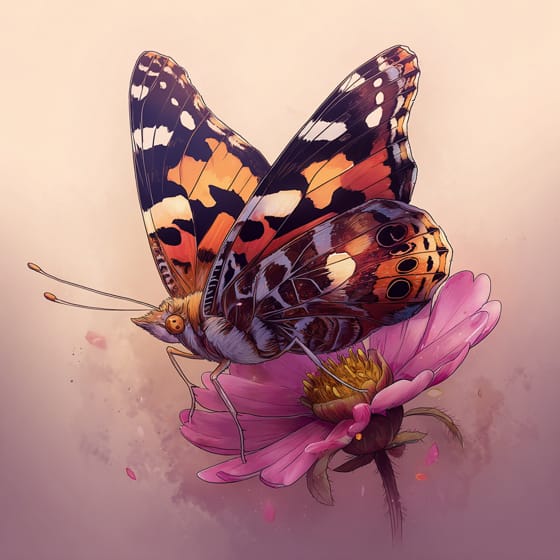
Vanessa cardui
visits the flowers for a sweet energy boost.
Glomus intraradices
helps roots absorb nutrients and water from the soil.
Furry describes animals possessing a dense covering of soft hair or fur.
Ornamental plants are cultivated primarily for their aesthetic appeal, enhancing landscapes and gardens with their attractive foliage, flowers, or form.
Spring blooming plants produce their flowers during the spring season, often signifying the end of winter and the start of new growth.
This human use trait indicates species from which natural dyes can be extracted and used to color textiles, food, or other materials.

Grassland habitats are terrestrial biomes dominated by grasses and herbaceous plants, supporting a variety of grazing animals.

Describes plants that are particularly attractive and beneficial to a wide range of pollinating organisms.
No aliases listed yet.
Danger
1/5 · Very low
Always look but don't pick flowers unless you have permission.
The easiest way to identify hairy puccoon is to use the Snappit nature identifier app.
30-60 cm
15-30 cm
1-2 cm
Late spring to mid summer
No
None
Perennial
Zoom in to split clusters and explore where this object has been snapped.
Jun 4, 2026
Glen HavenPhoto attribution
(c) daksu, some rights reserved (CC BY)
License: CC BY 4.0 ↗
Image may be shown cropped inside the card frame.
May 18, 2026
International Crane FoundationPhoto attribution
(c) Dan Vickers, some rights reserved (CC BY)
License: CC BY 4.0 ↗
Image may be shown cropped inside the card frame.

Michigan, US
You might spot Eastern Skunk Cabbage and Kirtland's Warbler.
View guide →

Michigan, US
You might spot Bladder Campion, Bearberry, and Common Milkweed.
View guide →

Wisconsin, US
You might spot Sundial Lupine, Canadian Lousewort, and Cream Wild-Indigo.
View guide →

Indiana, US
You might spot Sassafras, Eastern Skunk Cabbage, and Cardinal Flower.
View guide →

Indiana, US
You might spot Eastern Skunk Cabbage, Sassafras, and Red Columbine.
View guide →

Minnesota, US
You might spot Hairy Puccoon, Lanceleaf Figwort, and Ohio Spiderwort.
View guide →
Take the discovery with you
Snap it with Snappit to identify it, learn what makes it special, and add the discovery to your collection.









.jpg&width=800)



_001.jpg&width=800)




