





Hawaiian Goose
Branta sandvicensis
The Hawaiian Goose, also known as the Nene, is a special bird that lives in Hawaii. It has a unique, soft honking sound and loves to waddle around on the ground, making it a fun sight to see!
Habitat: Grasslands
The Hawaiian Goose has a dark brown body with a black head and neck, accented by distinctive cream-colored cheeks. Its deeply furrowed neck feathers give it a unique striped appearance. Unlike most geese, it has reduced webbing on its feet, adapted for walking across rocky terrain.
Category
BirdsRarity
Rare
Danger
1/5 · Very low
Snaps
9
Its soft "honk" sounds more like a gentle moo than a loud goose call!
Scientists believe its ancestors flew all the way from Canada!
The Hawaiian Goose is the rarest goose in the world! It almost went extinct.
Unlike most geese, it rarely swims and prefers walking on land.
Hawaiian Goose has uniquely less webbed feet that help them grip and walk easily over rough, uneven volcanic terrain.
Hawaiian Goose can journey long distances on land because its strong legs are perfectly adapted for hiking across varied Hawaiian landscapes.
Hawaiian Goose can drink slightly salty water, helping them find hydration in coastal areas where freshwater sources are limited.
The Hawaiian Goose loves to munch on many different plants found on its island home.
Herpestes javanicus
Introduced mongoose prey on Nene eggs and young goslings.
Felis catus
Feral cats hunt Nene goslings and sometimes adult birds.
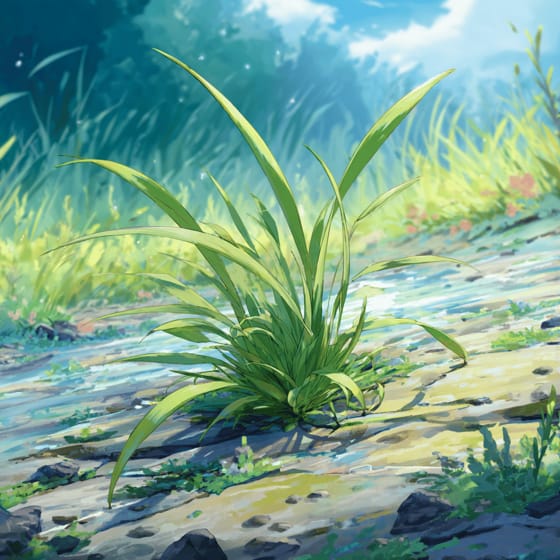
Cynodon dactylon
Nenes graze on Bermuda grass, a common food source in their habitat.
Rubus hawaiensis
Nenes forage for the berries and leaves of 'Akala plants.
Feathered describes animals, primarily birds, possessing a covering of feathers.
Social animals live in organized groups, cooperating for survival benefits such as foraging, defense, and raising offspring.
Grassland habitats are terrestrial biomes dominated by grasses and herbaceous plants, supporting a variety of grazing animals.
This trait characterizes organisms whose diet consists entirely or primarily of plant material.

Diurnal animals are primarily active during daylight hours, typically resting or sleeping at night.

Describes a species whose presence and role have a disproportionately large effect on its environment.

Endangered status indicates a species is at a very high risk of extinction in the wild in the near future.
Danger
1/5 · Very low
Always watch from a distance and don't try to touch wild birds.
The easiest way to identify Hawaiian Goose is to use the Snappit nature identifier app.
53-66 cm
100-130 cm
1.5-3 kg
8-20 years
60 km/h
The Hawaiian Goose loves to munch on many different plants found on its island home.
Grasslands
Zoom in to split clusters and explore where this object has been snapped.

Hawaii, US
You might spot Brown Anole, Gold Dust Day Gecko, and Red-Crested Cardinal.
View guide →
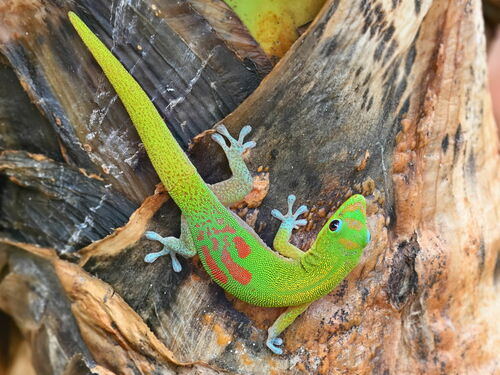
Hawaii, US
You might spot Gold Dust Day Gecko, Sea Turtle, and Brown Anole.
View guide →

Hawaii, US
You might spot ʻōhiʻa Lehua and Stinking Passionflower.
View guide →

Hawaii, US
You might spot ʻōhiʻa Lehua, Red Junglefowl, and Red-Crested Cardinal.
View guide →

Hawaii, US
You might spot 'āhinahina, Kūpaoa, and Chukar.
View guide →

Hawaii, US
You might spot 'āhinahina, Jackson's Chameleon, and Hawaiʻi ʻamakihi.
View guide →
Take the discovery with you
Snap it with Snappit to identify it, learn what makes it special, and add the discovery to your collection.





.jpg&width=800)








