.jpg&width=800)





Hoary Marmot
Marmota caligata
Hoary marmots are fluffy, friendly animals that live in the mountains. They love to sunbathe on rocks and make loud whistles to talk to each other!
Habitat: Mountain regions
The Hoary Marmot has thick, grizzly-grey fur with black feet and a dark, bushy tail. Its head is often darker, with a white patch on the snout. This large ground squirrel's distinctive 'hoary' appearance comes from the white tips on its guard hairs.
Category
MammalsRarity
Common
Danger
1/5 · Very low
Snaps
13
Hoary Marmots greet each other by gently pressing noses, almost like a kiss!
These big ground squirrels are nicknamed 'whistle pigs' because of their loud alarm calls!
They can pack on half their body weight in fat each summer, ready for winter hibernation.
They live in family groups, sharing burrows and often sunbathing together on sunny rocks.
Hoary Marmots can whistle loudly to warn their colony of danger, using a high-pitched call that travels far across mountain valleys.
Hoary Marmots undergo deep hibernation for up to 7-8 months, conserving energy through the harsh winter.
Hoary Marmots are skilled diggers, creating complex burrows that provide shelter from predators and harsh weather.
These mountain residents love to munch on a variety of plants found in their alpine home.

Aquila chrysaetos
A swift aerial predator, it preys on marmots from above.
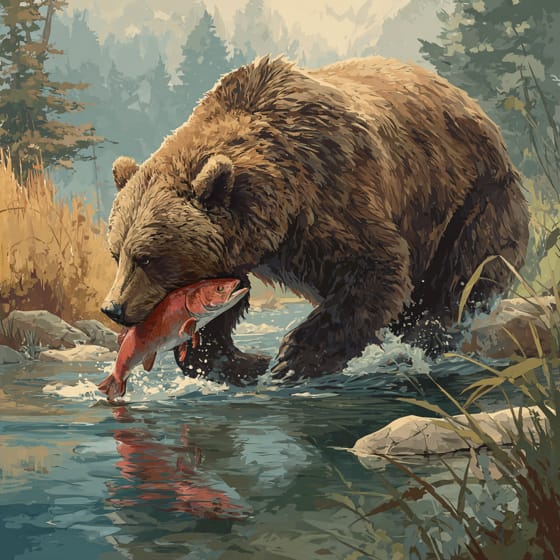
Ursus arctos
Bears dig marmots from their burrows for a meal.
Canis lupus
Wolves hunt marmots in open areas where they can chase them.
Festuca idahoensis
Hoary Marmots graze on this common grass in their habitat.

Arnica cordifolia
They consume the leaves and flowers of this mountain plant.
Furry describes animals possessing a dense covering of soft hair or fur.
Social animals live in organized groups, cooperating for survival benefits such as foraging, defense, and raising offspring.
This trait characterizes organisms whose diet consists entirely or primarily of plant material.
This habitat trait identifies species found in mountainous regions, characterized by high elevation, steep slopes, and varying climate zones.

Hibernating animals enter a state of metabolic depression during cold periods or when food is scarce, characterized by reduced body temperature and activity.

Diurnal animals are primarily active during daylight hours, typically resting or sleeping at night.
No aliases listed yet.
Danger
1/5 · Very low
Always watch from a distance and do not try to touch or feed wild animals.
The easiest way to identify Hoary Marmot is to use the Snappit nature identifier app.
60-80 cm
3-8 kg
10-15 years
30 km/h
These mountain residents love to munch on a variety of plants found in their alpine home.
Mountain regions
Foraging
Zoom in to split clusters and explore where this object has been snapped.

Montana, US
You might spot Bighorn Sheep and Mountain Goat.
View guide →

British Columbia, CA
You might spot White Twisted-Stalk and Western Skunk Cabbage.
View guide →

Montana, US
You might spot Thimbleberry, White-Tailed Deer, and Spreading Dogbane.
View guide →

Washington, US
You might spot Hoary Marmot, White Pasqueflower, and Avalanche Lily.
View guide →

Washington, US
You might spot Cascade Golden-Mantled Ground Squirrel.
View guide →

Montana, US
You might spot Moose, Common Beargrass, and Thimbleberry.
View guide →
Take the discovery with you
Snap it with Snappit to identify it, learn what makes it special, and add the discovery to your collection.




.jpg&width=800)


.JPG&width=800)


.jpg&width=800)
