.jpg&width=800)





Hudsonian Whimbrel
Numenius hudsonicus
The Hudsonian Whimbrel is a beautiful bird with long legs and a curved beak. It loves to wade in shallow waters and is known for its lovely, melodic calls.
Habitat: Coastal areas
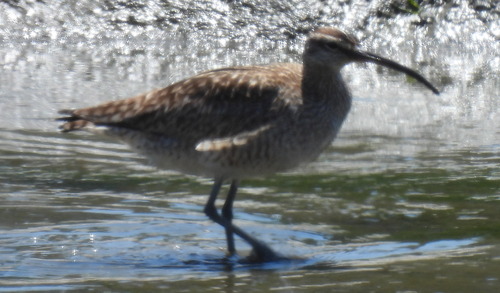
The Hudsonian Whimbrel is a medium-sized shorebird with mottled brown and white plumage. It has a distinctive long, downward-curved bill, a dark cap, and two pale stripes over its eyes, giving it a unique head pattern.
Category
BirdsRarity
Common
Danger
1/5 · Very low
Snaps
13
A Whimbrel once flew over 5,000 km across the ocean without stopping!
Sometimes, they follow tractors to find bugs stirred up from the soil!
Their name sounds like their whistle: 'Whim-brel'!
They lay their eggs in a simple nest on the open ground.
Hudsonian Whimbrel has a super sensitive bill tip that helps them find hidden food underground without seeing it.
Hudsonian Whimbrel can fly thousands of kilometers non-stop because of incredible endurance, helping them reach faraway homes.
Hudsonian Whimbrel has speckled brown plumage that helps them blend perfectly with rocks and grasses to hide from predators.
This shorebird loves to slurp up tasty crabs, insects, and berries from coastal mud and tundra.
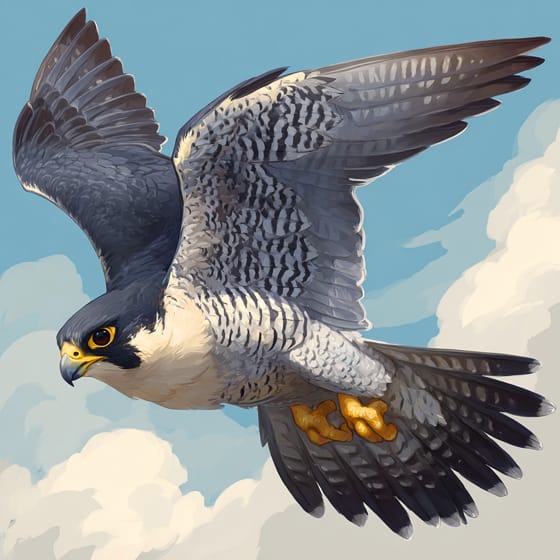
Falco peregrinus
Predates on adult Whimbrels and chicks.
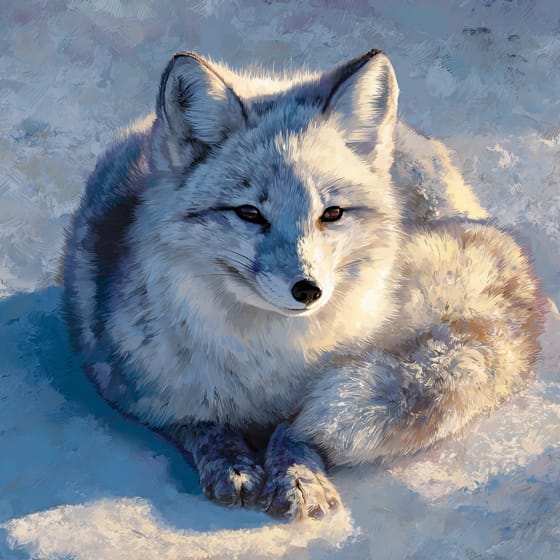
Vulpes lagopus
Preys on Whimbrel eggs and young chicks.
Uca pugnax
Hunted by Whimbrels in coastal mudflats.
Empetrum nigrum
Whimbrels eat the berries, especially on tundra.
Feathered describes animals, primarily birds, possessing a covering of feathers.
Social animals live in organized groups, cooperating for survival benefits such as foraging, defense, and raising offspring.
Singing animals produce complex vocalizations, often for purposes of attracting mates, defending territory, or communicating within their species.
Camouflaged describes organisms that possess coloring or patterns that allow them to blend into their environment.

This trait identifies organisms whose diet primarily consists of insects and other small invertebrates.

Coastal habitats are dynamic environments located along the interface between land and sea, influenced by tides, waves, and saltwater.

This trait identifies organisms whose diet consists entirely or primarily of animal tissue.

Migratory animals undertake seasonal movements from one region to another, typically in response to changes in climate or food availability.

Threatened status denotes a species likely to become endangered in the foreseeable future without effective conservation interventions.
No aliases listed yet.
Danger
1/5 · Very low
Always watch birds from a distance and be quiet so you don't scare them away.
The easiest way to identify Hudsonian Whimbrel is to use the Snappit nature identifier app.
37-47 cm
76-89 cm
0.27-0.493 kg
10-20 years
80 km/h
This shorebird loves to slurp up tasty crabs, insects, and berries from coastal mud and tundra.
Coastal areas
Zoom in to split clusters and explore where this object has been snapped.
May 9, 2026
CuriOdysseyPhoto attribution
(c) Timothy Whitehead, some rights reserved (CC BY)
License: CC BY 4.0 ↗
Image may be shown cropped inside the card frame.

US
You might spot Firewheel, Domestic Horse, and Atlantic Horseshoe Crab.
View guide →

Michigan, US
You might spot Bald Eagle, American White Pelican, and Painted Turtle.
View guide →

California, US
You might spot Snowy Egret, Great Blue Heron, and Western Gull.
View guide →

US
You might spot Variable Carpet Moth, Bald Eagle, and Red Huckleberry.
View guide →

California, US
You might spot Pacific Banana Slug and Ensatina.
View guide →

North Carolina, US
You might spot Firewheel, Domestic Horse, and Atlantic Horseshoe Crab.
View guide →
Take the discovery with you
Snap it with Snappit to identify it, learn what makes it special, and add the discovery to your collection.




.jpg&width=800)








