



Jack pine
Pinus banksiana
The Jack pine is a tall tree that grows in forests. It has long, slender needles and produces cones that can stay on the tree for many years. This tree is important for many animals and helps keep the forest healthy.
Habitat: Forests
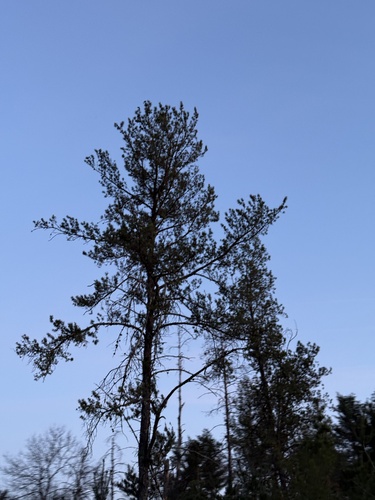
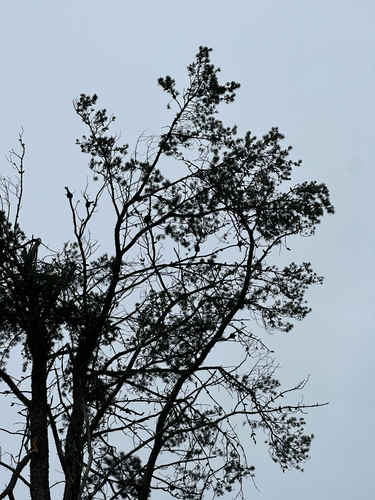
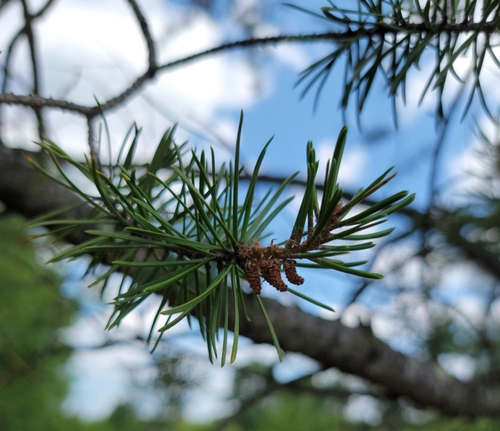
The Jack pine is an evergreen conifer often appearing irregularly shaped or scraggly. It has short, stiff, twisted, yellow-green needles growing in pairs. Its distinctive light brown cones are often curved, pointed, and remain tightly closed on branches for years.
Category
PlantsRarity
Common
Danger
1/5 · Very low
Snaps
7
Its wood is used for pulpwood, making paper products we use daily.
Jack pines can live for over 150 years in harsh northern climates!
The Kirtland's Warbler bird absolutely needs young Jack pines to nest.
Young Jack pines can grow incredibly fast after a wildfire sweeps through.
Jack pine has special cones that need the heat from a forest fire to open and release their seeds, helping new trees grow quickly.
Jack pine can grow in very poor, sandy, or rocky soils where many other trees struggle, making it a resilient pioneer.
Setophaga kirtlandii
nests exclusively in young Jack pines
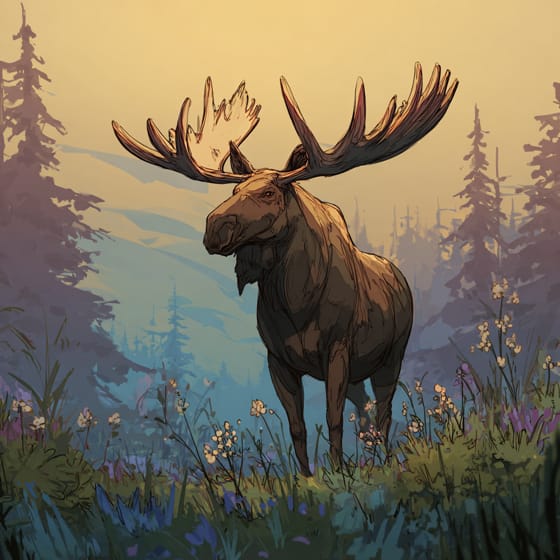
Alces alces
browses on young Jack pine shoots
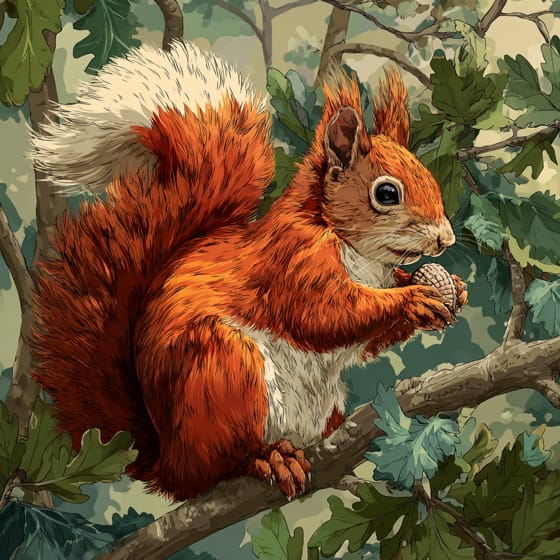
Tamiasciurus hudsonicus
eats seeds from Jack pine cones
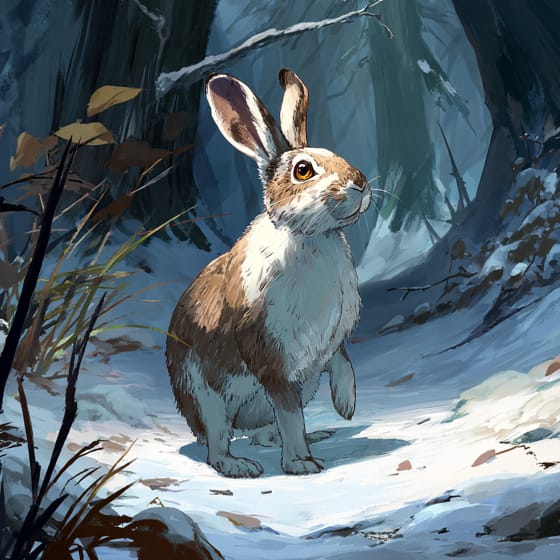
Lepus americanus
gnaws on bark and twigs
Cold hardy plants are able to withstand low temperatures and freezing conditions without significant damage.
Coniferous plants are typically evergreen, bearing needles or scales and reproductive cones.
Evergreen plants retain their foliage throughout the year, never shedding all their leaves at once.
Describes plants that are particularly attractive and beneficial to a wide range of pollinating organisms.

Rapid growing plants exhibit accelerated growth rates, quickly increasing in size and biomass within a short period.
Timber refers to wood that has been prepared for use in building and carpentry.

Forest habitats are terrestrial environments dominated by dense tree cover, supporting a high diversity of plant and animal life.

This trait characterizes organisms with an exceptionally long lifespan compared to others of their kind.

Describes a species whose presence and role have a disproportionately large effect on its environment.
No aliases listed yet.
Danger
1/5 · Very low
Be careful around trees; don't climb too high and watch for falling branches.
The easiest way to identify Jack pine is to use the Snappit nature identifier app.
1000-2500 cm
300-500 cm
Yes
None
Perennial
Wind
Forests
Zoom in to split clusters and explore where this object has been snapped.
May 12, 2026
Canoe Landing Prairie State Natural AreaPhoto attribution
(c) Brandon Corder, some rights reserved (CC BY)
License: CC BY 4.0 ↗
Image may be shown cropped inside the card frame.
Apr 1, 2026
Five Channels DamPhoto attribution
(c) jyoung2399, some rights reserved (CC BY)
License: CC BY 4.0 ↗
Image may be shown cropped inside the card frame.
Jul 2, 2023
Canoe Landing Prairie State Natural AreaPhoto attribution
(c) aarongunnar, some rights reserved (CC BY)
License: CC BY 4.0 ↗
Image may be shown cropped inside the card frame.

Michigan, US
You might spot Eastern Skunk Cabbage and Kirtland's Warbler.
View guide →

Wisconsin, US
You might spot Sundial Lupine, Aurora Damsel, and Lancet Clubtail.
View guide →

Maine, US
You might spot Jack Pine, Lingonberry, and Sheep Laurel.
View guide →
.jpg)
Manitoba, CA
You might spot Canadian Bunchberry, Jack Pine, and Paper Birch.
View guide →
Take the discovery with you
Snap it with Snappit to identify it, learn what makes it special, and add the discovery to your collection.








.jpg&width=800)



_001.jpg&width=800)


