.png&width=800)





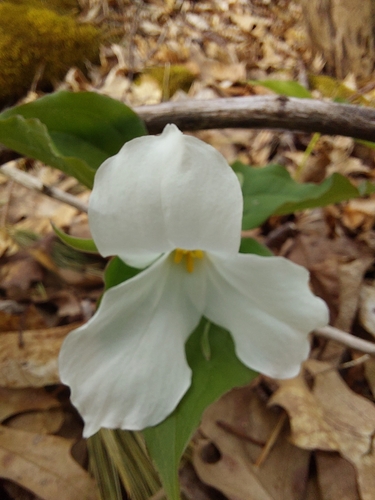
large white trillium
Trillium grandiflorum
The large white trillium is a beautiful flower with three white petals that can turn pink as they age. They bloom in spring and are often found in shady forests, making them a lovely sight in nature.
Habitat: Forests
The large white trillium has three large, pure white petals that fade to soft pink with age, prominently displayed above a whorl of three broad, deep green leaves. Its striking three-part symmetry makes it easy to identify in the forest.
Category
PlantsRarity
Common
Danger
1/5 · Very low
Snaps
29
It's an 'ephemeral', blooming quickly before tree leaves block the sun!
Many trilliums are protected; it's illegal to pick them in some places!
Some people believe seeing a trillium brings good luck or protection!
The name 'trillium' comes from Latin, meaning 'three,' for its three petals and leaves!
The large white trillium has petals that change from pure white to soft pink, signaling to pollinators that it's nearing the end of its bloom.
Large white trillium seeds have a special fatty coating, attracting ants who carry them away to help spread new plants.
This plant has a sturdy underground rhizome, allowing it to store energy and live for several decades, even over 50 years!
Apis mellifera
Carries pollen between trillium flowers, helping them reproduce.
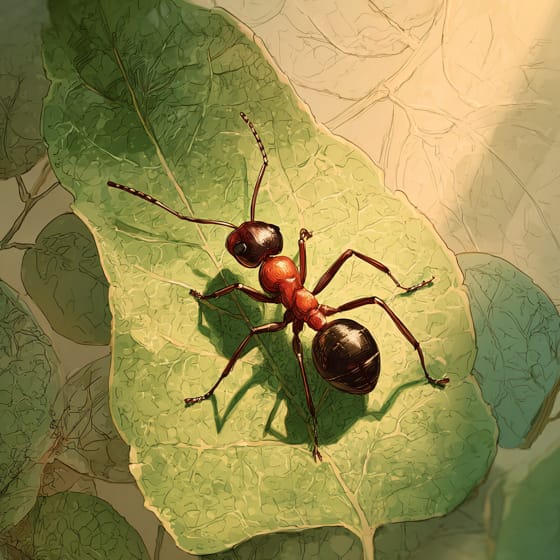
Aphaenogaster picea
Ants collect trillium seeds for their fatty elaiosomes, dispersing them.

Odocoileus virginianus
Deer browse on trillium leaves and flowers, impacting populations.
Deciduous plants periodically shed all their leaves, typically during autumn or dry seasons.
Flowering plants are any plants that produce flowers as part of their reproductive cycle.
Shade tolerant plants are adapted to grow and thrive in areas with low light levels, requiring less direct sunlight.
Spring blooming plants produce their flowers during the spring season, often signifying the end of winter and the start of new growth.

Describes plants that are particularly attractive and beneficial to a wide range of pollinating organisms.

Forest habitats are terrestrial environments dominated by dense tree cover, supporting a high diversity of plant and animal life.

This trait characterizes organisms with an exceptionally long lifespan compared to others of their kind.

Threatened status denotes a species likely to become endangered in the foreseeable future without effective conservation interventions.
No aliases listed yet.
Danger
1/5 · Very low
Do not pick flowers without asking an adult, so they can keep growing for everyone to enjoy.
The easiest way to identify large white trillium is to use the Snappit nature identifier app.
30-45 cm
20-30 cm
4-7 cm
Spring
Yes
Mild
Perennial
Zoom in to split clusters and explore where this object has been snapped.
May 8, 2026
Sand Bar State ParkPhoto attribution
no rights reserved
License: CC0 1.0 ↗
Image may be shown cropped inside the card frame.

Wisconsin, US
You might spot Turkey, White-Tailed Deer, and Dame's Rocket.
View guide →

New York, US
You might spot Allegheny Mountain Dusky Salamander.
View guide →

Wisconsin, US
You might spot White-Tailed Deer, American Robin, and Canada Goose.
View guide →
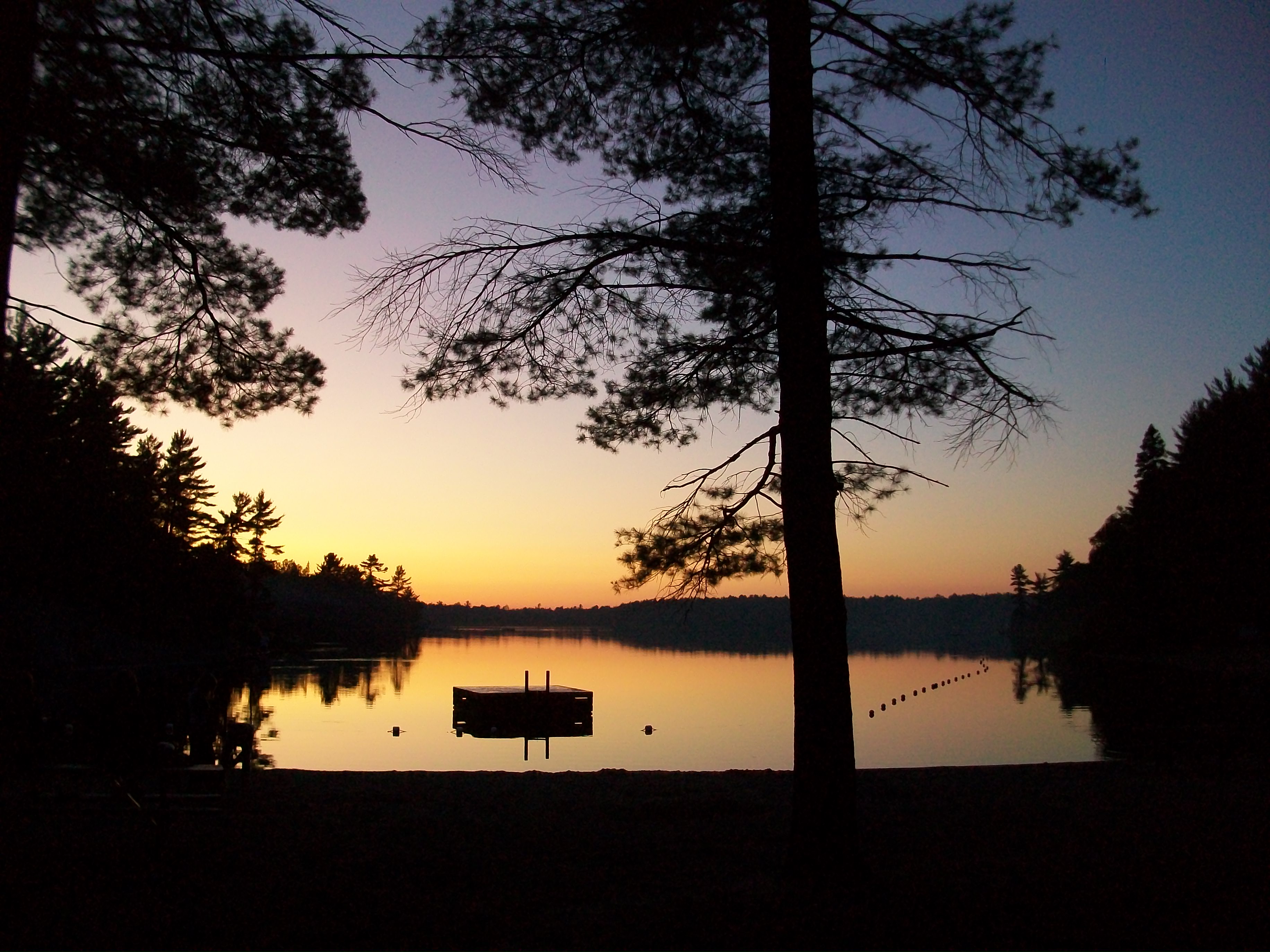
Ontario, CA
You might spot Painted Turtle, Common Watersnake, and Pickerelweed.
View guide →

Michigan, US
You might spot Hickory Tussock Moth, Mayapple, and Winged Euonymus.
View guide →

Minnesota, US
You might spot Common Eastern Bumble Bee and Turkey.
View guide →
Take the discovery with you
Snap it with Snappit to identify it, learn what makes it special, and add the discovery to your collection.






.jpg&width=800)



_001.jpg&width=800)


