





Largeflower Valerian
valeriana pauciflora
The Largeflower Valerian is a beautiful plant with large, colorful flowers that attract many pollinators. Kids will love spotting this plant in gardens and wild areas where it thrives!
Habitat: Meadows, gardens, and sunny areas.
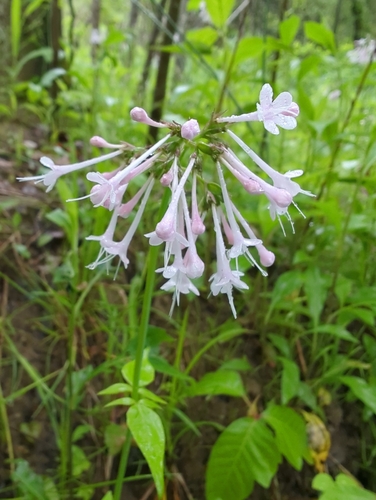
The Largeflower Valerian has distinctive tubular flowers, typically pinkish-white, which are notably larger than many other valerian species. Its deep green leaves are often deeply lobed, giving it a unique texture in the shaded forest understory.
Category
PlantsRarity
Common
Danger
0/5 · No known danger
Snaps
5
Its 'large flowers' are actually one of the biggest in the entire Valerian family!
The name 'Valerian' comes from a Latin word meaning 'to be strong or healthy'!
This plant prefers to grow where the ground stays cool and damp, like near streams.
You can tell it's a 'pauciflora' because it usually has just a few flowers per stem!
Largeflower Valerian can release a unique scent from its flowers to attract long-tongued insects for pollination, helping it reproduce.
Largeflower Valerian has adapted to thrive in low-light, moist forest environments, making it a powerful understory plant.
Largeflower Valerian can spread using underground rhizomes, helping it form small colonies and secure its place.
Apis mellifera
Collects nectar and pollen from its tubular flowers.

Bombus impatiens
Visits flowers for nectar, aiding in plant reproduction.

Odocoileus virginianus
Deer may browse its foliage, especially new growth.
Colorful describes organisms or objects displaying a wide range of bright and distinct colors.
This trait characterizes organisms whose diet consists entirely or primarily of plant material.
Describes organisms that transfer pollen, enabling the fertilization and reproduction of plants.
No aliases listed yet.
Danger
0/5 · No known danger
No special safety notes yet.
The easiest way to identify Largeflower Valerian is to use the Snappit nature identifier app.
30-90 cm
1.5-2.5 cm
Late spring to early summer
No
Mild
Perennial
Insect
Zoom in to split clusters and explore where this object has been snapped.
May 6, 2026
Bat Cave and Cascade Caverns State Nature PreservesPhoto attribution
(c) Anna Hess, some rights reserved (CC BY)
License: CC BY 4.0 ↗
Image may be shown cropped inside the card frame.

Kentucky, US
You might spot Large White Trillium and Sharp-Lobed Hepatica.
View guide →

Kentucky, US
You might spot Virginia Bluebells and Tall Bellflower.
View guide →
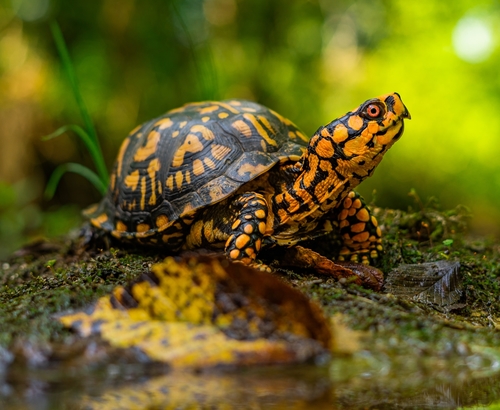
Kentucky, US
You might spot Eastern Box Turtle, Gray Ratsnake, and Dekay's Brownsnake.
View guide →

Maryland, US
You might spot Giraffes, Tiger, and White Tiger.
View guide →
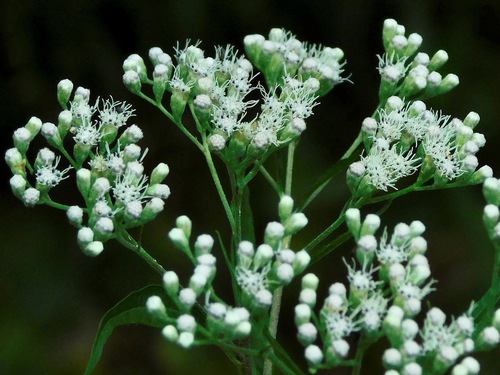
Virginia, US
You might spot Late Boneset, Fortune's Spindle, and Largeflower Valerian.
View guide →
Take the discovery with you
Snap it with Snappit to identify it, learn what makes it special, and add the discovery to your collection.









.jpg&width=800)



_001.jpg&width=800)




