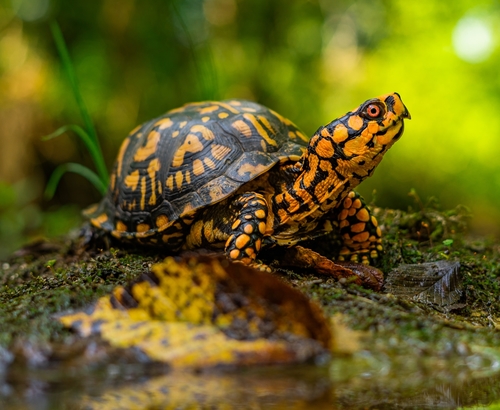
Eastern Box Turtle
Olympia State Forest offers a serene escape into Kentucky's captivating natural beauty.
Olympia State Forest offers a serene escape into Kentucky's captivating natural beauty. Now a cherished part of the expansive Daniel Boone National Forest, this 780-acre woodland provides a tranquil setting for those seeking connection with the outdoors. Visitors can immerse themselves in a rich tapestry of towering trees, lush greenery, and the soothing sounds of nature, discovering the diverse flora and fauna characteristic of the region.
The forest boasts picturesque trails winding through untouched wilderness, inviting hikers and nature enthusiasts to explore Kentucky's unique ecosystem. While there are no formal exhibits, the forest itself is a living display of biodiversity, home to various tree species like oak, maple, and hickory, and a habitat for white-tailed deer, squirrels, and a multitude of bird species. Clear streams and tranquil areas further enhance the enchanting atmosphere, making every visit a journey of discovery.
This natural haven is a must-visit destination for anyone looking to find solace and a deeper appreciation for the natural world. Whether you're an avid hiker, a keen birdwatcher, or simply yearning for peaceful respite amidst scenic landscapes, Olympia State Forest, within the broader Daniel Boone National Forest, offers memorable experiences that embody the essence of nature's wonder. Unlock an interactive field guide for this spot: get the Snappit app to identify nature on the go.
Olympia State Forest was formerly a distinct state forest, encompassing 780 acres in Bath County, Kentucky. Over time, it transitioned, and is now integrated into the vast Daniel Boone National Forest. This incorporation ensures its continued preservation as a natural habitat, contributing to the larger protected area that offers extensive outdoor recreation opportunities across eastern Kentucky.
Hike the winding trails, observe native plant species, look for birds and other wildlife, enjoy photography, and simply relax in nature. You might spot white-tailed deer, various songbirds, and a rich variety of native trees and wildflowers depending on the season.
Spring: Wildflowers in bloom (e.g., violets, common milkweed), migratory birds return.
Summer: Lush green canopy, potential for warmer temperatures and insects.
Fall: Spectacular fall foliage, cooler hiking weather, some bird migration.
Winter: Tranquil and less crowded, with opportunities to see animal tracks. Be prepared for colder temperatures and potential snow or ice.
As a natural forest area, specific accessibility information is limited. Trails may be unpaved and uneven, typical of forest environments. Visitors should expect varying terrain.
The primary highlight is the natural forest itself, with its diverse trees, undergrowth, and potential for wildlife sightings. Hiking trails are the main attraction.
Each card links to a full Explore page with photos, traits, and fun facts.
Start with the big picture, then zoom in to explore individual wildlife observations around this place.
Wear appropriate footwear
Trails are natural and can be uneven, so sturdy hiking shoes are recommended.
Bring water and snacks
Stay hydrated, especially on longer hikes, as facilities may be limited.
Pack insect repellent
Especially during warmer months, to protect against ticks and mosquitoes.
Carry a map or GPS
While trails exist, having navigational aids can be helpful in a forested area.
Leave no trace
Pack out everything you pack in to help preserve the forest's natural beauty.
Check weather conditions
Be prepared for sudden changes in weather, as conditions can vary.
May 23, 2024
Apr 28, 2023
Sep 25, 2022
May 2, 2022
Jul 12, 2020

Maryland, US
You might spot White-Tailed Deer and Eastern Gray Squirrel.
View guide →
.jpg)
District of Columbia, US
You might spot Eastern Gray Squirrel, Duck, and House Sparrow.
View guide →

Illinois, US
You might spot American Robin, Canada Goose, and House Sparrow.
View guide →

Virginia, US
You might spot Spotted Lanternfly and Northern Cardinal.
View guide →
Take the discovery with you
Identify the wildlife you spot, learn as you go, and keep a collection of the adventure.