





Lazuli Bunting
Passerina amoena
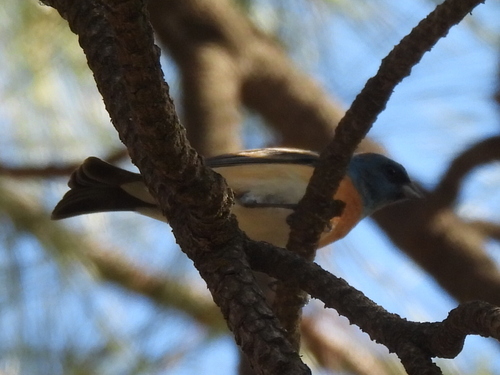
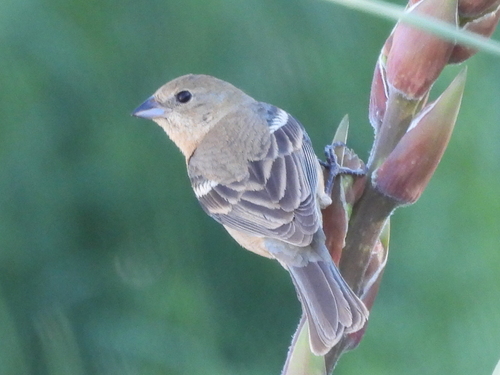
The Lazuli Bunting is a small, colorful bird that loves to sing. Males are bright blue with a warm orange belly, while females are more brown and spotted. They are often found in open fields and gardens.
Habitat: Open fields and gardens
The Lazuli Bunting is a small, vibrant songbird. Males boast a brilliant turquoise-blue head and back, a cinnamon chest, and a white belly. Females are much duller, appearing mostly brown with faint streaking, lacking the male's striking colors.
Category
BirdsRarity
Common
Danger
1/5 · Very low
Snaps
9
Sometimes, a male Lazuli Bunting will help care for chicks in another pair's nest, even if they aren't his own!
The dazzling blue color on male Lazuli Buntings comes from light-refracting feathers, not blue pigment!
Their name "Lazuli" comes from a deep blue gemstone called lapis lazuli, referencing the male's stunning plumage!
Young male Lazuli Buntings often learn their unique songs by listening to and mimicking nearby adult males.
Lazuli Bunting has unique feather structures that refract light, making their blue color appear incredibly vibrant.
Lazuli Bunting has a strong, cone-shaped beak that helps them crack open tough seeds for food.
Lazuli Bunting can learn complex songs from other males that helps them attract mates and defend territory.
Lazuli Bunting can travel thousands of kilometers during migration, guided by the Earth's magnetic field and stars.
These tiny birds enjoy a diverse diet of small insects during summer and various seeds year-round.

Accipiter striatus
A common avian predator of small birds.
Thamnophis sirtalis
Known to prey on eggs and nestlings.
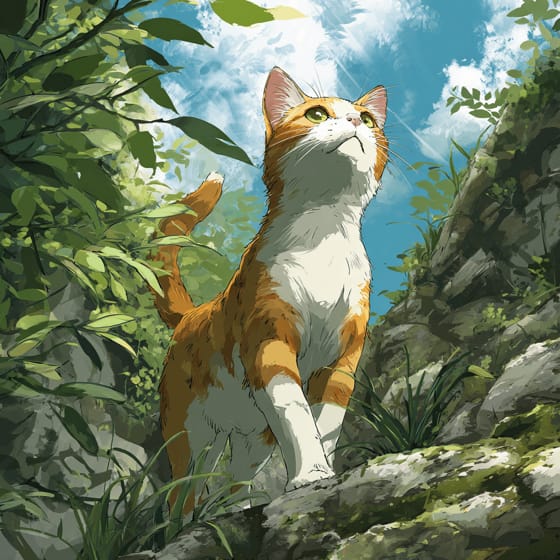
Felis catus
A significant predator of birds, especially near human settlements.
Malacosoma americanum
Lazuli Buntings feed on various insect larvae, including caterpillars.

Bromus tectorum
They consume seeds from many grass species, including cheatgrass.
Feathered describes animals, primarily birds, possessing a covering of feathers.
Marked with spots or patches of a different color.
Social animals live in organized groups, cooperating for survival benefits such as foraging, defense, and raising offspring.
Aerial creatures spend a significant portion of their lives airborne, utilizing flight for various activities such as hunting, migration, or nesting.

Singing animals produce complex vocalizations, often for purposes of attracting mates, defending territory, or communicating within their species.

Colorful describes organisms or objects displaying a wide range of bright and distinct colors.

Grassland habitats are terrestrial biomes dominated by grasses and herbaceous plants, supporting a variety of grazing animals.

This trait identifies organisms whose diet primarily consists of insects and other small invertebrates.

Diurnal animals are primarily active during daylight hours, typically resting or sleeping at night.

Migratory animals undertake seasonal movements from one region to another, typically in response to changes in climate or food availability.

This habitat trait indicates species that can coexist with humans in urban and suburban environments, utilizing man-made structures and green spaces.
No aliases listed yet.
Danger
1/5 · Very low
Enjoy watching birds from a distance and don't try to touch them.
The easiest way to identify Lazuli Bunting is to use the Snappit nature identifier app.
13-15 cm
22-25 cm
0.012-0.018 kg
2-7 years
40 km/h
These tiny birds enjoy a diverse diet of small insects during summer and various seeds year-round.
Open fields and gardens
Zoom in to split clusters and explore where this object has been snapped.
Jun 1, 2026
Julia Davis ParkPhoto attribution
(c) Sam Kieschnick, some rights reserved (CC BY)
License: CC BY 4.0 ↗
Image may be shown cropped inside the card frame.
Jun 1, 2026
Julia Davis ParkPhoto attribution
(c) Sam Kieschnick, some rights reserved (CC BY)
License: CC BY 4.0 ↗
Image may be shown cropped inside the card frame.

California, US
You might spot Sequoia, California Newt, and Pacific Dogwood.
View guide →

Washington, US
You might spot Rock Pigeon, Great Blue Heron, and Duck.
View guide →

Montana, US
You might spot Tiger, Grizzly Bear, and Red Panda.
View guide →

Utah, US
You might spot Duck, Gambel Oak, and Box Elder.
View guide →

Montana, US
You might spot Black Bear, Moose, and Lodgepole Pine.
View guide →

Colorado, US
You might spot Front Range Beardtongue and Mountain Ball Cactus.
View guide →
Take the discovery with you
Snap it with Snappit to identify it, learn what makes it special, and add the discovery to your collection.




.jpg&width=800)







