





leafcup
Polymnia canadensis
The leafcup is a special plant with big, green leaves that can hold water like a cup! It grows in shady places and is loved by many little creatures in the forest.
Habitat: Forests
The leafcup has large, deeply lobed green leaves that join at the stem, sometimes forming a small cup. Its branched stems bear tiny, pale yellow to white daisy-like flowers, often lacking prominent petals, making them look like small buttons.
Category
PlantsRarity
Common
Danger
1/5 · Very low
Snaps
3
Early naturalists sometimes called this plant 'bearsfoot' because its big leaves look like a bear's paw!
Even though it's a relative of giant sunflowers, leafcup's blooms are usually only pencil-eraser size!
Its scientific name, Polymnia, comes from the Greek goddess of sacred hymns!
The 'cup' in leafcup comes from how its leaves join around the stem, like a tiny cup!
Leafcup has cup-shaped leaf bases that can collect rainwater, providing tiny drinking pools for thirsty insects!
Leafcup can grow well in shady woodland spots, using its broad leaves to soak up even faint sunlight for energy.
Leafcup stems are often covered in sticky hairs, helping to deter small crawling pests from damaging its leaves and flowers.
Apis mellifera
Visits its small flowers for nectar and pollen.
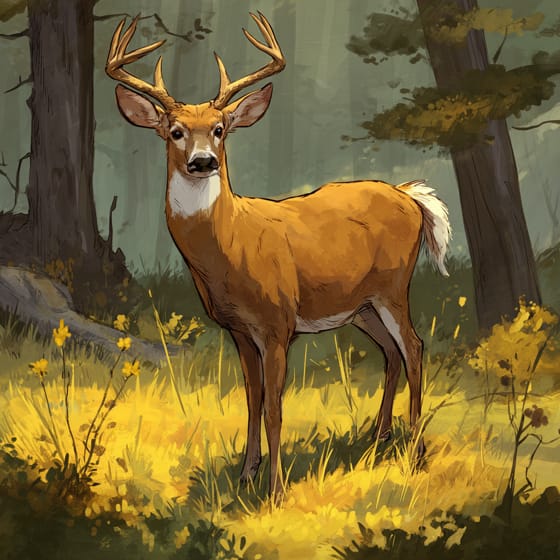
Odocoileus virginianus
Sometimes browses on leafcup leaves and young stems.
Crocidophora serratissimalis
Its larvae tunnel into the plant's stems to feed.
Flowering plants are any plants that produce flowers as part of their reproductive cycle.
Shade tolerant plants are adapted to grow and thrive in areas with low light levels, requiring less direct sunlight.
Summer blooming plants produce their flowers during the summer season, often providing vibrant color when many other plants have finished.
Broadleaf trees are angiosperms characterized by flat, wide leaves that are typically shed annually in temperate climates.

Medicinal plants possess chemical compounds that can be used for therapeutic purposes to treat illnesses or maintain health.

Edible plants are those parts of a plant that are considered safe for human consumption.

Describes plants that are particularly attractive and beneficial to a wide range of pollinating organisms.

Forest habitats are terrestrial environments dominated by dense tree cover, supporting a high diversity of plant and animal life.
No aliases listed yet.
Danger
1/5 · Very low
Always look but don't touch plants unless you know they are safe.
The easiest way to identify leafcup is to use the Snappit nature identifier app.
50-150 cm
30-60 cm
0.5-1.5 cm
Late summer to fall
No
None
Perennial
Zoom in to split clusters and explore where this object has been snapped.

Wisconsin, US
You might spot Turkey, White-Tailed Deer, and Dame's Rocket.
View guide →

Wisconsin, US
You might spot American Cancer-Root and Eastern White Pine.
View guide →

Tennessee, US
You might spot Black Maidenhair Fern and Great Blue Heron.
View guide →
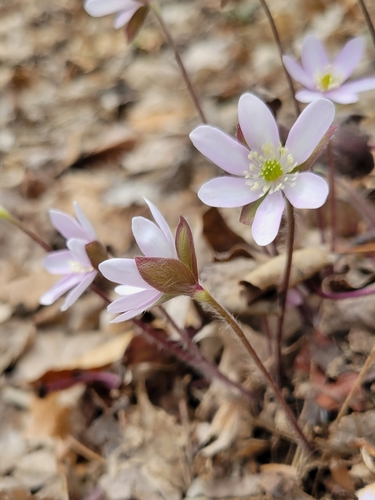
Tennessee, US
You might spot Sharp-Lobed Hepatica and Northern Slimy Salamander.
View guide →

Kentucky, US
You might spot Silvery Checkerspot, Huron Skipper, and Common Milkweed.
View guide →

Ohio, US
You might spot Cassin's 17-Year Cicada and White-Tailed Deer.
View guide →
Take the discovery with you
Snap it with Snappit to identify it, learn what makes it special, and add the discovery to your collection.







.jpg&width=800)


_001.jpg&width=800)


