





leather oak
Quercus durata
The leather oak is a strong tree with thick, leathery leaves. It grows in warm, dry places and provides shade and homes for many animals.
Habitat: Mountain regions
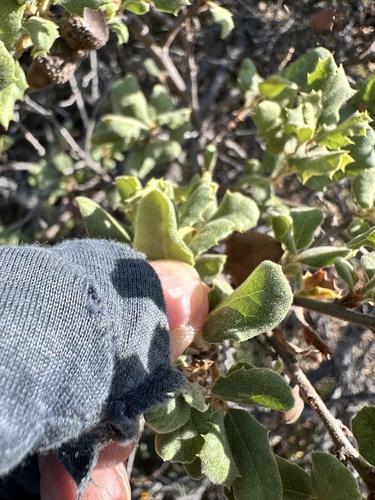
The leather oak is a small tree or large shrub with distinctively leathery, dark green leaves that are often smooth and stiff to the touch. Its bark is generally grayish and fissured, while its small acorns are partially enclosed by a fuzzy, scaled cap.
Category
PlantsRarity
Common
Danger
1/5 · Very low
Snaps
1
Its scientific name, 'durata', means 'enduring' because of its tough leaves!
Some leather oaks can live for hundreds of years, watching history unfold!
The fuzzy caps on its acorns are like tiny hats for protection!
This oak often grows like a big bush, not a tall tree!
Its acorns are a vital food source for wildlife, ensuring the spread of its seeds to new locations.
Thick, furrowed bark protects the leather oak's inner tissues, helping it survive some wildfires.

Sciurus griseus
acorns provide crucial winter energy

Aphelocoma californica
disperse seeds by burying them
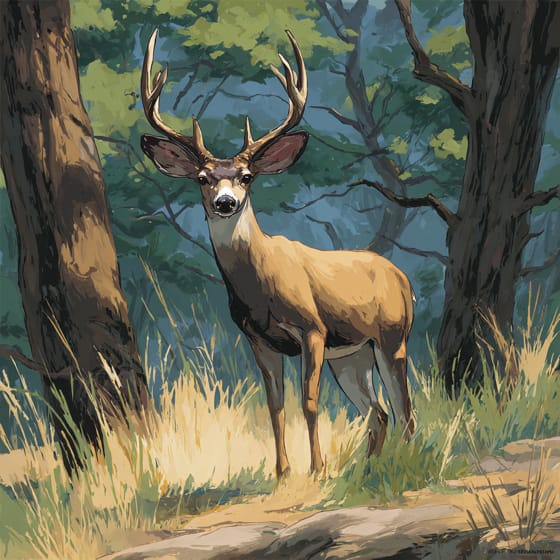
Odocoileus hemionus
deer browse its leaves and acorns
Callirhytis quercusduratae
forms distinctive galls on leaves
Deciduous plants periodically shed all their leaves, typically during autumn or dry seasons.
Broadleaf trees are angiosperms characterized by flat, wide leaves that are typically shed annually in temperate climates.
Nut bearing plants produce hard-shelled fruits, commonly known as nuts, which contain a single seed and are a valuable food source.
Drought-tolerant plants can survive and flourish in conditions with limited water availability.

Edible plants are those parts of a plant that are considered safe for human consumption.

Timber refers to wood that has been prepared for use in building and carpentry.

This habitat trait identifies species found in mountainous regions, characterized by high elevation, steep slopes, and varying climate zones.

This trait characterizes organisms with an exceptionally long lifespan compared to others of their kind.

Describes a species whose presence and role have a disproportionately large effect on its environment.
No aliases listed yet.
Danger
1/5 · Very low
Stay on paths when exploring near trees to avoid tripping.
The easiest way to identify leather oak is to use the Snappit nature identifier app.
100-500 cm
100-400 cm
1-3 cm
Early Spring
No
Mild
Perennial
Zoom in to split clusters and explore where this object has been snapped.
Jun 2, 2026
Armstrong Redwoods State Natural ReservePhoto attribution
no rights reserved
License: CC0 1.0 ↗
Image may be shown cropped inside the card frame.
Take the discovery with you
Snap it with Snappit to identify it, learn what makes it special, and add the discovery to your collection.









.jpg&width=800)


_001.jpg&width=800)


