




Lesser hop trefoil
Trifolium dubium
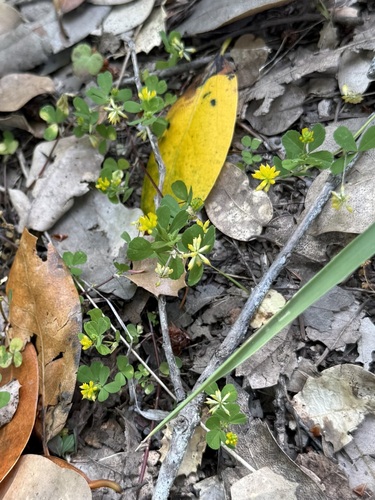
The Lesser hop trefoil is a small, cheerful plant with bright yellow flowers. It grows close to the ground and is often found in grassy areas, making it a lovely sight for little explorers!
Habitat: Grasslands
The Lesser hop trefoil is a small, low-growing plant with trifoliate leaves, often marked with a pale V. It has dense clusters of tiny, bright yellow, pea-like flowers that darken to brown as they mature.
Category
PlantsRarity
Common
Danger
1/5 · Very low
Snaps
7
Its small yellow flowers magically turn brown and papery as they get older!
Many cultures call it a "shamrock", which is a famous lucky symbol!
This tiny plant helps make soil super healthy for other plants to grow.
You can tell it apart because its middle leaf has a little stalk!
Lesser hop trefoil can team up with soil bacteria to 'fix' nitrogen, making the soil richer for other plants.
Lesser hop trefoil has many tiny seeds that can stay dormant in the soil for years, waiting to sprout.
Lesser hop trefoil can quickly establish itself in disturbed areas, covering bare ground with its growth.
Lesser hop trefoil can create its own seeds even without insect visitors, ensuring new plants grow.
Apis mellifera
visits flowers for nectar and pollen
Bombus terrestris
important pollinator of its flowers
Rhizobium leguminosarum
helps fix nitrogen in the soil
Ovis aries
a common forage plant for grazing animals

Bos taurus
part of the diet for livestock in pastures
Flowering plants are any plants that produce flowers as part of their reproductive cycle.
Describes organisms capable of converting atmospheric nitrogen into compounds usable by plants.
Grass-like plants are herbaceous plants that visually resemble true grasses, typically having long, narrow leaves.
Edible plants are those parts of a plant that are considered safe for human consumption.

Grassland habitats are terrestrial biomes dominated by grasses and herbaceous plants, supporting a variety of grazing animals.

Describes plants that are particularly attractive and beneficial to a wide range of pollinating organisms.
No aliases listed yet.
Danger
1/5 · Very low
Always look but don't pick plants unless an adult says it's okay.
The easiest way to identify Lesser hop trefoil is to use the Snappit nature identifier app.
10-30 cm
10-40 cm
0.5-0.8 cm
Late spring to early autumn
Yes
None
Annual
Zoom in to split clusters and explore where this object has been snapped.
May 30, 2026
Hakone GardensPhoto attribution
(c) lazarus, some rights reserved (CC BY)
License: CC BY 4.0 ↗
Image may be shown cropped inside the card frame.

California, US
You might spot Western Fence Lizard and Pacific Poison Oak.
View guide →

Alabama, US
You might spot Black-Necked Stilt and Eastern Bluebird.
View guide →

Wyoming, US
You might spot American Bison and Common Raven.
View guide →

Washington, US
You might spot Ochre Sea Star, Painted Anemone, and Aggregating Anemone.
View guide →

Rhode Island, US
You might spot Common Eastern Bumble Bee and Rugosa Rose.
View guide →

Massachusetts, US
You might spot Common Eastern Bumble Bee, Huron Skipper, and Song Sparrow.
View guide →
Take the discovery with you
Snap it with Snappit to identify it, learn what makes it special, and add the discovery to your collection.








.jpg&width=800)



_001.jpg&width=800)



