





Lindheimer's Doveweed
Croton lindheimeri
Lindheimer's Doveweed is a lovely plant with soft, green leaves and tiny white flowers. It grows close to the ground and can be found in sunny places, making it a cheerful addition to gardens and fields.
Habitat: Grasslands
The Lindheimer's Doveweed is a low-growing plant with distinctive silvery-green, star-shaped fuzzy leaves. It produces very small, inconspicuous greenish-yellow flowers in slender spikes. Its overall appearance is soft and muted, often forming dense clumps.
Category
PlantsRarity
Common
Danger
1/5 · Very low
Snaps
Be the first to snap!
"Doveweed" gets its name because doves absolutely love to eat its seeds!
Crushing a leaf releases a surprisingly faint, slightly spicy scent!
Its fuzzy leaves make it look like it's covered in tiny, sparkly stars!
This plant can grow super well in hot, sunny spots where others struggle!
Lindheimer's Doveweed has a dense covering of star-shaped hairs that reflect sunlight and trap moisture, helping it survive dry, sunny environments.
This plant can rapidly grow from seed after rains, allowing it to quickly colonize disturbed areas and complete its life cycle.
Lindheimer's Doveweed has a fibrous root system that helps anchor it in loose soils and efficiently absorb water from the upper layers.
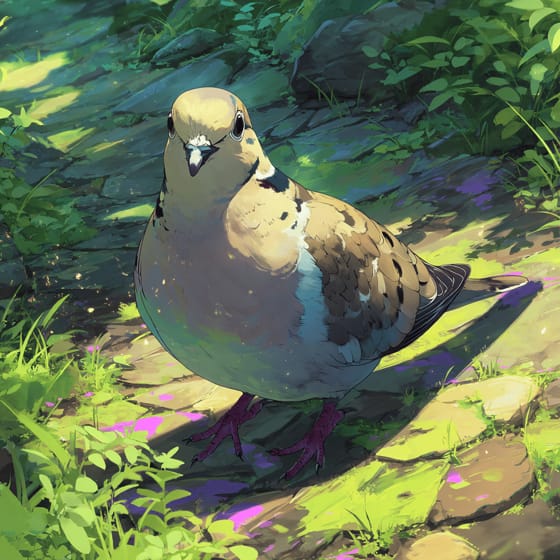
Zenaida macroura
Its seeds are a vital food source.

Colinus virginianus
Often consumes its small, nutritious seeds.
Callipepla squamata
Forages for fallen seeds in arid regions.
Spiza americana
Eats seeds, especially during migration.
Deciduous plants periodically shed all their leaves, typically during autumn or dry seasons.
Flowering plants are any plants that produce flowers as part of their reproductive cycle.
A shrub is a woody plant smaller than a tree, typically with multiple stems branching from or near the ground.
Summer blooming plants produce their flowers during the summer season, often providing vibrant color when many other plants have finished.

Drought-tolerant plants can survive and flourish in conditions with limited water availability.

Grassland habitats are terrestrial biomes dominated by grasses and herbaceous plants, supporting a variety of grazing animals.

Describes plants that are particularly attractive and beneficial to a wide range of pollinating organisms.
No aliases listed yet.
Danger
1/5 · Very low
Always look but don't touch plants without asking an adult first.
The easiest way to identify Lindheimer's Doveweed is to use the Snappit nature identifier app.
30-90 cm
30-90 cm
0.2-0.5 cm
Summer to fall
No
Mild
Annual
Zoom in to split clusters and explore where this object has been snapped.
Recent snaps will appear here as new observations are added.
Take the discovery with you
Snap it with Snappit to identify it, learn what makes it special, and add the discovery to your collection.







.jpg&width=800)



_001.jpg&width=800)




