





Little Brown Jugs
Asarum arifolium
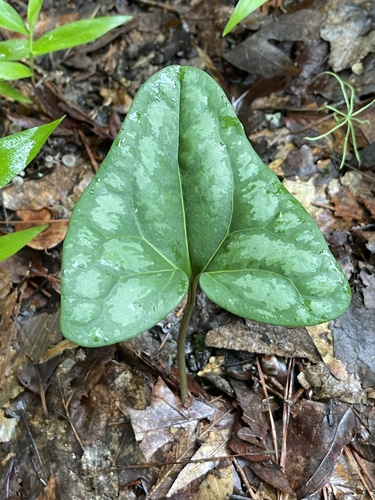
Little Brown Jugs are unique plants with heart-shaped leaves and pretty, brownish flowers. They grow close to the ground and like shady spots in the forest, making them special little treasures to find!
Habitat: Forests
The Little Brown Jugs has glossy, dark green, heart-shaped leaves often mottled with silver or lighter green. Its unique brownish-purple, jug-shaped flowers bloom at ground level, often hidden beneath the leaves.
Category
PlantsRarity
Common
Danger
1/5 · Very low
Snaps
8
Even though it's called "wild ginger," it does not taste like ginger and should not be eaten!
Its tiny flowers grow right on the ground, often hidden beneath its heart-shaped leaves!
The unique shape of its flower traps small insects inside, ensuring they help with pollination!
This plant's seeds have a special fatty cap that ants love, helping the plant spread far!
Little Brown Jugs has flowers hidden at ground level that attract tiny crawling insects for pollination.
Little Brown Jugs has evergreen leaves that help it start making food even before other plants.
Little Brown Jugs can spread widely using underground stems to create new plants.
Mycetophila fungorum
attracted to low-lying flowers
Formica rufa
carries seeds for dispersal
Rhizophagus irregularis
helps absorb nutrients from soil
Deroceras reticulatum
slugs occasionally nibble its leaves
Aromatic plants produce and emit fragrant volatile organic compounds, often for defense or to attract pollinators.
Bell-shaped flowers possess petals fused or arranged to form a cup-like or campanulate structure resembling a bell.
Deciduous plants periodically shed all their leaves, typically during autumn or dry seasons.
Flowering plants are any plants that produce flowers as part of their reproductive cycle.

Shade tolerant plants are adapted to grow and thrive in areas with low light levels, requiring less direct sunlight.

Medicinal plants possess chemical compounds that can be used for therapeutic purposes to treat illnesses or maintain health.

Describes plants that are particularly attractive and beneficial to a wide range of pollinating organisms.

Forest habitats are terrestrial environments dominated by dense tree cover, supporting a high diversity of plant and animal life.
No aliases listed yet.
Danger
1/5 · Very low
Don't eat any plants unless a grown-up says it's safe!
The easiest way to identify Little Brown Jugs is to use the Snappit nature identifier app.
10-15 cm
15-60 cm
2-3 cm
Spring
No
Mild
Perennial
Zoom in to split clusters and explore where this object has been snapped.
May 25, 2026
Callaway GardensPhoto attribution
no rights reserved
License: CC0 1.0 ↗
Image may be shown cropped inside the card frame.

Alabama, US
You might spot Anole, Eastern Gray Squirrel, and Asian Lady Beetle.
View guide →

Alabama, US
You might spot Anole, Eastern Gray Squirrel, and Asian Lady Beetle.
View guide →

Georgia, US
You might spot Eastern Gray Squirrel, Domestic Cat, and American Robin.
View guide →
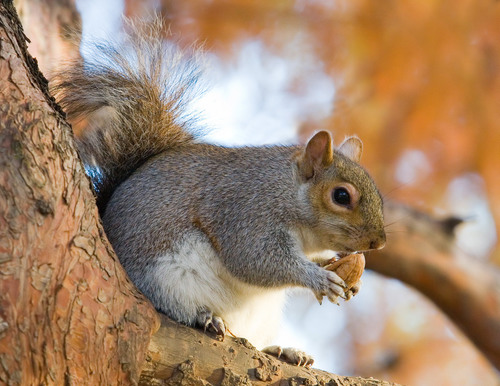
Georgia, US
You might spot Eastern Gray Squirrel, Domestic Cat, and American Robin.
View guide →

Alabama, US
You might spot Anole, Eastern Gray Squirrel, and Asian Lady Beetle.
View guide →

Georgia, US
You might spot Eastern Gray Squirrel, Domestic Cat, and Anole.
View guide →
Take the discovery with you
Snap it with Snappit to identify it, learn what makes it special, and add the discovery to your collection.






.jpg&width=800)



_001.jpg&width=800)



