





Long-billed Dowitcher
Limnodromus scolopaceus
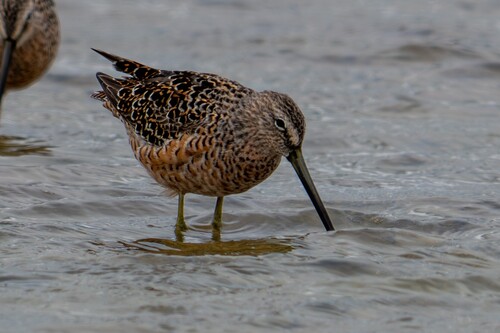
The Long-billed Dowitcher is a shorebird with a long, straight bill. It loves to wade in shallow waters and uses its bill to find tasty insects and small crustaceans in the mud.
Habitat: Wetlands
The Long-billed Dowitcher has a stocky body with a very long, straight bill. During breeding, it shows brick-red underparts and barred flanks, while in winter it's a drab grey-brown. Its most distinguishing feature is its exceptionally long bill, which helps it probe deep for food.
Category
BirdsRarity
Common
Danger
1/5 · Very low
Snaps
5
Dowitchers often forage with their heads fully submerged under water.
Sometimes, hundreds of these birds gather in huge, noisy flocks!
Their bill tip has special touch sensors to find food in muddy water!
They migrate all the way from Arctic tundras to warm southern coasts.
Long-billed Dowitcher has a super sensitive bill tip that helps them feel tiny creatures hidden deep in the mud.
Long-billed Dowitcher can rapidly probe its long bill into the mud, like a sewing machine, to find food quickly.
Long-billed Dowitcher can fly thousands of kilometers between breeding and wintering grounds, navigating vast distances.
They probe muddy shallows for a feast of small invertebrates hidden beneath the surface.
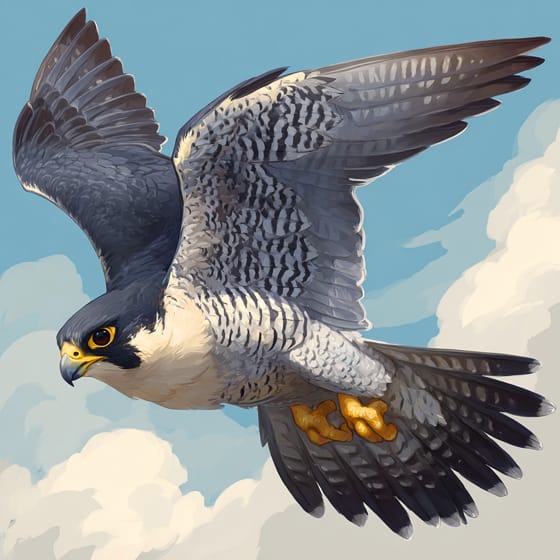
Falco peregrinus
Adult dowitchers are swift prey for this aerial hunter.

Canis latrans
Ground predators sometimes target nesting adults or chicks.
Chironomus plumosus
Feeds on larvae of aquatic insects found in mud.
Capitella capitata
Probes for marine worms in soft sediments and mudflats.
Feathered describes animals, primarily birds, possessing a covering of feathers.
Social animals live in organized groups, cooperating for survival benefits such as foraging, defense, and raising offspring.
Camouflaged describes organisms that possess coloring or patterns that allow them to blend into their environment.
Filter feeders obtain nutrients by straining suspended food particles and small organisms from water.

This trait identifies organisms whose diet primarily consists of insects and other small invertebrates.

This habitat trait identifies species found in wetlands, which are areas of land saturated with water, either permanently or seasonally, including marshes, swamps, and bogs.

Coastal habitats are dynamic environments located along the interface between land and sea, influenced by tides, waves, and saltwater.

Migratory animals undertake seasonal movements from one region to another, typically in response to changes in climate or food availability.
No aliases listed yet.
Danger
1/5 · Very low
Always watch birds from a distance and be quiet so you don't scare them away.
The easiest way to identify Long-billed Dowitcher is to use the Snappit nature identifier app.
26-30 cm
46-52 cm
0.08-0.155 kg
10-15 years
70 km/h
They probe muddy shallows for a feast of small invertebrates hidden beneath the surface.
Wetlands
Zoom in to split clusters and explore where this object has been snapped.
Apr 19, 2025
Crowley Historic DistrictPhoto attribution
(c) Brandon Johnson, some rights reserved (CC BY)
License: CC BY 4.0 ↗
Image may be shown cropped inside the card frame.

California, US
You might spot American Avocet, Great Egret, and Snowy Egret.
View guide →

California, US
You might spot Largemouth Bass and Birdcage Evening Primrose.
View guide →

California, US
You might spot Snowy Egret, Great Blue Heron, and Western Gull.
View guide →

Louisiana, US
You might spot Pectoral Sandpiper, Sprague's Pipit, and Anole.
View guide →

Nebraska, US
You might spot Purple Martin, Prairie Rattlesnake, and Lesser Scaup.
View guide →
Take the discovery with you
Snap it with Snappit to identify it, learn what makes it special, and add the discovery to your collection.




.jpg&width=800)









