Sweetgum
Liquidambar styraciflua
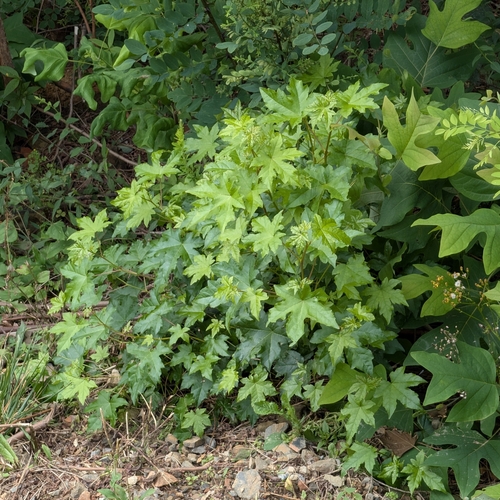
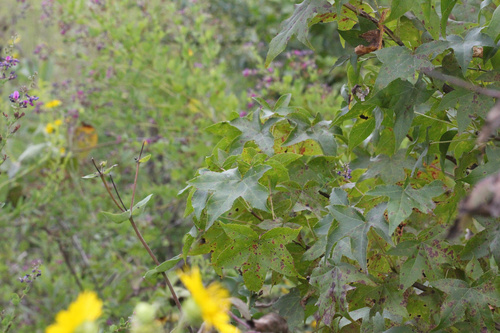
Sweetgum trees have star-shaped leaves that turn beautiful shades of red, orange, and yellow in the fall. They produce spiky seed balls that are fun to collect and explore.
Habitat: Forests
The Sweetgum has distinct star-shaped leaves, typically with five to seven lobes, that burst into brilliant shades of red, orange, and purple in autumn. It produces unique, round, spiky seed balls, giving it an easily recognizable texture and form.
Category
TreesRarity
Common
Danger
1/5 · Very low
Snaps
59
Ancient Sweetgum fossils reveal it once grew in Europe, showing its long history!
Its strong wood is prized for furniture, cabinets, and even musical instruments!
Sweetgum has a deeply furrowed, grey-brown bark on older trees, unique in its texture.
The tree's scientific name means 'liquid amber,' referencing its valuable, aromatic resin.
Sweetgum has a sticky, aromatic resin that helps it seal wounds and protect against pests and diseases.
Its woody, spiky seed balls protect developing seeds and aid in dispersal when animals move them away.
Sweetgum can turn its leaves stunning shades of red and purple, signaling nutrients are conserved before winter.
Deciduous plants periodically shed all their leaves, typically during autumn or dry seasons.
Shade tolerant plants are adapted to grow and thrive in areas with low light levels, requiring less direct sunlight.
Broadleaf trees are angiosperms characterized by flat, wide leaves that are typically shed annually in temperate climates.
Fruit-bearing plants produce fruits, which are the mature ovaries of flowering plants containing seeds.

Medicinal plants possess chemical compounds that can be used for therapeutic purposes to treat illnesses or maintain health.

Fall color refers to the seasonal change in foliage pigmentation, primarily in deciduous plants, displaying vibrant hues.

This trait signifies organisms belonging to a very old evolutionary group with ancestors dating back millions of years.

Forest habitats are terrestrial environments dominated by dense tree cover, supporting a high diversity of plant and animal life.
Danger
1/5 · Very low
Enjoy the beauty of sweetgum trees from a safe distance and avoid touching or eating the seed balls.
The easiest way to identify Sweetgum is to use the Snappit nature identifier app.
18-45 m
12-21 m
No
60-150 cm
150-400 years
Forests
Spiky gumball-like capsule
Zoom in to split clusters and explore where this object has been snapped.
May 31, 2026
Arrowmont School of Arts and CraftsPhoto attribution
(c) Nick Kleinschmidt, some rights reserved (CC BY)
License: CC BY 4.0 ↗
Image may be shown cropped inside the card frame.
Sep 5, 2024
Harrell Prairie Botanical AreaPhoto attribution
(c) Samuel A Schmid, PhD, PWS, some rights reserved (CC BY)
License: CC BY 4.0 ↗
Image may be shown cropped inside the card frame.

New Jersey, US
You might spot Garlic Mustard, Sensitive Fern, and Common Mugwort.
View guide →

Tennessee, US
You might spot Black Bear, Yellow Wakerobin, and Pipevine Swallowtail.
View guide →

South Carolina, US
You might spot American Alligator, Anole, and Great Blue Heron.
View guide →
Alabama, US
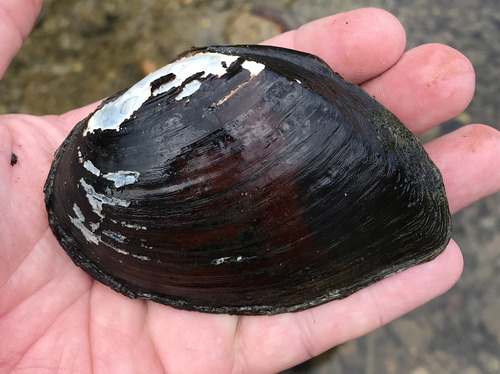
You might spot Elephantear, Three-Ridge Mussel, and Rough Fatmucket.
View guide →

Arkansas, US
You might spot Widow's-Cross, Yucca Giant-Skipper, and Outis Skipper.
View guide →

US
You might spot Wharf Louse, Osprey, and Ruddy Turnstone.
View guide →
Take the discovery with you
Snap it with Snappit to identify it, learn what makes it special, and add the discovery to your collection.