.jpeg&width=800)





Mainland Clouded Leopard
neofelis nebulosa
The Mainland Clouded Leopard is a beautiful big cat with large, cloud-like spots on its fur. It loves to climb trees and is a great hunter in the forests of Southeast Asia!
Habitat: Tropical and subtropical forests in Southeast Asia.
The Mainland Clouded Leopard has a gorgeous yellowish-brown to greyish coat covered in distinctive black-bordered, cloud-like markings. It possesses a very long, thick tail and relatively short, powerful legs. Its unique markings and stocky build differentiate it from other forest cats.
Category
MammalsRarity
Common
Danger
3/5 · Moderate
Snaps
Be the first to snap!
Despite their name, they are not actually "true" leopards, but a distinct ancient cat species.
Their "cloud" spots are unique to each cat, like a fingerprint, helping scientists tell them apart!
Their long canine teeth are bigger proportionally than even a tiger's, perfect for piercing prey!
They can hang upside down from branches using just their back paws, like a giant jungle gymnast!
Mainland Clouded Leopards can rotate their ankles 180 degrees, allowing them to climb down trees headfirst like a squirrel.
Mainland Clouded Leopards have a tail almost as long as their body, which acts as a perfect counterweight for incredible agility in trees.
Mainland Clouded Leopards have the longest canine teeth relative to their body size of any living wild cat, helping them secure prey.
A silent hunter, it pounces on small mammals and birds in the forest canopy and on the ground.

Macaca mulatta
Preys on these monkeys in the forest canopy.
Axis porcinus
Hunts smaller deer found in their forest habitat.
.jpg&width=800)
Manis pentadactyla
Preys on pangolins on the forest floor.
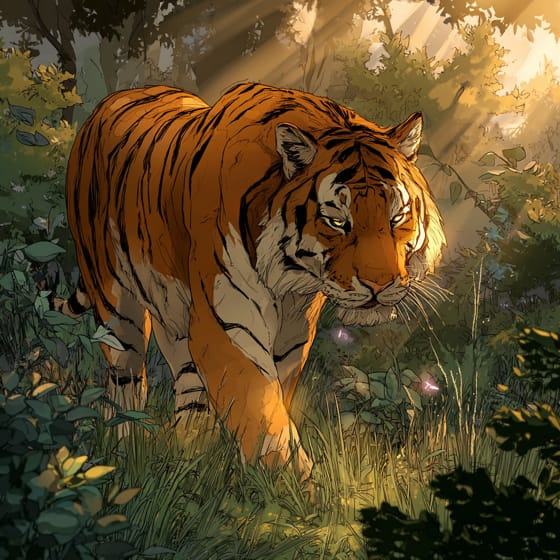
Panthera tigris
Adult tigers may occasionally prey on juvenile clouded leopards.
Marked with spots or patches of a different color.
Solitary animals live alone for most of their lives, only interacting with others for mating or parental care.
Arboreal animals live primarily in trees, utilizing them for shelter, food, and protection from predators.
This trait identifies organisms whose diet consists entirely or primarily of animal tissue.

Nocturnal animals are primarily active during the nighttime hours, typically resting or sleeping during the day.
Danger
3/5 · Moderate
No special safety notes yet.
The easiest way to identify Mainland Clouded Leopard is to use the Snappit nature identifier app.
60-110 cm
11-23 kg
10-18 years
50 km/h
A silent hunter, it pounces on small mammals and birds in the forest canopy and on the ground.
Tropical and subtropical forests in Southeast Asia.
Ambush
Zoom in to split clusters and explore where this object has been snapped.
Recent snaps will appear here as new observations are added.

England, UK
You might spot White Rhinoceros, Giraffes, and Ring-Tailed Lemur.
View guide →

District of Columbia, US
You might spot Giant Panda, Red Panda, and Asian Elephant.
View guide →
Texas, US
You might spot Giraffes, Tiger, and Hippopotamus.
View guide →
Pennsylvania, US
You might spot Tiger, Red Panda, and Komodo Dragon.
View guide →

Washington, US
You might spot Tiger, Walrus, and Polar Bear.
View guide →

Utah, US
You might spot Great White Shark and Gentoo Penguin.
View guide →
Take the discovery with you
Snap it with Snappit to identify it, learn what makes it special, and add the discovery to your collection.




.jpg&width=800)




.JPG&width=800)



.jpg&width=800)
