





Melissa Blue
Plebejus melissa
The Melissa Blue is a tiny butterfly with beautiful blue wings. It flutters around flowers and loves sunny days, making it a delightful sight in gardens and meadows.
Habitat: Grasslands
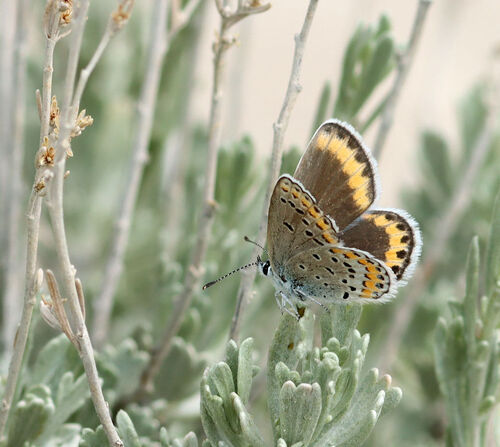
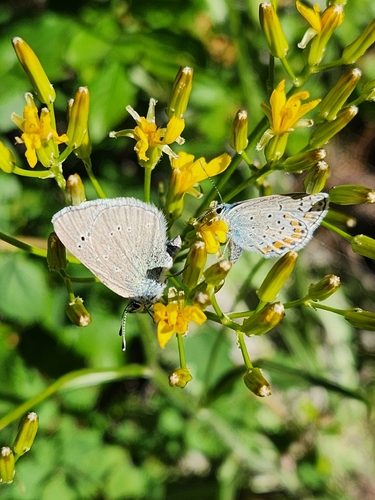
The Melissa Blue has iridescent sky-blue upperwings with a thin black border if it's a male, while females are often brownish-blue with orange spots. Its underside is grayish-white, marked with black spots and a distinct row of orange spots along the hindwing.
Category
InsectsRarity
Common
Danger
1/5 · Very low
Snaps
3
Adults taste with their feet, sensing if a flower is yummy for nectar!
Many females surprisingly show off beautiful orange and brown markings, not just blue!
Melissa Blue caterpillars look like tiny green slugs, not fuzzy worms!
They can complete two or three full life cycles (generations) in a single summer!
Melissa Blue caterpillars can release sweet liquid to attract ants that protect them from hungry predators.
Melissa Blue has a long, straw-like proboscis that helps them reach delicious nectar deep inside flowers.
Female Melissa Blues can precisely find specific legume plants to lay their eggs on, ensuring their babies have food.
Adult Melissa Blues sip flower nectar, while their caterpillars munch on plant leaves.
Age differences: Larvae eat specific plant leaves, while adults exclusively drink nectar from flowers.

Lupinus sericeus
Caterpillars eat its leaves as their primary food source.
Astragalus mollis
Another important host plant for the hungry Melissa Blue caterpillars.
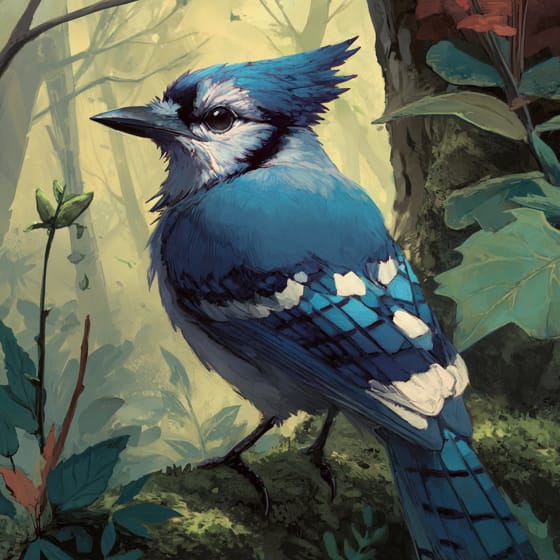
Cyanocitta cristata
A common bird that will prey on adult Melissa Blue butterflies.
Misumena vatia
This spider camouflages on flowers, ambushing visiting butterflies.
Solitary animals live alone for most of their lives, only interacting with others for mating or parental care.
Colorful describes organisms or objects displaying a wide range of bright and distinct colors.
Grassland habitats are terrestrial biomes dominated by grasses and herbaceous plants, supporting a variety of grazing animals.
This trait characterizes organisms whose diet consists entirely or primarily of plant material.

Describes plants that are particularly attractive and beneficial to a wide range of pollinating organisms.

Diurnal animals are primarily active during daylight hours, typically resting or sleeping at night.

Pertaining to species that are significantly smaller than typical or average for their kind.

Describes organisms that transfer pollen, enabling the fertilization and reproduction of plants.
No aliases listed yet.
Danger
1/5 · Very low
Be gentle and quiet around butterflies so you don't scare them away.
The easiest way to identify Melissa Blue is to use the Snappit nature identifier app.
25-38 mm
15-20 mm
7-14 days
15 km/h
Adult Melissa Blues sip flower nectar, while their caterpillars munch on plant leaves.
Grasslands
Foraging
Zoom in to split clusters and explore where this object has been snapped.
May 14, 2026
Toadstool Geologic ParkPhoto attribution
(c) hr_dragonfly, some rights reserved (CC BY)
License: CC BY 4.0 ↗
Image may be shown cropped inside the card frame.
Jul 1, 2023
Lehman Orchard and AqueductPhoto attribution
(c) Cristhian Mace, some rights reserved (CC BY)
License: CC BY 4.0 ↗
Image may be shown cropped inside the card frame.

Nebraska, US
You might spot Lark Sparrow, Rock Wren, and Scarlet Globemallow.
View guide →

Nevada, US
You might spot Plains Pricklypear and Western Fence Lizard.
View guide →

Nebraska, US
You might spot Great Plains Yucca, Plains Pricklypear, and Winterfat.
View guide →
Take the discovery with you
Snap it with Snappit to identify it, learn what makes it special, and add the discovery to your collection.






.jpg&width=800)



