





Menzies' Baby Blue Eyes
nemophila menziesii
Menzies' Baby Blue Eyes is a beautiful flower with bright blue petals that look like tiny eyes! It blooms in the spring and attracts butterflies and bees.
Habitat: Menzies' Baby Blue Eyes typically grows in open grasslands and along roadsides.
The Menzies' Baby Blue Eyes is a low-growing annual wildflower known for its cup-shaped, sky-blue flowers. Each delicate blossom often has a striking white center, sometimes speckled with dark dots, making it visually distinct.
Category
PlantsRarity
Common
Danger
0/5 · No known danger
Snaps
4
Its delicate flowers look like tiny, sky-blue cups!
Its scientific name means 'love of groves' or 'woodland-loving'.
Some people say their petals feel like soft satin!
This plant can carpet fields with its beautiful blue blossoms!
Menzies' Baby Blue Eyes can quickly cover ground and self-seed abundantly, helping it spread and create beautiful carpets of blue.
Menzies' Baby Blue Eyes has vibrant blue petals that attract buzzing bees, ensuring its pollen is spread far and wide.
Menzies' Baby Blue Eyes can grow low to the ground, which helps it capture precious moisture and sunlight in open areas.
Apis mellifera
Collects nectar and pollen from flowers.
Bombus vosnesenskii
Visits flowers for nectar and pollen.
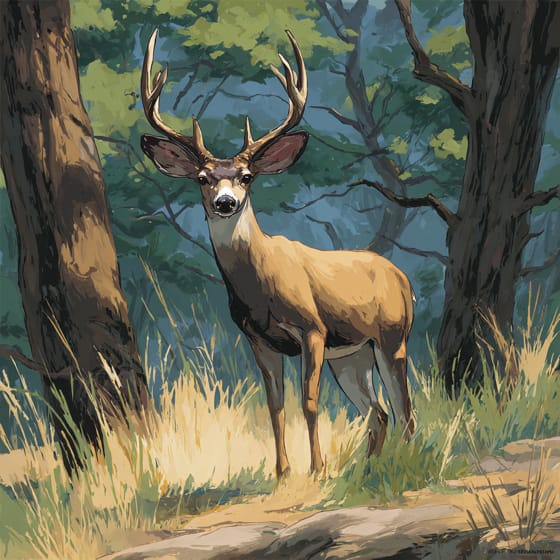
Odocoileus hemionus
Deer browse on tender leaves when available.
Colorful describes organisms or objects displaying a wide range of bright and distinct colors.
Grassland habitats are terrestrial biomes dominated by grasses and herbaceous plants, supporting a variety of grazing animals.
This trait characterizes organisms whose diet consists entirely or primarily of plant material.
Diurnal animals are primarily active during daylight hours, typically resting or sleeping at night.

Describes organisms that transfer pollen, enabling the fertilization and reproduction of plants.
Danger
0/5 · No known danger
No special safety notes yet.
The easiest way to identify Menzies' Baby Blue Eyes is to use the Snappit nature identifier app.
15-30 cm
15-30 cm
2-4 cm
Spring to early summer
No
None
Annual
Zoom in to split clusters and explore where this object has been snapped.

California, US
You might spot Gray Pine, Gambel Oak, and Caterpillar Scorpionweed.
View guide →

California, US
You might spot Western Redbud and Harlequin Lupine.
View guide →

Oregon, US
You might spot Great Camas, Columbian Larkspur, and Osoberry.
View guide →

Washington, US
You might spot Canada Goose, Daisy, and Duck.
View guide →
California, US
You might spot African Lion, Tiger, and Leopard.
View guide →
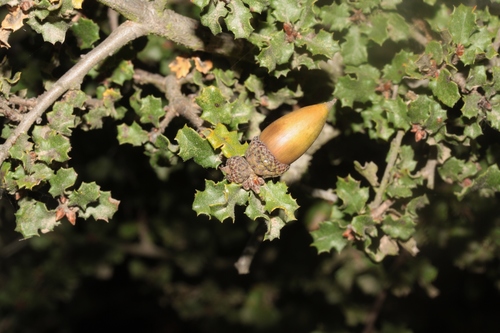
California, US
You might spot Nuttall's Scrub Oak and House Finch.
View guide →
Take the discovery with you
Snap it with Snappit to identify it, learn what makes it special, and add the discovery to your collection.









.jpg&width=800)



_001.jpg&width=800)




