





moth mullein
Verbascum blattaria
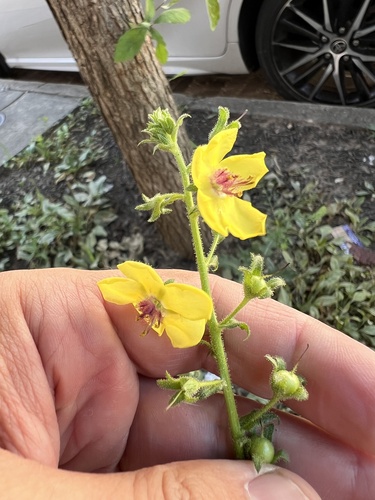
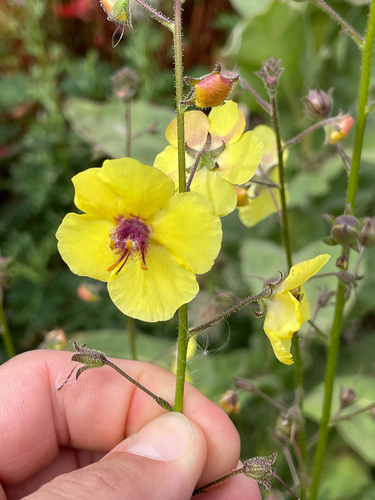
Moth mullein is a tall plant with fuzzy leaves and bright yellow flowers. It loves to grow in sunny places and can be found in gardens and along roadsides.
Habitat: Urban areas
The moth mullein is a tall, slender plant featuring a single, upright stem. It has bright yellow or sometimes white flowers, each with a distinctive purple-orange center of fuzzy stamens. Its leaves are typically flat at the base and sparse along the stem.
Category
PlantsRarity
Common
Danger
1/5 · Very low
Snaps
44
Ancient Romans sometimes used fuzzy mullein leaves as makeshift wicks for oil lamps!
Each moth mullein plant can produce thousands of tiny, dust-like seeds, spreading far and wide!
Its scientific name, *Verbascum blattaria*, strangely means 'moth-like cockroach plant'!
While often yellow, some varieties of moth mullein surprise us with pure white blossoms!
Moth mullein has bright, open flowers with contrasting colors that act like a beacon, attracting busy bees and other helpful insects.
This plant produces natural compounds like saponins that can make it unappealing or mildly irritating to hungry herbivores, protecting its leaves.
Moth mullein is biennial, spending its first year building strong roots, then bursting with a tall, flower-covered stalk in its second year to reproduce.
Apis mellifera
Visits the vibrant flowers for nectar and pollen.

Bombus impatiens
Helps transfer pollen between the plant's blossoms.
Cucullia verbasci
Its caterpillars feed on the leaves of mullein plants.
Furry describes animals possessing a dense covering of soft hair or fur.
Flowering plants are any plants that produce flowers as part of their reproductive cycle.
Biennial plants complete their life cycle over two growing seasons, typically forming foliage in the first year and flowering/seeding in the second.
Summer blooming plants produce their flowers during the summer season, often providing vibrant color when many other plants have finished.

Fragrant flowers emit a pleasant aroma, often to attract pollinators or for defense.

Night blooming plants open their flowers after sunset, often to attract nocturnal pollinators with their scent and appearance.

Describes plants that are particularly attractive and beneficial to a wide range of pollinating organisms.

This habitat trait indicates species that can coexist with humans in urban and suburban environments, utilizing man-made structures and green spaces.
No aliases listed yet.
Danger
1/5 · Very low
Always look but don't touch plants unless you know they are safe.
The easiest way to identify moth mullein is to use the Snappit nature identifier app.
30-150 cm
20-40 cm
2-3 cm
Summer
No
Mild
Biennial
Zoom in to split clusters and explore where this object has been snapped.
Jun 15, 2026
Herring Run ParkPhoto attribution
no rights reserved
License: CC0 1.0 ↗
Image may be shown cropped inside the card frame.

New Jersey, US
You might spot Garlic Mustard, Sensitive Fern, and Common Mugwort.
View guide →

Michigan, US
You might spot Monarch, Canada Goose, and Eastern Gray Squirrel.
View guide →

Ohio, US
You might spot Spotted Lanternfly and White-Tailed Deer.
View guide →

Michigan, US
You might spot Monarch, Canada Goose, and Eastern Gray Squirrel.
View guide →
Pennsylvania, US
You might spot House Sparrow, Spotted Lanternfly, and American Robin.
View guide →

Indiana, US
You might spot Eastern Fox Squirrel, Duck, and Canada Goose.
View guide →
Take the discovery with you
Snap it with Snappit to identify it, learn what makes it special, and add the discovery to your collection.








.jpg&width=800)


_001.jpg&width=800)




