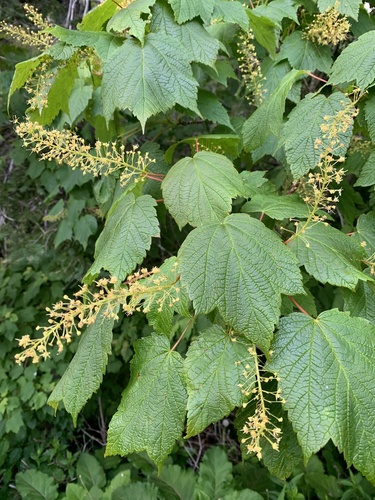


Mountain Maple
acer spicatum
The Mountain Maple (Acer spicatum) is a hardy, deciduous large shrub or small tree native to the cool, moist forests of northeastern North America. Thriving in the shade of dominant canopy trees like birches and hemlocks, it plays a vital ecological role by stabilizing rocky slopes and providing nutritious browse for forest wildlife. This species is particularly distinguished from other maples by its upright flower spikes and brilliant autumn display, where its foliage transitions into vibrant shades of yellow, orange, and red. Often growing in multi-stemmed clumps, it is a key understory component of northern hardwood and boreal transition forests, adapting well to acidic and nutrient-poor soils. Its resilient root system helps prevent erosion on steep terrains, making it a unsung hero of mountainous ecosystems. Its wood, though small, is tough, and its leaves provide critical microhabitats for various canopy-dwelling insects.
Habitat: Found in cool, moist understories of coniferous and mixed hardwood forests, particularly on rocky slopes, ravines, talus banks, and along streams.
Mountain Maple is a multi-stemmed shrub or small tree growing up to 3 to 8 meters tall. Its leaves are opposite, 3-lobed (occasionally with two small basal lobes), and coarsely, unevenly serrated with a wrinkled texture. In early summer, it produces distinctive, upright, spike-like clusters of tiny yellowish-green flowers that point upward, unlike the drooping clusters of most other maples. These flowers develop into paired, winged samaras that turn reddish in mid-summer before drying to a light brown. The bark is thin, smooth, and reddish-brown to grayish, sometimes becoming slightly furrowed or scaly on older stems.
Category
PlantsRarity
Common
Danger
1/5 · Very low
Snaps
2
Indigenous peoples traditionally brewed a decoction of the bark to treat eye irritation and soreness.
The specific epithet 'spicatum' translates to 'spiked,' which perfectly describes its unusual upright flower panicles.
While most maples release their seeds in spring or early summer, Mountain Maple seeds mature in late summer and can remain on the branches throughout winter, feeding hungry birds.
Unlike most maples, it produces erect flower spikes that stand above the foliage, optimizing visibility and access for insect pollinators in dense understories.
It rapidly regenerates by sending up vigorous new shoots from the root crown or trunk after mechanical damage, browsing, or fire.
Its leaves are highly efficient at capturing low-intensity light, allowing it to grow and photosynthesize effectively beneath a closed forest canopy.
As a photoautotrophic plant, the Mountain Maple generates its own energy through photosynthesis, utilizing sunlight, carbon dioxide, water, and essential soil minerals.

Alces alces
Moose rely heavily on Mountain Maple twigs and bark as a critical winter food source.
Castor canadensis
Beavers use the stems for building dams and eat the nutrient-rich inner bark.

Bonasa umbellus
Ruffed Grouse feed on the winter buds and seeds of this maple.
No trait badges are assigned for this object yet.
No aliases listed yet.
Collections for this object will appear here as more themes are added.
Danger
1/5 · Very low
No special safety notes yet.
The easiest way to identify Mountain Maple is to use the Snappit nature identifier app.
300-800 cm
30-60 years
As a photoautotrophic plant, the Mountain Maple generates its own energy through photosynthesis, utilizing sunlight, carbon dioxide, water, and essential soil minerals.
Found in cool, moist understories of coniferous and mixed hardwood forests, particularly on rocky slopes, ravines, talus banks, and along streams.
Zoom in to split clusters and explore where this object has been snapped.

Maine, US
You might spot American Bullfrog and Three-Toothed Cinquefoil.
View guide →

Massachusetts, US
You might spot Eastern Newt and Eastern Red-Backed Salamander.
View guide →
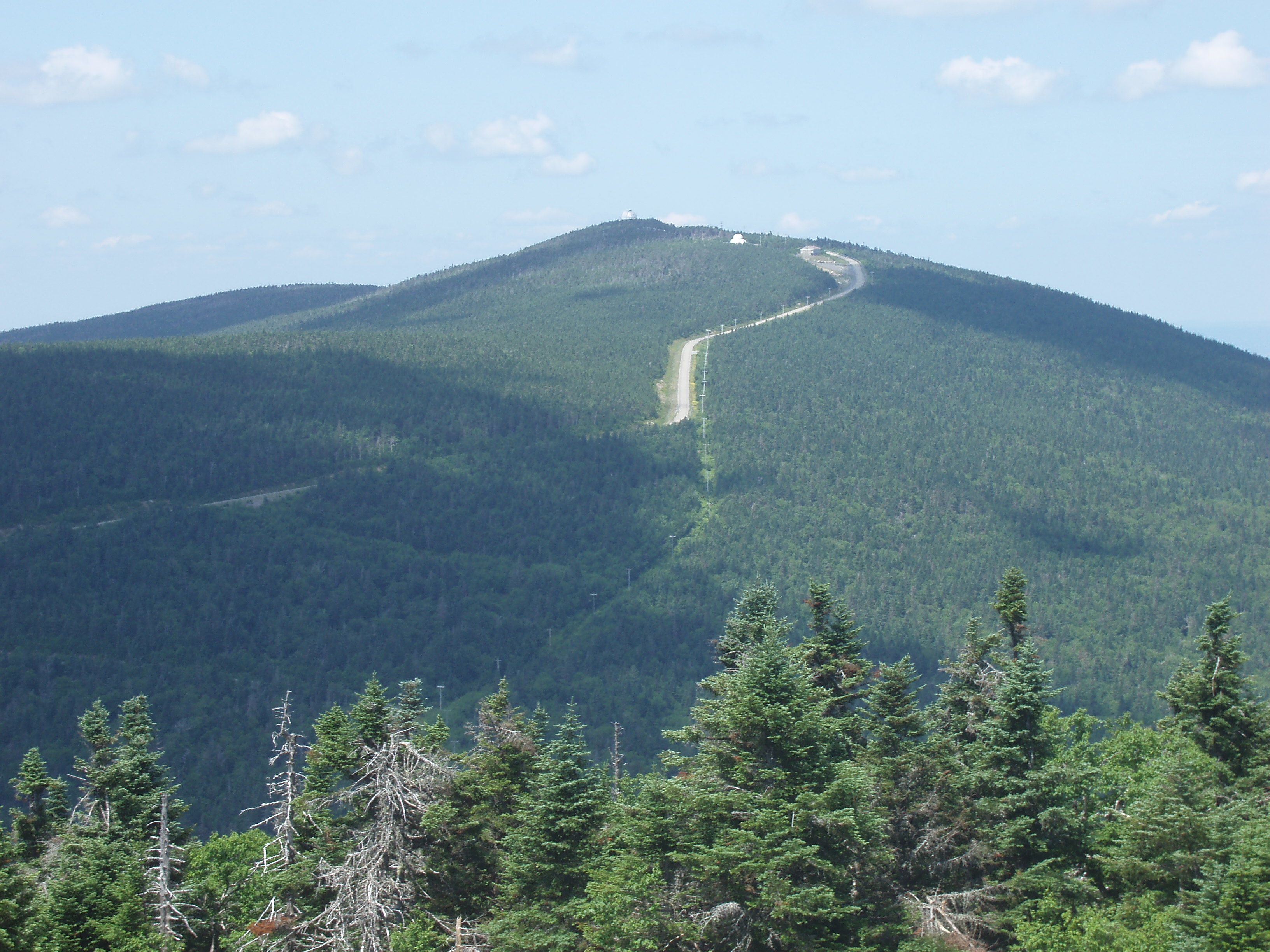
Québec, CA
You might spot Canada Jay, Bluebead Lily, and Hobblebush.
View guide →
Take the discovery with you
Snap it with Snappit to identify it, learn what makes it special, and add the discovery to your collection.











.jpg&width=800)



_001.jpg&width=800)




