





musk thistle
Carduus nutans
Musk thistle is a tall plant with spiky purple flowers that bloom in summer. It can grow in many places and is often found in fields and along roadsides.
Habitat: Grasslands
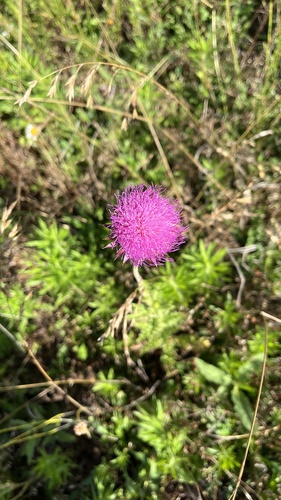
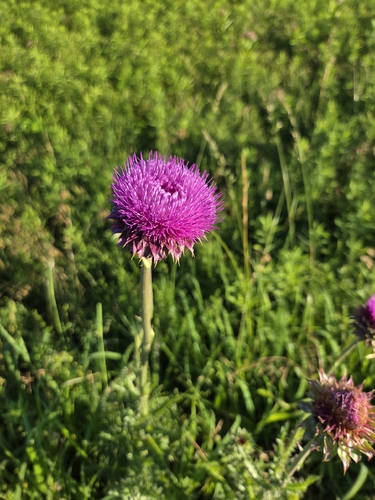
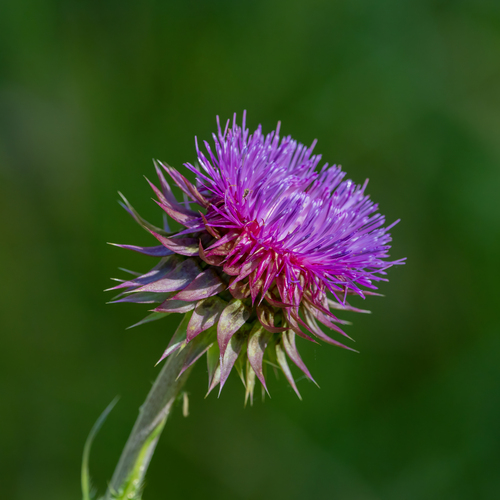
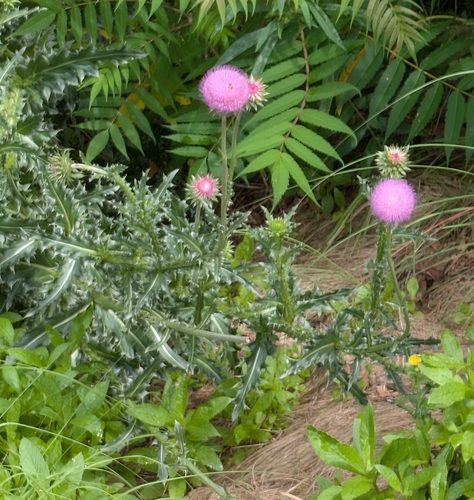
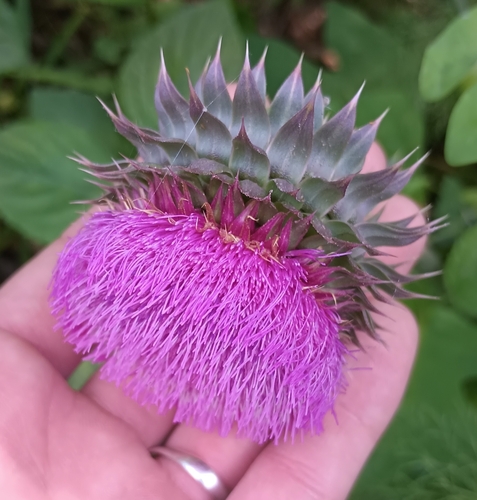
The musk thistle has large, solitary, deep reddish-purple flower heads that distinctly nod or droop. Its broad, deeply lobed leaves are spiny along the edges and feature a prominent whitish midrib, setting it apart from smooth-leafed plants.
Category
PlantsRarity
Common
Danger
2/5 · Low
Snaps
69
Each plant can produce up to 20,000 seeds, helping it spread very quickly!
Its drooping flower heads inspired its common name, 'Nodding Thistle'.
This tough plant is considered an invasive species in many countries around the world.
Tiny insects called weevils are sometimes released to help manage huge groups of musk thistle!
Musk thistle can nod its heavy flower heads, which might help protect its developing seeds from strong winds and harsh rain.
Musk thistle has sharp spines on its leaves and stems that help defend it from hungry animals trying to eat its plant parts.
Musk thistle has fluffy parachute-like structures attached to its seeds, helping them catch the wind and travel far.
Apis mellifera
Gathers nectar and pollen from the flowers.

Bombus impatiens
Visits the large flowers for nectar and pollen.
Rhinocyllus conicus
Larvae feed inside the flower heads, consuming seeds.
Trichosirocalus horridus
Feeds on the root crown and leaves of the young plants.
Flowering plants are any plants that produce flowers as part of their reproductive cycle.
Biennial plants complete their life cycle over two growing seasons, typically forming foliage in the first year and flowering/seeding in the second.
Summer blooming plants produce their flowers during the summer season, often providing vibrant color when many other plants have finished.
Edible plants are those parts of a plant that are considered safe for human consumption.

Grassland habitats are terrestrial biomes dominated by grasses and herbaceous plants, supporting a variety of grazing animals.

Describes plants that are particularly attractive and beneficial to a wide range of pollinating organisms.

Possessing sharp, pointed projections or spines on the body or surface.

Invasive species are non-native organisms that cause harm to the environment, economy, or human health.
Danger
2/5 · Low
Be careful around the spiky leaves and flowers; they can poke you!
The easiest way to identify musk thistle is to use the Snappit nature identifier app.
50-200 cm
30-100 cm
3-7 cm
Late spring to late summer
No
Mild
Biennial
Zoom in to split clusters and explore where this object has been snapped.
Jun 18, 2026
Shaw Nature ReservePhoto attribution
(c) diana schwartz, some rights reserved (CC BY)
License: CC BY 4.0 ↗
Image may be shown cropped inside the card frame.
Jun 15, 2026
Reading Public MuseumPhoto attribution
no rights reserved
License: CC0 1.0 ↗
Image may be shown cropped inside the card frame.
Jun 3, 2026
Murphey Candler ParkPhoto attribution
(c) Dan Vickers, some rights reserved (CC BY)
License: CC BY 4.0 ↗
Image may be shown cropped inside the card frame.
May 31, 2026
Arrowmont School of Arts and CraftsPhoto attribution
(c) Nick Kleinschmidt, some rights reserved (CC BY)
License: CC BY 4.0 ↗
Image may be shown cropped inside the card frame.
May 17, 2026
Caldwell Street Historic DistrictPhoto attribution
(c) Raven Dandridge, some rights reserved (CC BY)
License: CC BY 4.0 ↗
Image may be shown cropped inside the card frame.

Tennessee, US
You might spot Black Bear, Yellow Wakerobin, and Pipevine Swallowtail.
View guide →

North Carolina, US
You might spot Northern Cardinal, Carolina Wren, and Tufted Titmouse.
View guide →

Indiana, US
You might spot Eastern Fox Squirrel, Duck, and Canada Goose.
View guide →

Ohio, US
You might spot Blue-Fronted Dancer, American Rubyspot, and Fowler's Toad.
View guide →

Pennsylvania, US
You might spot Spotted Lanternfly, Duck, and Asian Lady Beetle.
View guide →

Colorado, US
You might spot Common Starlily and Wholeleaf Paintbrush.
View guide →
Take the discovery with you
Snap it with Snappit to identify it, learn what makes it special, and add the discovery to your collection.








.jpg&width=800)


_001.jpg&width=800)



