.jpg&width=800)





Northern House Wren
Troglodytes aedon
The Northern House Wren is a small, cheerful bird that loves to sing! They build their nests in cozy places like birdhouses and tree holes, making them fun to watch.
Habitat: Urban areas
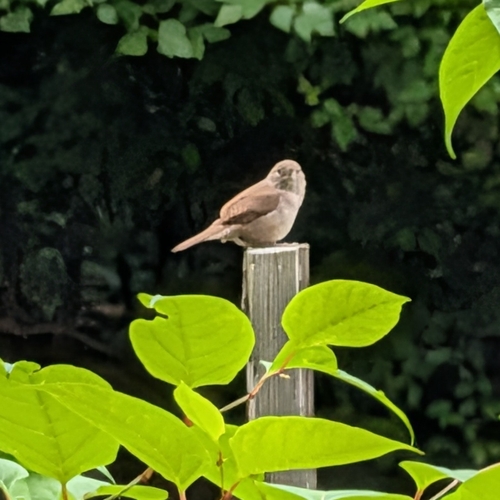
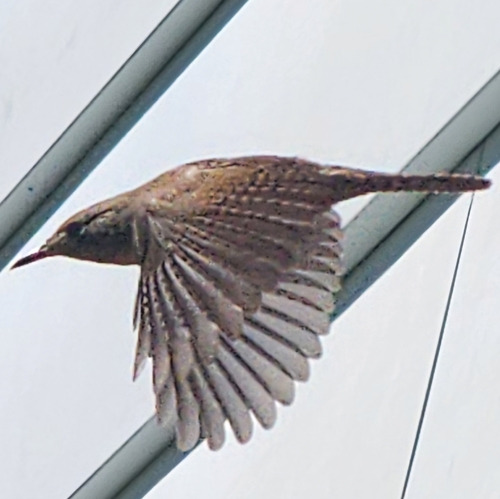
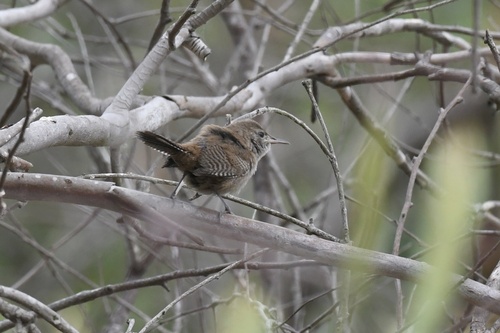
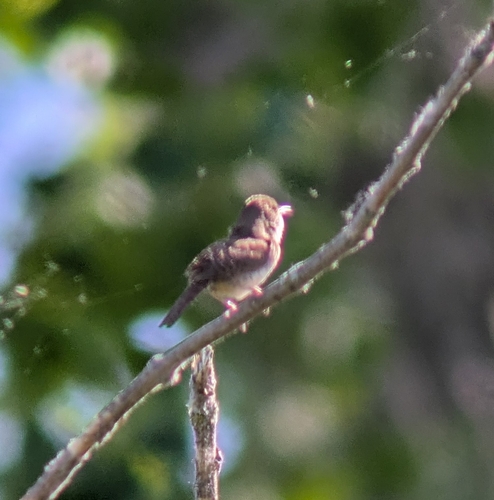
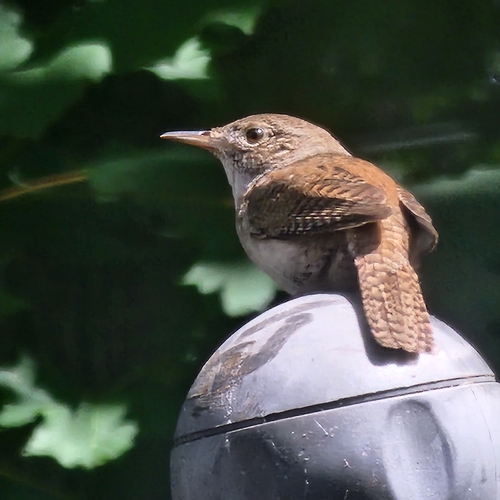
The Northern House Wren is a tiny, active bird with dull brown plumage over most of its body, often appearing grayish on the underside. It has faint barring on its wings and tail, a short, slightly upturned tail, and a slender, dark bill. This plain appearance helps it blend into its natural environment.
Category
BirdsRarity
Common
Danger
1/5 · Very low
Snaps
42
A male wren might build several 'dummy' nests for a female to choose her favorite from!
Despite their small size, these wrens often chase away much bigger birds from their territory.
House Wrens often reuse birdhouses or abandoned nests from other species to raise their families.
Their scientific name, 'Troglodytes', means 'cave-dweller,' referring to their love for cavities.
Northern House Wrens have a complex, bubbly song that helps them defend territory and attract mates.
Northern House Wrens can fill cavities with twigs, sometimes preventing other birds from nesting there.
Northern House Wrens can deftly forage for insects in dense vegetation, helping control pest populations.
These small birds are amazing insect hunters, snatching up tiny bugs to eat!

Felis catus
House wrens are common prey for cats.
Thamnophis sirtalis
Snakes can raid nests, eating eggs or chicks.
Araneus diadematus
Wrens actively hunt various spider species.
Manduca sexta
Caterpillars are a main food source, especially for young.
Feathered describes animals, primarily birds, possessing a covering of feathers.
Social animals live in organized groups, cooperating for survival benefits such as foraging, defense, and raising offspring.
Singing animals produce complex vocalizations, often for purposes of attracting mates, defending territory, or communicating within their species.
This trait identifies organisms whose diet primarily consists of insects and other small invertebrates.

Diurnal animals are primarily active during daylight hours, typically resting or sleeping at night.

This habitat trait indicates species that can coexist with humans in urban and suburban environments, utilizing man-made structures and green spaces.
No aliases listed yet.
Danger
1/5 · Very low
Enjoy watching birds from a distance and don't disturb their nests.
The easiest way to identify Northern House Wren is to use the Snappit nature identifier app.
11-13 cm
12-18 cm
0.01-0.012 kg
2-7 years
35 km/h
These small birds are amazing insect hunters, snatching up tiny bugs to eat!
Urban areas
Zoom in to split clusters and explore where this object has been snapped.
Jun 14, 2026
Pines Bridge Historic DistrictPhoto attribution
(c) Jessica Utrup, some rights reserved (CC BY)
License: CC BY 4.0 ↗
Image may be shown cropped inside the card frame.
Jun 10, 2026
Haym Salomon Memorial ParkPhoto attribution
(c) i_da_naturalist, some rights reserved (CC BY)
License: CC BY 4.0 ↗
Image may be shown cropped inside the card frame.
Jun 6, 2026
Mount EcclesiaPhoto attribution
(c) zr217, some rights reserved (CC BY)
License: CC BY 4.0 ↗
Image may be shown cropped inside the card frame.
Jun 2, 2026
Magee Marsh Wildlife AreaPhoto attribution
no rights reserved
License: CC0 1.0 ↗
Image may be shown cropped inside the card frame.
May 28, 2026
Haym Salomon Memorial ParkPhoto attribution
(c) i_da_naturalist, some rights reserved (CC BY)
License: CC BY 4.0 ↗
Image may be shown cropped inside the card frame.

California, US
You might spot Acorn Woodpecker and Western Fence Lizard.
View guide →

Pennsylvania, US
You might spot American Robin, Red-Winged Blackbird, and Lesser Celandine.
View guide →

Ohio, US
You might spot Spotted Lanternfly and Eastern Fox Squirrel.
View guide →

District of Columbia, US
You might spot Spotted Lanternfly and Eastern Gray Squirrel.
View guide →

Massachusetts, US
You might spot Striped Wintergreen, Painted Turtle, and Canada Goose.
View guide →

Iowa, US
You might spot Common Eastern Bumble Bee and North American Luna Moth.
View guide →
Take the discovery with you
Snap it with Snappit to identify it, learn what makes it special, and add the discovery to your collection.




.jpg&width=800)









