





Ostrich Fern
Matteuccia struthiopteris
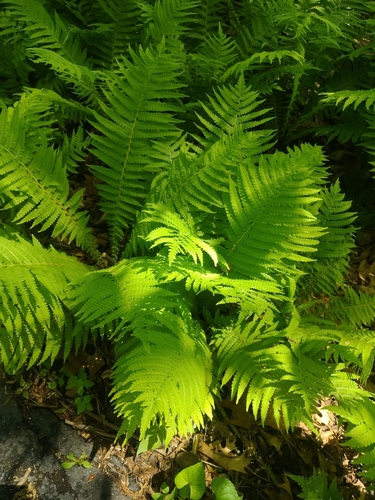
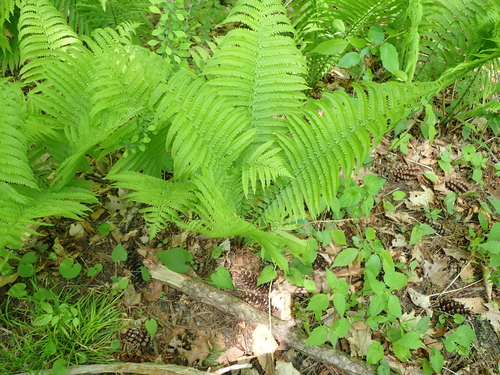
The Ostrich Fern has tall, feathery fronds that look like the feathers of an ostrich. It loves damp, shady spots and can grow in big groups, creating a lush green carpet in forests and wetlands.
Habitat: Forests, Wetlands
The Ostrich Fern is a large, stately fern with two distinct types of fronds. Its tall, vase-shaped green sterile fronds are deeply cut, resembling ostrich plumes. Shorter, dark brown fertile fronds emerge later, holding the spores.
Category
PlantsRarity
Common
Danger
1/5 · Very low
Snaps
26
Ostrich Ferns are ancient plants, thriving since the time of the dinosaurs!
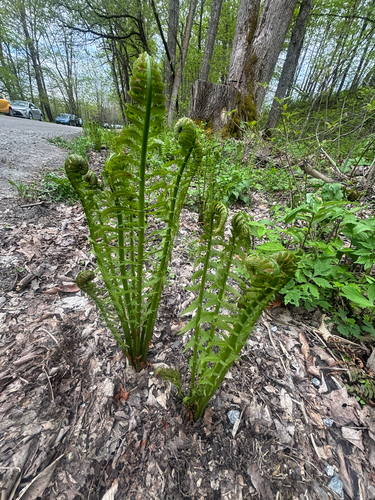
The young, coiled fronds are called "fiddleheads" because they look like violin scrolls.
Their fertile fronds look like they're wearing tiny, spore-filled helmets all winter.
Unlike flowering plants, ferns reproduce using tiny, dust-like spores carried by the wind!
Ostrich Fern releases tiny spores that can travel far on the wind to grow new ferns in distant places.
Ostrich Fern grows edible young fronds (fiddleheads) in spring, providing a tasty early-season food.
Ostrich Fern spreads underground using rhizomes, allowing it to form large colonies and claim more space.
Homo sapiens
Fiddleheads are harvested as a seasonal delicacy.

Odocoileus virginianus
Young fiddleheads are occasionally browsed.
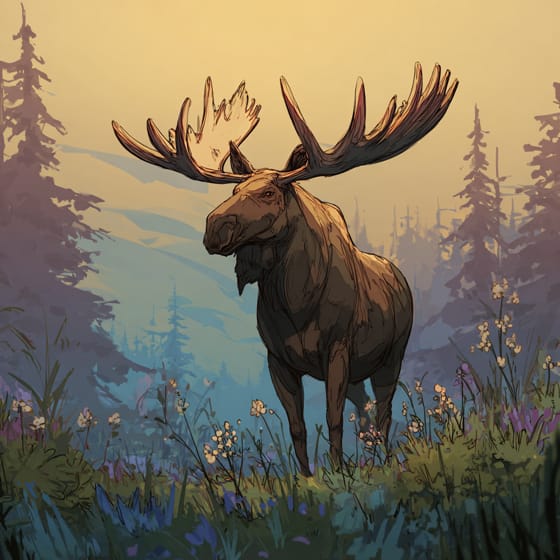
Alces alces
Mature fronds provide forage in some regions.
Plethodon cinereus
Moist undergrowth offers refuge from predators.
Deciduous plants periodically shed all their leaves, typically during autumn or dry seasons.
Fronded plants possess large, divided leaves, characteristic of ferns and certain palms.
Shade tolerant plants are adapted to grow and thrive in areas with low light levels, requiring less direct sunlight.
Edible plants are those parts of a plant that are considered safe for human consumption.

Rapid growing plants exhibit accelerated growth rates, quickly increasing in size and biomass within a short period.

This trait signifies organisms belonging to a very old evolutionary group with ancestors dating back millions of years.

Forest habitats are terrestrial environments dominated by dense tree cover, supporting a high diversity of plant and animal life.

This habitat trait identifies species found in wetlands, which are areas of land saturated with water, either permanently or seasonally, including marshes, swamps, and bogs.
Danger
1/5 · Very low
Enjoy looking at Ostrich Ferns but never eat any plants without an adult's permission.
The easiest way to identify Ostrich Fern is to use the Snappit nature identifier app.
30-170 cm
60-90 cm
Yes
None
Perennial
Forests, Wetlands
Zoom in to split clusters and explore where this object has been snapped.
May 25, 2026
Taltree Arboretum and GardensPhoto attribution
no rights reserved
License: CC0 1.0 ↗
Image may be shown cropped inside the card frame.
May 17, 2026
Berkshire Botanical GardenPhoto attribution
no rights reserved
License: CC0 1.0 ↗
Image may be shown cropped inside the card frame.
May 16, 2026
Plainfield Village Historic DistrictPhoto attribution
(c) Cassandra Hemenway, some rights reserved (CC BY-SA)
License: CC BY-SA 4.0 ↗
Image may be shown cropped inside the card frame.

Massachusetts, US
You might spot Maidenhair Spleenwort and Red Trillium.
View guide →

Massachusetts, US
You might spot Common Eastern Bumble Bee and Eastern Skunk Cabbage.
View guide →

Vermont, US
You might spot Japanese Knotweed and Red-Bellied Woodpecker.
View guide →

New Hampshire, US
You might spot Eastern White Pine and White-Tailed Deer.
View guide →

Massachusetts, US
You might spot Hemlock Woolly Adelgid, Eastern Newt, and Red Trillium.
View guide →

Iowa, US
You might spot American Toad and Silver-Spotted Skipper.
View guide →
Take the discovery with you
Snap it with Snappit to identify it, learn what makes it special, and add the discovery to your collection.







.jpg&width=800)



_001.jpg&width=800)


