





Pacific trillium
Trillium ovatum
The Pacific trillium is a beautiful flower that grows in the woods. It has three white petals that can turn pink as they age, making it look like a little star in the forest!
Habitat: Forests
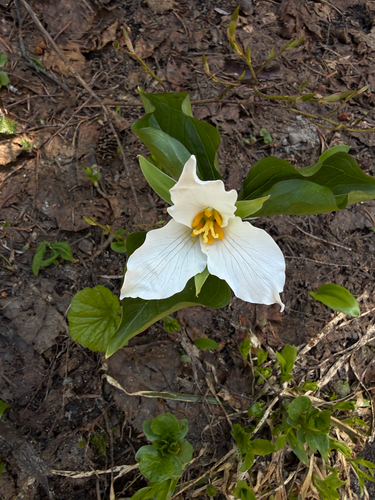
The Pacific trillium has a single, striking white flower with three broad, ovate petals that deepen to pink or purplish with age. It stands atop a whorl of three large, emerald green leaves, creating a symmetrical display.
Category
PlantsRarity
Common
Danger
1/5 · Very low
Snaps
37
A Pacific trillium can take up to seven years to bloom its very first flower!
Everything about this plant comes in threes: three leaves, three petals, and three sepals!
Native Americans used its roots for medicine, earning it the nickname 'birthroot'.
Picking a trillium flower can kill the entire plant because its leaves are essential!
Pacific trillium has special seed attachments called elaiosomes that ants carry, helping the plant spread its seeds far and wide.
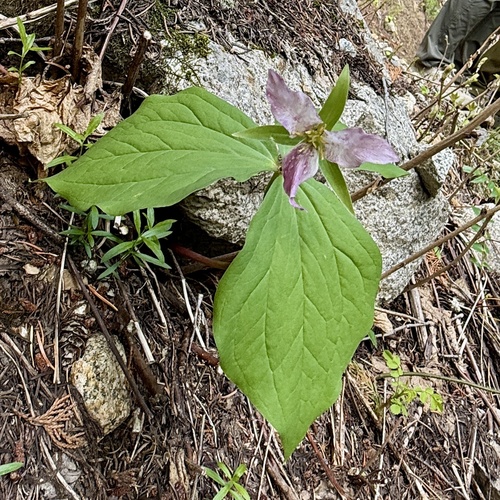
Pacific trillium's white petals slowly turn pink or purple as the flower ages, showing its maturity to the world.
Pacific trillium can live for many decades thanks to its underground rhizome, storing energy to bloom year after year.
Formica fusca
Carries trillium seeds to their nests, aiding dispersal.
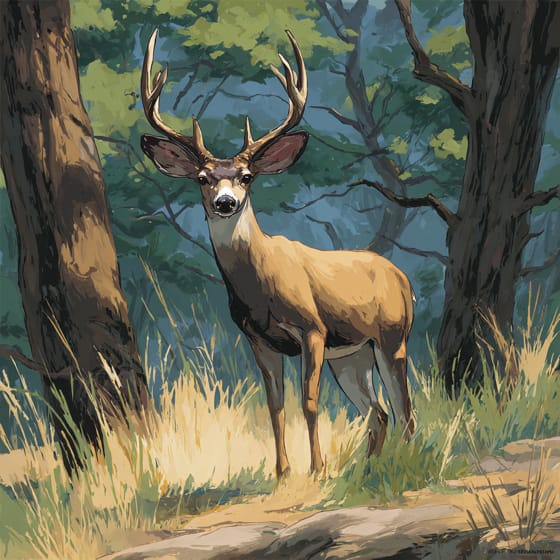
Odocoileus hemionus
Browses on the leaves and flowers of the trillium plant.
Fannia canicularis
Visits the flowers and helps transfer pollen for reproduction.
Deciduous plants periodically shed all their leaves, typically during autumn or dry seasons.
Flowering plants are any plants that produce flowers as part of their reproductive cycle.
Shade tolerant plants are adapted to grow and thrive in areas with low light levels, requiring less direct sunlight.
Spring blooming plants produce their flowers during the spring season, often signifying the end of winter and the start of new growth.

Fragrant flowers emit a pleasant aroma, often to attract pollinators or for defense.

Describes plants that are particularly attractive and beneficial to a wide range of pollinating organisms.

Forest habitats are terrestrial environments dominated by dense tree cover, supporting a high diversity of plant and animal life.

Threatened status denotes a species likely to become endangered in the foreseeable future without effective conservation interventions.
Danger
1/5 · Very low
Do not pick the flowers; they are best enjoyed in nature!
The easiest way to identify Pacific trillium is to use the Snappit nature identifier app.
20-50 cm
20-40 cm
3-7 cm
Spring to early summer (March-July)
No
Mild
Perennial
Zoom in to split clusters and explore where this object has been snapped.
May 31, 2026
Sunrise Historic DistrictPhoto attribution
(c) Hill Craddock, some rights reserved (CC BY)
License: CC BY 4.0 ↗
Image may be shown cropped inside the card frame.
May 31, 2026
Paradise Historic DistrictPhoto attribution
(c) Max Miley, some rights reserved (CC BY)
License: CC BY 4.0 ↗
Image may be shown cropped inside the card frame.

Washington, US
You might spot Rock Pigeon, Great Blue Heron, and Duck.
View guide →

Washington, US
You might spot Rock Pigeon, American Crow, and Olympic Gull.
View guide →
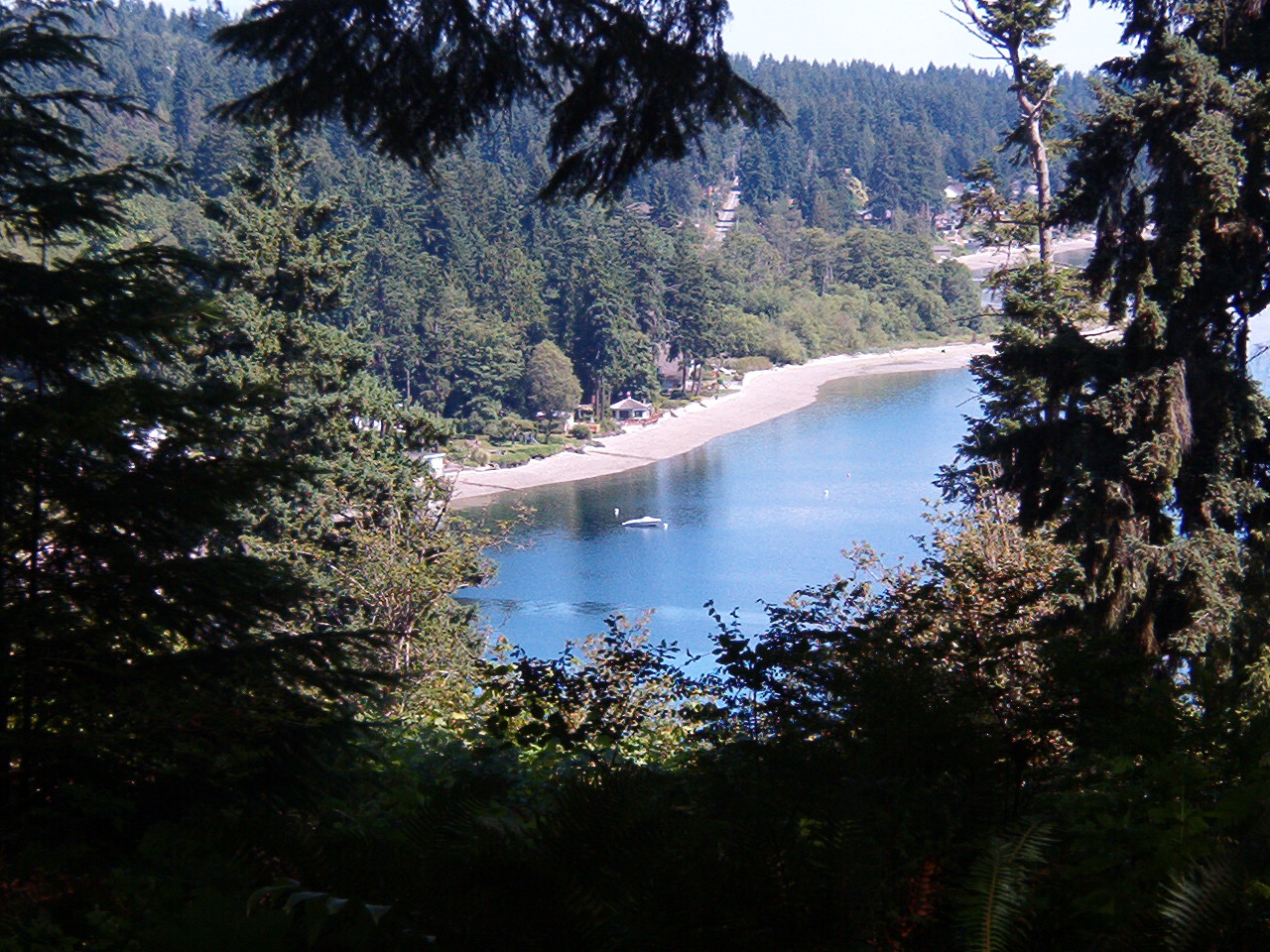
Washington, US
You might spot Surf Scoter, Horned Grebe, and Salmonberry.
View guide →

California, US
You might spot Pacific Banana Slug and Ensatina.
View guide →

California, US
You might spot Hilton's Aeolid and Opalescent Nudibranch.
View guide →

California, US
You might spot Western Azalea, Pacific Trillium, and Western Columbine.
View guide →
Take the discovery with you
Snap it with Snappit to identify it, learn what makes it special, and add the discovery to your collection.






.jpg&width=800)


_001.jpg&width=800)



