.jpg&width=800)





Pandorus Sphinx
Eumorpha pandorus
The Pandorus Sphinx is a beautiful moth with big, colorful wings. It loves to fly around flowers and is often seen at night, making it a special nighttime friend in nature.
Habitat: Forests
The Pandorus Sphinx is a large moth with a mottled green and brown body, often featuring striking pinkish or olive-green patches on its stout abdomen. Its forewings are elongated and narrow, displaying intricate patterns of olive-green, brown, and pink, making it distinctive among moths.
Category
InsectsRarity
Common
Danger
1/5 · Very low
Snaps
6
Adult Pandorus Sphinx moths have a very long tongue, called a proboscis, for reaching deep into flowers.
Its amazing camouflage helps it disappear perfectly against tree bark or leaves during the day.
Many Pandorus Sphinx caterpillars lose their horn as they grow, looking even more snake-like!
Unlike many insects, this moth can maintain a warm body temperature, even on cool nights.
Pandorus Sphinx can hover precisely like a hummingbird because of its powerful wings that helps them drink nectar from flowers.
Pandorus Sphinx caterpillars have fake 'eyes' and patterns that make them look like small snakes or dead leaves to scare predators.
Pandorus Sphinx can produce a hissing sound when threatened that helps them startle and deter potential attackers.
Caterpillars munch on leaves, while adult moths sip sweet nectar from flowers!
Age differences: Yes, caterpillars eat plant leaves, while adults only drink liquid nectar from flowers.

Parthenocissus quinquefolia
The caterpillar stage feeds on the leaves of this common vine.
.jpg&width=800)
Vitis aestivalis
Its caterpillars chew the leaves of grapevines as their primary food source.
Lonicera sempervirens
Adult moths visit this flower at night to drink nectar, aiding its pollination.
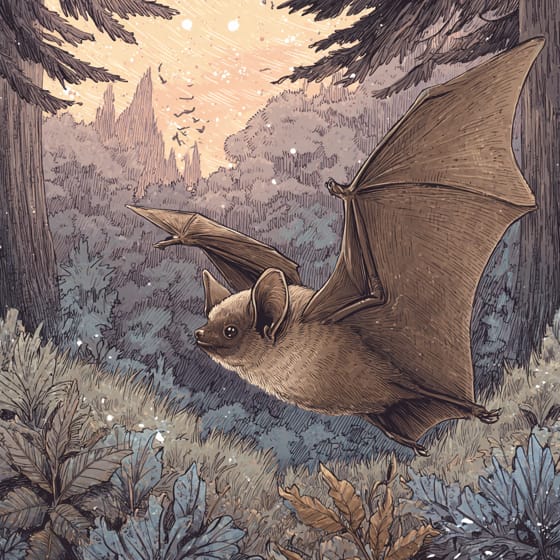
Myotis lucifugus
This common bat hunts large moths, including the Pandorus Sphinx, during night flights.
Solitary animals live alone for most of their lives, only interacting with others for mating or parental care.
Aerial creatures spend a significant portion of their lives airborne, utilizing flight for various activities such as hunting, migration, or nesting.
Colorful describes organisms or objects displaying a wide range of bright and distinct colors.
This trait characterizes organisms whose diet consists entirely or primarily of plant material.

Describes plants that are particularly attractive and beneficial to a wide range of pollinating organisms.

Forest habitats are terrestrial environments dominated by dense tree cover, supporting a high diversity of plant and animal life.

Nocturnal animals are primarily active during the nighttime hours, typically resting or sleeping during the day.

Describes organisms that transfer pollen, enabling the fertilization and reproduction of plants.
No aliases listed yet.
Danger
1/5 · Very low
Always watch moths from a distance and don't touch them, as they can be delicate.
The easiest way to identify Pandorus Sphinx is to use the Snappit nature identifier app.
80-115 mm
30-45 mm
7-10 days
48 km/h
Caterpillars munch on leaves, while adult moths sip sweet nectar from flowers!
Forests
Foraging
Zoom in to split clusters and explore where this object has been snapped.

Connecticut, US
You might spot Spongy Moth, Eastern Tent Caterpillar Moth, and Monarch.
View guide →

Connecticut, US
You might spot Spongy Moth and Eastern Tent Caterpillar Moth.
View guide →

Indiana, US
You might spot Panthera Pardus Orientalis and Reticulated Giraffe.
View guide →

Iowa, US
You might spot False Rue Anemone, Sharp-Lobed Hepatica, and Common Shiner.
View guide →

New Jersey, US
You might spot Common Loon, Laughing Gull, and Ring-Billed Gull.
View guide →
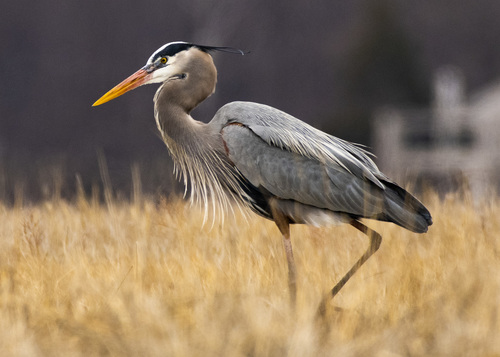
Georgia, US
You might spot Great Blue Heron and Double-Crested Cormorant.
View guide →
Take the discovery with you
Snap it with Snappit to identify it, learn what makes it special, and add the discovery to your collection.








.jpg&width=800)


