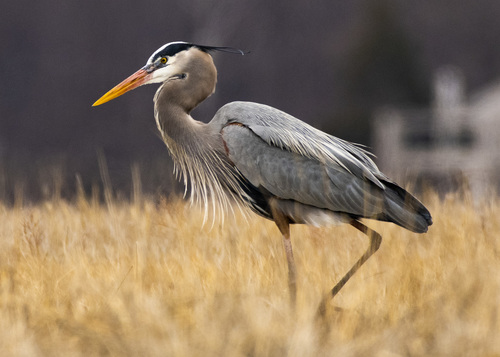
Great Blue Heron
Step back in time to a vibrant mill village transformed into a captivating historic district.
Step back in time to a vibrant mill village transformed into a captivating historic district. Bibb City Historic District, once a bustling company town in Columbus, Georgia, preserves the architectural and social legacy of the Bibb Manufacturing Company. This unique area, listed on the National Register of Historic Places, invites visitors to explore the remnants of a powerful textile industry and the community it fostered along the Chattahoochee River.
Wander through distinct sections of the former mill village, where the "Old Village" presents tightly spaced, modest homes on gridded streets, contrasting sharply with the "New Village" featuring diverse Craftsman-style bungalows and cottages artfully arranged along curvilinear roads. While the colossal Bibb Mill itself was largely destroyed by fire, its remaining façade and surrounding structures stand as silent testaments to a bygone era. Discover historic community buildings like the Classical Revival-style Bibb City School and Porter Memorial Baptist Church, each telling a story of daily life in this self-contained community.
A visit to Bibb City offers a poignant and educational experience, highlighting the ingenuity of early 20th-century urban planning and the rich social fabric of a company town. It’s an ideal destination for those seeking to understand the industrial past of the American South and appreciate the resilience and evolution of historic communities. The district's unique design and surviving structures provide a compelling narrative, making it a memorable journey through time. Wondering what that bird or insect is? Find out on your visit using the Snappit nature app.
Bibb City emerged in 1902 as a company town built around the Bibb Manufacturing Company's textile mill, which quickly became one of the largest in the South. To secure a loyal workforce, the company constructed over 260 homes and established various community amenities. Incorporated as its own city in 1909, Bibb City operated under the paternalistic control of the mill, providing housing, healthcare, and social activities for its workers. The mill, renowned for producing a range of textile products including heat-resistant tire cord, remained the heart of the community for nearly a century, closing its doors in 1998. Following the mill's closure, Bibb City dissolved its municipal charter in 2000 and was subsequently annexed by Columbus. A significant turning point occurred in 2008 when a massive fire tragically destroyed the main mill building, though its façade still stands. In recognition of its unique historical significance, the Bibb City Historic District was officially listed on the National Register of Historic Places in 2010.
Take a self-guided walking tour to appreciate the contrasting layouts of the "Old" and "New" villages. Photograph the distinctive architectural styles of the mill houses and public buildings. Imagine life in a company town as you stroll the historic streets. Consider combining your visit with a walk along the nearby Chattahoochee Riverwalk.
Summer can be very hot and humid, so hydrate well if visiting then. Winter is generally mild but can be chilly. Fall brings colorful foliage, enhancing the scenic quality of the district.
The district primarily consists of public streets and sidewalks. Some areas may have hills and a small flight of steps are mentioned on a self-guided tour route. The Columbus Riverwalk, adjacent to the district, is a paved asphalt path suitable for wheelchairs.
Witness the impressive remains of what was once a sprawling textile mill.
Observe the original, tightly-packed worker housing, reflecting early industrial living conditions.
Explore the more diverse and architecturally varied homes built on curvilinear streets, showcasing a later phase of community planning.
Admire the Classical Revival architecture of this former educational hub.
Each card links to a full Explore page with photos, traits, and fun facts.
Start with the big picture, then zoom in to explore individual wildlife observations around this place.
Wear comfortable shoes
The best way to experience the district is by walking its streets and paths.
Bring a camera
Capture the unique architectural styles of the mill houses, the mill ruins, and the historic community buildings.
Explore both village sections
Note the stark contrast between the gridded "Old Village" and the curvilinear streets of the "New Village" to fully appreciate the town's evolution.
Combine with Riverwalk
Extend your visit with a stroll or bike ride on the adjacent Chattahoochee Riverwalk for scenic views and further exploration of the area.
Look for historical markers
Seek out any informational plaques or signs that might provide additional context to the buildings and sites.
Visit during daylight hours
This ensures the best visibility for photography and architectural details.
Jun 5, 2026
Jun 5, 2026
Jun 4, 2026
Jun 1, 2026
May 30, 2026

Maryland, US
You might spot White-Tailed Deer and Eastern Gray Squirrel.
View guide →
.jpg)
District of Columbia, US
You might spot Eastern Gray Squirrel, Duck, and House Sparrow.
View guide →

Illinois, US
You might spot American Robin, Canada Goose, and House Sparrow.
View guide →

Virginia, US
You might spot Spotted Lanternfly and Northern Cardinal.
View guide →
Take the discovery with you
Identify the wildlife you spot, learn as you go, and keep a collection of the adventure.