




partridge pea
Chamaecrista fasciculata
The partridge pea is a bright yellow flower that blooms in the summer. It grows low to the ground and is loved by many butterflies and bees!
Habitat: Grasslands
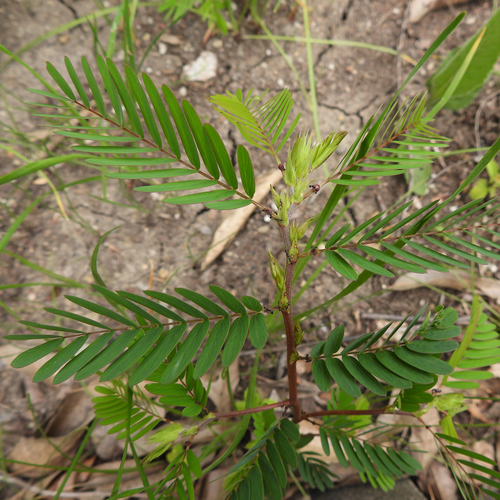
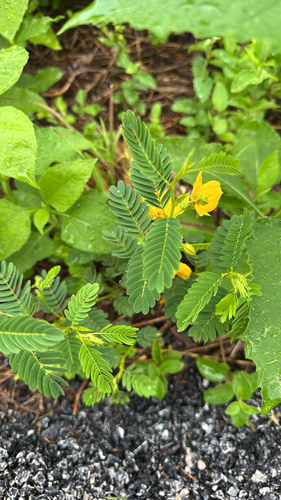
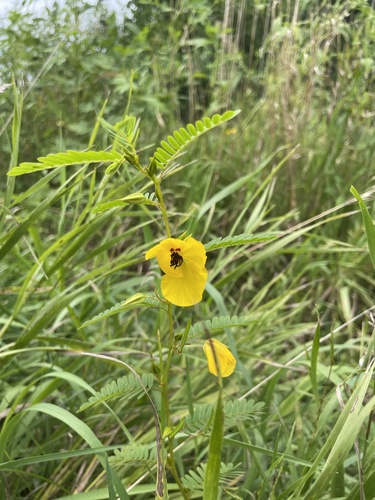
The partridge pea is a low-growing plant with delicate, fern-like leaves that fold up at night. It has bright yellow flowers, often with a striking reddish-brown spot near the base of the petals. Its bushy form and vibrant blooms make it stand out in sunny fields.
Category
PlantsRarity
Common
Danger
1/5 · Very low
Snaps
30
Found almost everywhere in the eastern and central United States, often by roadsides!
It's a crucial snack for caterpillars of the pretty Cloudless Sulphur butterfly!
Its fern-like leaves actually fold up tightly every night, like going to sleep!
Some flowers have a mysterious dark spot, almost like a secret bullseye for insects!
Partridge pea has tiny nectar glands on its leaf stems that attract ants, which then help protect the plant from hungry herbivores.
Partridge pea works with special bacteria in its roots to pull nitrogen from the air, enriching the soil for itself and other plants.
Partridge pea's ripe seed pods can burst open with surprising force, flinging their seeds far away to spread new plants.
Apis mellifera
collects pollen and nectar
Bombus impatiens
vibrates flowers to release pollen
Phoebis sennae
caterpillars feed on its leaves

Colinus virginianus
eats its protein-rich seeds
Bradyrhizobium japonicum
forms nodules to fix atmospheric nitrogen
Deciduous plants periodically shed all their leaves, typically during autumn or dry seasons.
Flowering plants are any plants that produce flowers as part of their reproductive cycle.
Describes organisms capable of converting atmospheric nitrogen into compounds usable by plants.
Summer blooming plants produce their flowers during the summer season, often providing vibrant color when many other plants have finished.

Drought-tolerant plants can survive and flourish in conditions with limited water availability.

Edible plants are those parts of a plant that are considered safe for human consumption.

Grassland habitats are terrestrial biomes dominated by grasses and herbaceous plants, supporting a variety of grazing animals.

Describes plants that are particularly attractive and beneficial to a wide range of pollinating organisms.
No aliases listed yet.
Danger
1/5 · Very low
Always look but don't touch plants unless you know they're safe.
The easiest way to identify partridge pea is to use the Snappit nature identifier app.
30-90 cm
30-60 cm
2-3 cm
Summer to Early Fall (July-October)
No
None
Annual
Zoom in to split clusters and explore where this object has been snapped.
Jun 1, 2026
Holy Cross Church and School Complex-LatoniaPhoto attribution
(c) M. Whitson, some rights reserved (CC BY)
License: CC BY 4.0 ↗
Image may be shown cropped inside the card frame.
May 28, 2026
Tennessee AquariumPhoto attribution
(c) charlie olson, some rights reserved (CC BY)
License: CC BY 4.0 ↗
Image may be shown cropped inside the card frame.
Aug 15, 2024
High Trestle TrailPhoto attribution
no rights reserved
License: CC0 1.0 ↗
Image may be shown cropped inside the card frame.

Illinois, US
You might spot Brown-Belted Bumble Bee and Eastern Gray Squirrel.
View guide →

Texas, US
You might spot Anole, Monarch, and Pinkladies.
View guide →

Iowa, US
You might spot Common Eastern Bumble Bee and Eastern Cottontail.
View guide →

Iowa, US
You might spot Common Milkweed, Amur Honeysuckle, and Canada Anemone.
View guide →

Ohio, US
You might spot Brown-Belted Bumble Bee and Eastern Carpenter Bee.
View guide →

Texas, US
You might spot Grooved Nipple Cactus and Blanchard's Cricket Frog.
View guide →
Take the discovery with you
Snap it with Snappit to identify it, learn what makes it special, and add the discovery to your collection.







.jpg&width=800)



_001.jpg&width=800)



