





Periodical Cicadas
Magicicada
Periodical cicadas are special insects that come out every 13 or 17 years! They sing a loud song to find friends and can be found in many places during their big years.
Habitat: Forests
The Periodical Cicadas has a sturdy, dark body, typically black, with bright red eyes that stand out. Their clear, membranous wings are veined with orange, giving them a distinct appearance from other cicada species.
Category
InsectsRarity
Common
Danger
1/5 · Very low
Snaps
17
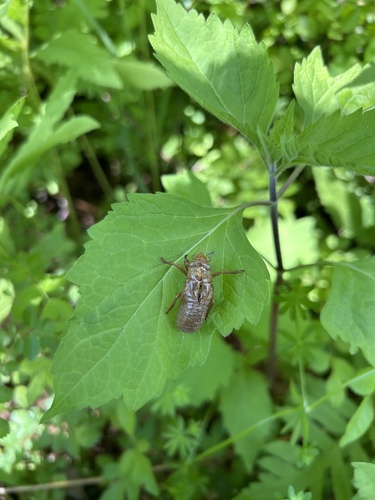
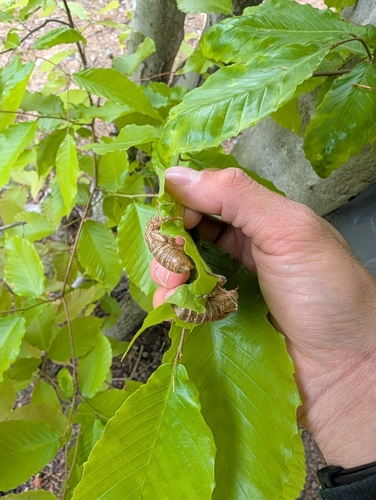
After they emerge, their shed skin shells are often found clinging to trees and plants!
Some groups of cicadas have been tracked for hundreds of years, like a living calendar!
Their incredibly loud songs can be as noisy as a roaring lawnmower!
They emerge in such huge numbers, scientists can predict their arrival decades ahead!
Periodical Cicadas has the ability to live underground for 13 or 17 years as nymphs, safely developing before emerging.
Periodical Cicadas can produce extremely loud mating calls using special vibrating membranes, attracting mates from afar.
Periodical Cicadas can drink sap directly from tree roots or branches using a straw-like mouthpart for nutrients.
These insects sip sap from trees and plants using a straw-like mouth.
Age differences: Nymphs feed on tree root sap, while adults feed on sap from branches.
Social animals live in organized groups, cooperating for survival benefits such as foraging, defense, and raising offspring.
Singing animals produce complex vocalizations, often for purposes of attracting mates, defending territory, or communicating within their species.
Colorful describes organisms or objects displaying a wide range of bright and distinct colors.
This trait characterizes organisms whose diet consists entirely or primarily of plant material.

This trait signifies organisms belonging to a very old evolutionary group with ancestors dating back millions of years.

Forest habitats are terrestrial environments dominated by dense tree cover, supporting a high diversity of plant and animal life.

This trait characterizes organisms with an exceptionally long lifespan compared to others of their kind.

Describes a species whose presence and role have a disproportionately large effect on its environment.
Danger
1/5 · Very low
Cicadas are not harmful, but it's best to watch them from a distance.
The easiest way to identify Periodical Cicadas is to use the Snappit nature identifier app.
60-100 mm
20-40 mm
4745-6205 days
15 km/h
These insects sip sap from trees and plants using a straw-like mouth.
Forests
6
Zoom in to split clusters and explore where this object has been snapped.
May 26, 2026
Bamboo Brook Outdoor Education CenterPhoto attribution
(c) Bonnie Semmling, some rights reserved (CC BY)
License: CC BY 4.0 ↗
Image may be shown cropped inside the card frame.
May 2, 2026
Scottsville Historic DistrictPhoto attribution
(c) James Weaver, some rights reserved (CC BY)
License: CC BY 4.0 ↗
Image may be shown cropped inside the card frame.

New Jersey, US
You might spot White-Tailed Deer and Eastern Gray Squirrel.
View guide →

Tennessee, US
You might spot Eastern Gray Squirrel and American Robin.
View guide →

New Jersey, US
You might spot Eastern Tiger Swallowtail.
View guide →

Virginia, US
You might spot Eastern Box Turtle and Carolina Horsenettle.
View guide →

New Jersey, US
You might spot Eastern Tiger Swallowtail.
View guide →

Maryland, US
You might spot Duck, Monarch, and Great Blue Heron.
View guide →
Take the discovery with you
Snap it with Snappit to identify it, learn what makes it special, and add the discovery to your collection.










.jpg&width=800)

