





Pine Grosbeak
Pinicola enucleator
The Pine Grosbeak is a colorful bird that loves to eat seeds and berries. With its bright plumage, it can be spotted in snowy forests, making it a beautiful sight during winter.
Habitat: Forests
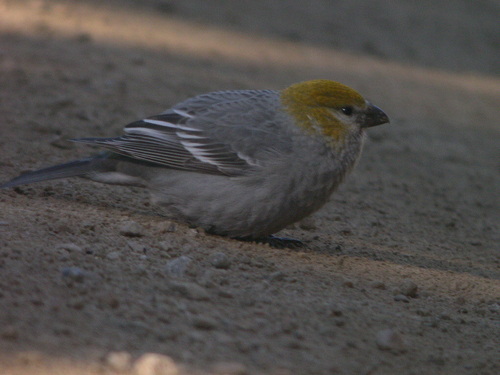
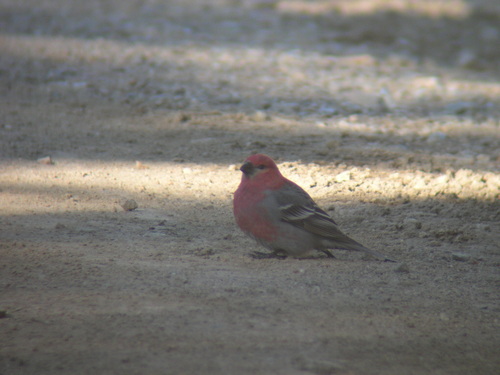
The Pine Grosbeak is a large, stout finch with a thick, conical beak. Males display a striking rosy-red plumage over most of their body, contrasted with dusky wings. Females and immatures are primarily grey with yellowish or orange-tinged heads and rumps, making them look quite different.
Category
BirdsRarity
Common
Danger
1/5 · Very low
Snaps
4
Male Pine Grosbeaks aren't always bright red; sometimes they're duller orange or even yellow!
Their scientific name 'Pinicola enucleator' literally means 'pine dweller who takes out kernels'!
They are the largest finches in North America, bigger than many sparrows!
They can hang upside down like acrobats to reach tasty berries or seeds high up in trees.
Pine Grosbeak can survive frigid temperatures because of their dense feather insulation and ability to shiver, generating warmth.
Pine Grosbeak has a powerful, conical beak that helps them crack open tough conifer seeds and eat hard buds with ease.
Pine Grosbeak can travel long distances to find food, moving south unpredictably during harsh winters with scarce resources.
They mainly eat seeds, buds, and fruits found in cold, northern forests.
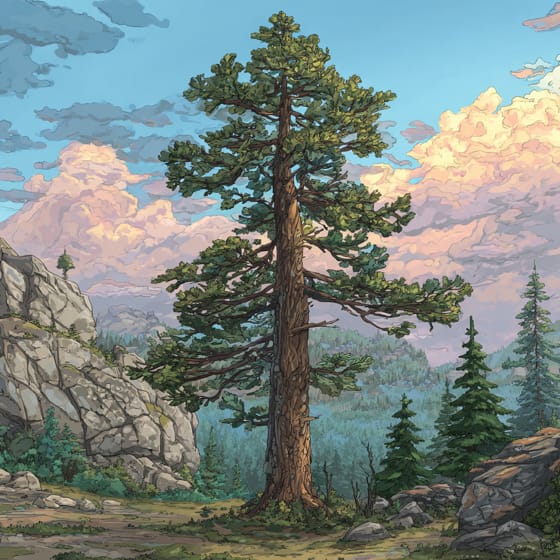
Pinus contorta
eats its seeds and buds, aiding in dispersal.
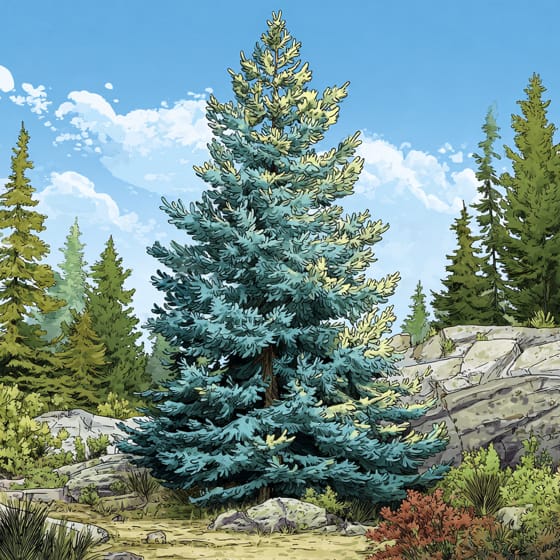
Picea glauca
feeds on its seeds and buds, a key winter food source.
Sorbus americana
relies on its berries for food, especially in winter.
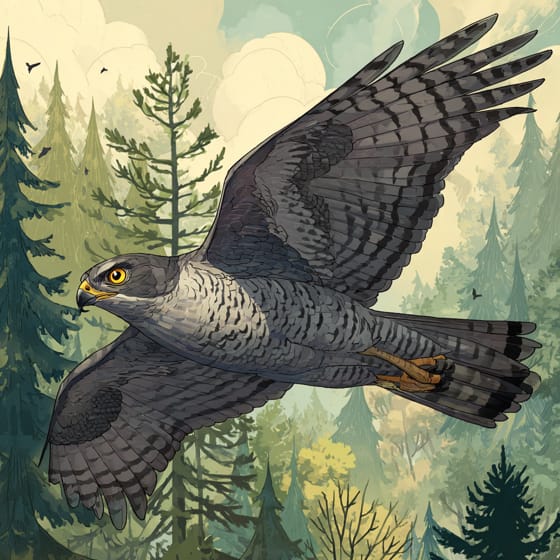
Accipiter gentilis
is a potential prey for this swift forest hawk.
Feathered describes animals, primarily birds, possessing a covering of feathers.
Social animals live in organized groups, cooperating for survival benefits such as foraging, defense, and raising offspring.
Singing animals produce complex vocalizations, often for purposes of attracting mates, defending territory, or communicating within their species.
Colorful describes organisms or objects displaying a wide range of bright and distinct colors.

This trait characterizes organisms whose diet consists entirely or primarily of plant material.

Forest habitats are terrestrial environments dominated by dense tree cover, supporting a high diversity of plant and animal life.

Diurnal animals are primarily active during daylight hours, typically resting or sleeping at night.

Migratory animals undertake seasonal movements from one region to another, typically in response to changes in climate or food availability.
No aliases listed yet.
Danger
1/5 · Very low
Enjoy watching birds from a distance and don't try to touch them.
The easiest way to identify Pine Grosbeak is to use the Snappit nature identifier app.
20-25 cm
30-36 cm
0.052-0.078 kg
5-8 years
45 km/h
They mainly eat seeds, buds, and fruits found in cold, northern forests.
Forests
Zoom in to split clusters and explore where this object has been snapped.
Mar 21, 2004
Georgetown-Silver Plume Historic DistrictPhoto attribution
no rights reserved
License: CC0 1.0 ↗
Image may be shown cropped inside the card frame.
Mar 21, 2004
Georgetown-Silver Plume Historic DistrictPhoto attribution
no rights reserved
License: CC0 1.0 ↗
Image may be shown cropped inside the card frame.

Minnesota, US
You might spot Common Eastern Bumble Bee and Turkey.
View guide →

New York, US
You might spot Pine Grosbeak, Hydrangea Leaftier Moth, and Brown Trout.
View guide →

Colorado, US
You might spot Bighorn Sheep and Quaking Aspen.
View guide →

British Columbia, CA
You might spot Oregon Grape, Common Snowberry, and Black Locust.
View guide →
Take the discovery with you
Snap it with Snappit to identify it, learn what makes it special, and add the discovery to your collection.




.jpg&width=800)





