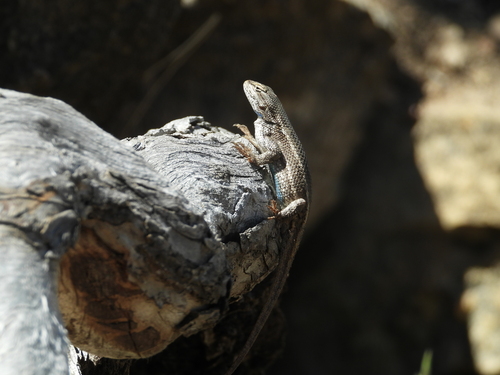
Plateau Fence Lizard
Sceloporus tristichus
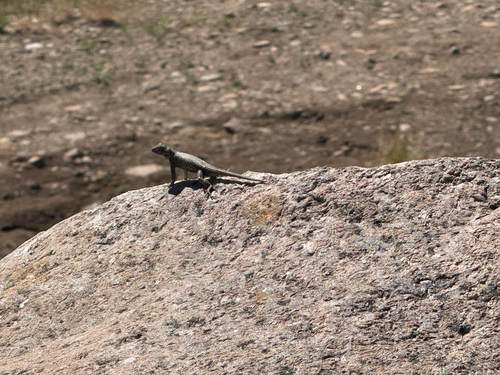
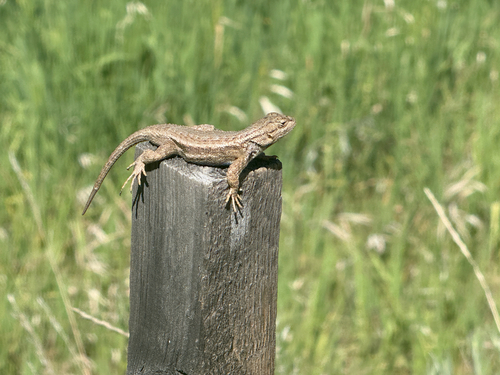
The Plateau Fence Lizard is a small, colorful lizard that loves to bask in the sun. It has beautiful blue and gray patterns on its body, making it easy to spot in its rocky home.
Habitat: Mountain regions
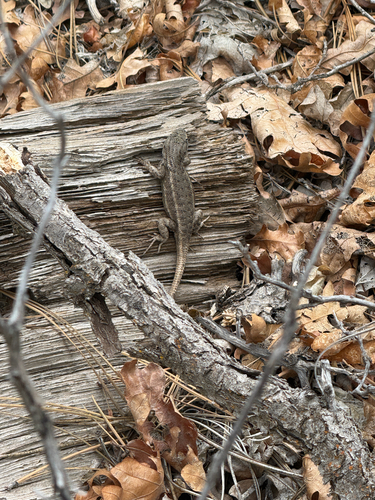
The Plateau Fence Lizard has a rough, spiny body, typically gray or brown, with faint dark wavy patterns. Males display vibrant blue patches on their throat and sides, distinguishing them from duller females and blending them into rocky surroundings.
Category
ReptilesRarity
Common
Danger
1/5 · Very low
Snaps
19
Each baby lizard hatches from a soft, leathery egg buried underground!
Males do tiny push-ups to show off and warn other lizards to stay away!
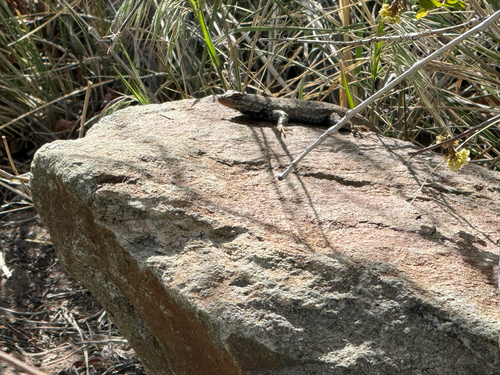
These sun-loving lizards often bask on warm rocks to get their energy!
They use their keen eyesight to spot tiny insects from far away!
Plateau Fence Lizard can change the shade of its skin because it helps them blend perfectly into rocks or bark, hiding from hungry birds.
Plateau Fence Lizard can sprint away in a flash because of powerful leg muscles that help them quickly escape dangerous predators.
Plateau Fence Lizard has a special tail that can break off, wiggling on its own, because it helps distract predators while the lizard runs to safety.
These small lizards are insectivores, mostly munching on bugs and spiders they find.
Masticophis taeniatus
a quick snake predator
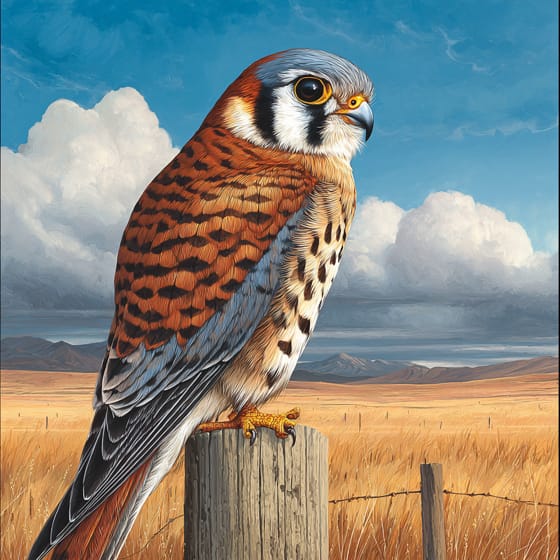
Falco sparverius
a keen-eyed bird of prey
Formica fusca
a common insect prey source
Solitary animals live alone for most of their lives, only interacting with others for mating or parental care.
Camouflaged describes organisms that possess coloring or patterns that allow them to blend into their environment.
Colorful describes organisms or objects displaying a wide range of bright and distinct colors.
This trait identifies organisms whose diet primarily consists of insects and other small invertebrates.

This habitat trait identifies species found in mountainous regions, characterized by high elevation, steep slopes, and varying climate zones.

Diurnal animals are primarily active during daylight hours, typically resting or sleeping at night.

This trait identifies organisms that exhibit exceptional swiftness in movement for hunting, escape, or travel.
No aliases listed yet.
Danger
1/5 · Very low
Always watch lizards from a distance and don't try to catch them.
The easiest way to identify Plateau Fence Lizard is to use the Snappit nature identifier app.
10-18 cm
0.004-0.01 kg
2-5 years
20 km/h
These small lizards are insectivores, mostly munching on bugs and spiders they find.
Mountain regions
Ambush
Zoom in to split clusters and explore where this object has been snapped.
May 27, 2026
Main Avenue Historic DistrictPhoto attribution
(c) Michelle Pustka, some rights reserved (CC BY)
License: CC BY 4.0 ↗
Image may be shown cropped inside the card frame.
May 27, 2026
Main Avenue Historic DistrictPhoto attribution
(c) Michelle Pustka, some rights reserved (CC BY)
License: CC BY 4.0 ↗
Image may be shown cropped inside the card frame.
May 26, 2026
Main Avenue Historic DistrictPhoto attribution
(c) Michelle Pustka, some rights reserved (CC BY)
License: CC BY 4.0 ↗
Image may be shown cropped inside the card frame.
May 17, 2026
Great Sand Dunes National Park and PreservePhoto attribution
(c) Coryn Fox Corvus, some rights reserved (CC BY)
License: CC BY 4.0 ↗
Image may be shown cropped inside the card frame.
Mar 25, 2026
Grandview MinePhoto attribution
(c) Megan Bolcar, some rights reserved (CC BY)
License: CC BY 4.0 ↗
Image may be shown cropped inside the card frame.

Colorado, US
You might spot Common Side-Blotched Lizard and Eastern Collared Lizard.
View guide →

New Mexico, US
You might spot Common Side-Blotched Lizard and Kingcup Cactus.
View guide →

New Mexico, US
You might spot Tree Cholla, Mule Deer, and Sacred Datura.
View guide →

New Mexico, US
You might spot Pinkflower Hedgehog Cactus and Kingcup Cactus.
View guide →

Arizona, US
You might spot Elk, Rock Squirrel, and Common Raven.
View guide →

Utah, US
You might spot Roundleaf Buffaloberry, Mule Deer, and Kingcup Cactus.
View guide →
Take the discovery with you
Snap it with Snappit to identify it, learn what makes it special, and add the discovery to your collection.