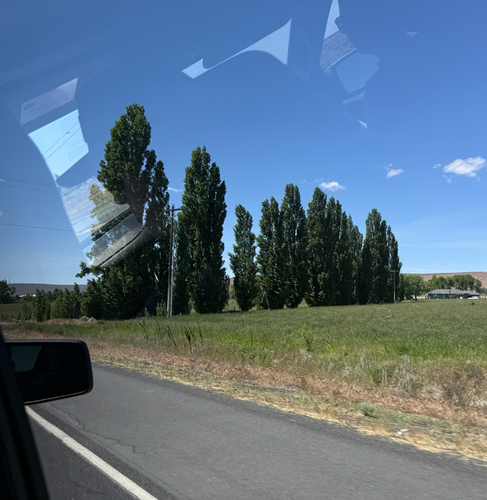
Poplar
Populus nigra
Poplars are tall trees with leaves that shimmer and rustle in the wind. They grow near rivers and streams, providing shade and homes for birds and insects.
Habitat: Riversides
The Poplar is a tall, slender tree often with pale or grayish bark, sometimes furrowed, and a distinctive upright or conical shape. Its shimmering, usually heart-shaped or triangular leaves flutter easily in the breeze, often revealing a lighter underside, creating a unique visual effect.
Category
TreesRarity
Common
Danger
1/5 · Very low
Snaps
2
Poplar leaves have flattened stalks that make them shiver and "clap" in the breeze!
Poplar wood is used to make popsicle sticks and even matchsticks!
The Pando 'tree' in Utah is a giant Poplar clone, the world's heaviest organism!
Their fluffy, cottony seeds are carried by wind, sometimes looking like summer snow!
Poplar has flattened leaf stems that make its leaves flutter and "whisper" in the wind, helping reduce drag and reflect sunlight.
Poplar can grow incredibly fast, reaching impressive heights quickly to outcompete other plants for vital sunlight.
Poplar has a wide-spreading root system that can stabilize soil, preventing erosion, especially along riverbanks.
Some Poplars can create entire groves of genetically identical trees by sprouting new trunks from their roots.
Castor canadensis
Chews down Poplar for food and building dams.

Odocoileus virginianus
Browses on young Poplar shoots and leaves.

Chrysomela scripta
Feeds on Poplar leaves, especially young ones.
Melampsora medusae
Causes orange spots and damage on Poplar leaves.
Deciduous plants periodically shed all their leaves, typically during autumn or dry seasons.
Shade tolerant plants are adapted to grow and thrive in areas with low light levels, requiring less direct sunlight.
Broadleaf trees are angiosperms characterized by flat, wide leaves that are typically shed annually in temperate climates.
Rapid growing plants exhibit accelerated growth rates, quickly increasing in size and biomass within a short period.

Forest habitats are terrestrial environments dominated by dense tree cover, supporting a high diversity of plant and animal life.
Danger
1/5 · Very low
Enjoy the beauty of poplar trees from a safe distance and avoid climbing them.
The easiest way to identify Poplar is to use the Snappit nature identifier app.
20-40 m
8-20 m
No
50-200 cm
50-150 years
Riversides
Capsule
Zoom in to split clusters and explore where this object has been snapped.
May 20, 2026
Grand CouleePhoto attribution
no rights reserved
License: CC0 1.0 ↗
Image may be shown cropped inside the card frame.
Take the discovery with you
Snap it with Snappit to identify it, learn what makes it special, and add the discovery to your collection.