_Sabine_Woods_TX_2018-04-21_08-32-57_(28100602238).jpg&width=800)





Prothonotary Warbler
Protonotaria citrea
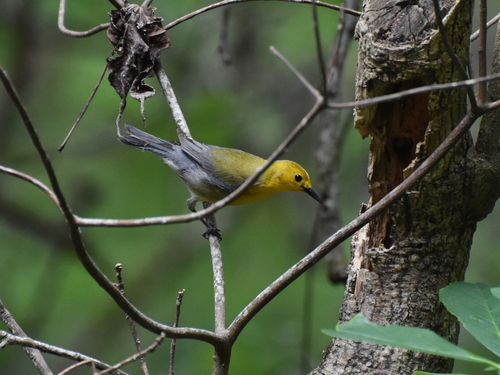
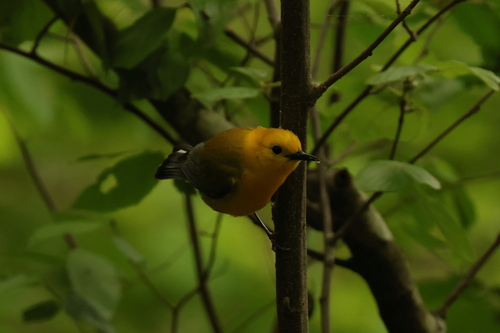
The Prothonotary Warbler is a small, bright yellow bird that loves to sing! It builds its nest in tree holes and can often be found near water. These cheerful birds are known for their beautiful songs.
Habitat: Wetlands
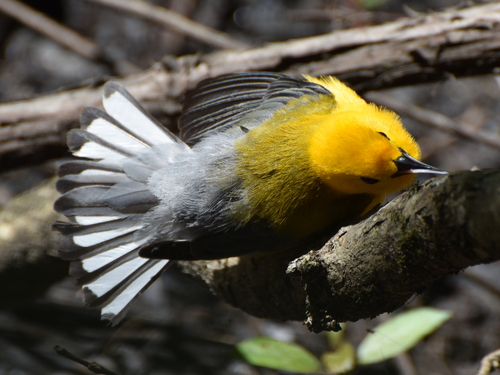
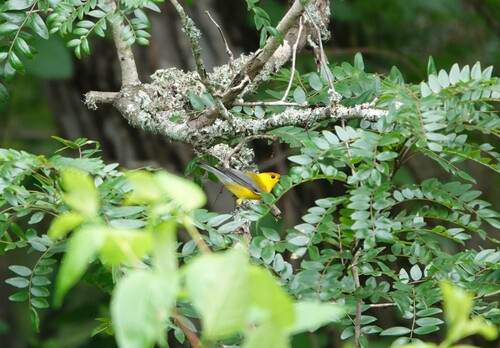
The Prothonotary Warbler is a small, striking songbird with a brilliant golden-orange head and underparts contrasting sharply with olive-gray wings and a short, dark tail. Males are brighter, while females have slightly duller yellow plumage. It is often the only warbler with such intense golden color.
Category
BirdsRarity
Common
Danger
1/5 · Very low
Snaps
24
It gets its name from bright golden robes worn by medieval church officials. Wow!
Males sometimes build 'dummy' nests to impress females during courtship. Wow!
Their loud, ringing song is like a repetitive 'sweet-sweet-sweet-sweet' sound. Wow!
These tiny birds migrate thousands of miles each year to warmer climates. Wow!
Prothonotary Warbler can build nests inside old woodpecker holes or natural tree crevices because they are one of the few warblers to do so.
Prothonotary Warbler has strong feet that help them hop and climb through dense, watery vegetation to find food in swamps and flooded forests.
Prothonotary Warbler can dart and weave through trees with agility, using its sharp eyesight to snatch insects from leaves and bark.
These small birds primarily eat insects and spiders, helping control bug populations in wetlands.
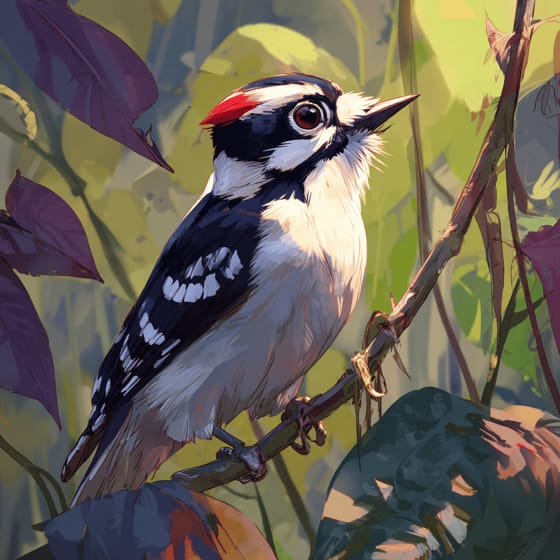
Dryobates pubescens
Often uses abandoned cavities for nesting.
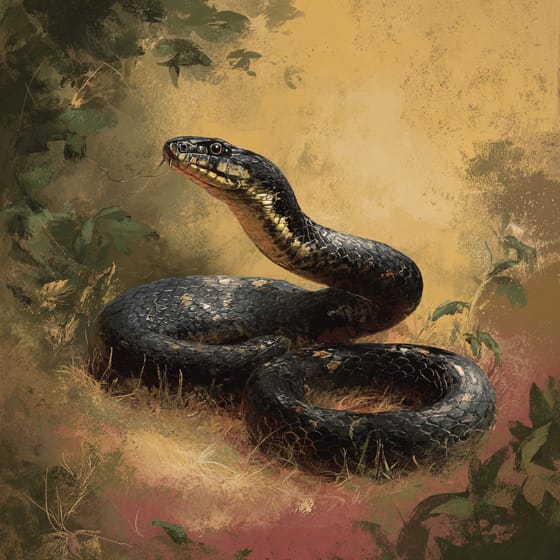
Pantherophis obsoletus
Predates on eggs and nestlings.
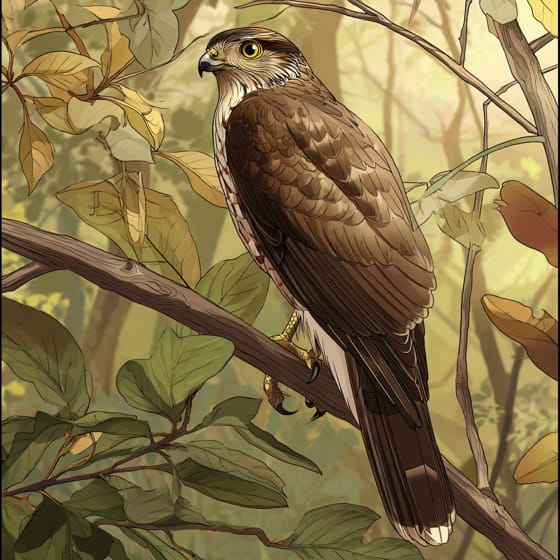
Accipiter cooperii
Hunts adult warblers in their habitat.
Malacosoma americanum
Preys on caterpillars found on leaves.
Feathered describes animals, primarily birds, possessing a covering of feathers.
Social animals live in organized groups, cooperating for survival benefits such as foraging, defense, and raising offspring.
Singing animals produce complex vocalizations, often for purposes of attracting mates, defending territory, or communicating within their species.
Colorful describes organisms or objects displaying a wide range of bright and distinct colors.

This trait identifies organisms whose diet primarily consists of insects and other small invertebrates.

Forest habitats are terrestrial environments dominated by dense tree cover, supporting a high diversity of plant and animal life.

This habitat trait identifies species found in wetlands, which are areas of land saturated with water, either permanently or seasonally, including marshes, swamps, and bogs.

Diurnal animals are primarily active during daylight hours, typically resting or sleeping at night.
No aliases listed yet.
Danger
1/5 · Very low
Always watch birds from a distance and do not disturb their nests.
The easiest way to identify Prothonotary Warbler is to use the Snappit nature identifier app.
13-14 cm
21-23 cm
0.01-0.014 kg
2-5 years
40 km/h
These small birds primarily eat insects and spiders, helping control bug populations in wetlands.
Wetlands
Zoom in to split clusters and explore where this object has been snapped.
Jun 4, 2026
Francis Beidler ForestPhoto attribution
(c) Ryan Watson, some rights reserved (CC BY)
License: CC BY 4.0 ↗
Image may be shown cropped inside the card frame.
May 13, 2026
Francis Beidler ForestPhoto attribution
(c) Ryan Watson, some rights reserved (CC BY)
License: CC BY 4.0 ↗
Image may be shown cropped inside the card frame.
Apr 26, 2026
Scottsville Historic DistrictPhoto attribution
(c) Andre Knocklein, some rights reserved (CC BY)
License: CC BY 4.0 ↗
Image may be shown cropped inside the card frame.
May 11, 2023
Pomme de Terre Wildlife Management AreaPhoto attribution
(c) Jacob Saucier, some rights reserved (CC BY)
License: CC BY 4.0 ↗
Image may be shown cropped inside the card frame.

Maryland, US
You might spot Crane-Fly Orchid, Fragile Forktail, and Ebony Jewelwing.
View guide →

Illinois, US
You might spot Eastern Fox Squirrel, Amur Honeysuckle, and Poison Hemlock.
View guide →

Iowa, US
You might spot American Toad and Silver-Spotted Skipper.
View guide →

Illinois, US
You might spot Ivory Gull, Bald Eagle, and Eastern Fox Squirrel.
View guide →

Arkansas, US
You might spot Water Tupelo, Banded Watersnake, and Prothonotary Warbler.
View guide →

Minnesota, US
You might spot Rue Anemone, Bloodroot, and White-Tailed Deer.
View guide →
Take the discovery with you
Snap it with Snappit to identify it, learn what makes it special, and add the discovery to your collection.




.jpg&width=800)







