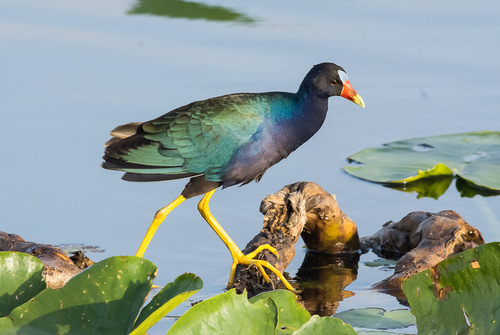


Purple Gallinule
porphyrio martinica
The Purple Gallinule is an astonishingly vibrant marsh bird that brings a burst of tropical color to the wetlands of the Americas. Often described as a flying jewel, this medium-sized member of the rail family combines a brilliant violet-blue plumage with an olive-green back, a striking red bill tipped in yellow, and a pale blue forehead shield. Their exceptionally long, bright yellow toes are their most remarkable adaptation, allowing them to walk effortlessly across floating vegetation, like lily pads, without sinking.
Habitat: Typically found in freshwater marshes, swamps, and lakes with abundant floating vegetation like water lilies and pickerelweed.
This bird features a dazzling mix of deep purple and blue on its head, neck, and underparts, contrasted by a bronzy-green back and wings. Its bill is bright red with a yellow tip, seamlessly meeting a pale blue frontal shield on its forehead. Undertail coverts are bright white and highly visible when the tail flickers. It possesses extremely long, thin, bright yellow legs and toes, a medium-sized body measuring 26 to 37 centimeters in length, and a wingspan of roughly 50 to 61 centimeters.
Category
BirdsRarity
Common
Danger
1/5 · Very low
Snaps
2
Despite having a heavy, somewhat clumsy appearance in flight, Purple Gallinules are strong long-distance flyers and occasionally turn up as wind-blown vagrants as far away as South Africa and Great Britain.
They are known to occasionally raid the nests of other wetland birds to eat their eggs or nestlings.
Young chicks are born with small functional claws on their wings, which help them climb through dense tangled marsh vegetation shortly after hatching.
Their incredibly long, widely splayed toes distribute their body weight perfectly, allowing them to walk across floating plants without sinking.
Unlike many waterbirds, they can effortlessly climb up tall marsh reeds, shrubs, and even low trees using their strong legs and claws.
Their bright blue forehead plate acts as a social signal, changing in intensity during territorial disputes or mate selection.
An opportunistic feeder that searches floating vegetation and shallow water for a wide mix of plant and animal material.
Age differences: Chicks are fed high-protein invertebrates by their parents initially before transitioning to an omnivorous diet.
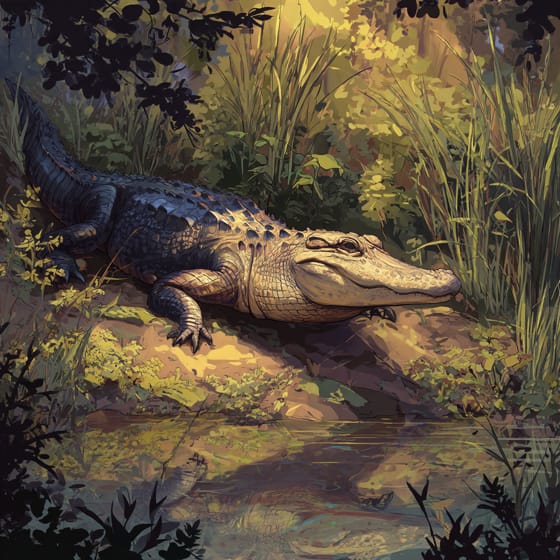
Alligator mississippiensis
The American Alligator is a key predator of adult and juvenile gallinules in deep-marsh ecosystems.

Pomacea maculata
The Purple Gallinule frequently hunts and consumes these large aquatic snails, extracting them from water plants.

Gallinula galeata
They compete directly for nesting sites and food resources in overlapping freshwater marsh habitats.
No trait badges are assigned for this object yet.
No aliases listed yet.
Collections for this object will appear here as more themes are added.
Danger
1/5 · Very low
No special safety notes yet.
The easiest way to identify Purple Gallinule is to use the Snappit nature identifier app.
26+ cm
50+ cm
0.2+ kg
3+ years
35 km/h
An opportunistic feeder that searches floating vegetation and shallow water for a wide mix of plant and animal material.
Typically found in freshwater marshes, swamps, and lakes with abundant floating vegetation like water lilies and pickerelweed.
Zoom in to split clusters and explore where this object has been snapped.
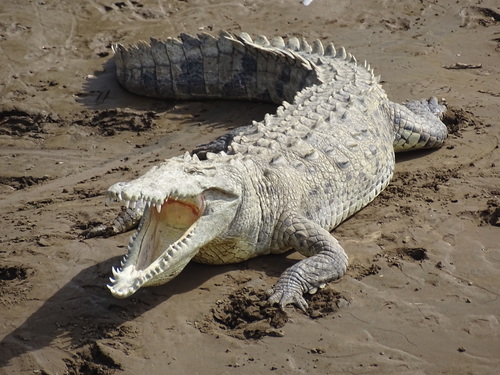
Florida, US
You might spot American Crocodile and American Alligator.
View guide →
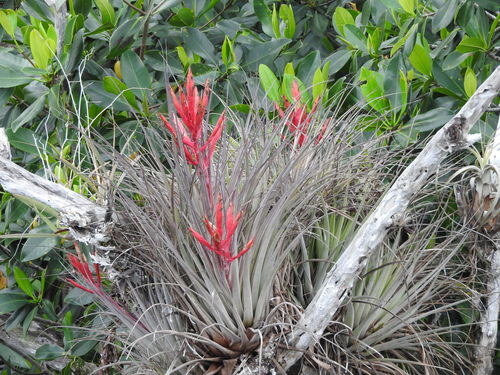
Florida, US
You might spot Tillandsia Fasciculata, Red Mangrove, and Giant Airplant.
View guide →
Take the discovery with you
Snap it with Snappit to identify it, learn what makes it special, and add the discovery to your collection.







.jpg&width=800)









