2_-California.jpg&width=800)





Pygmy Nuthatch
Sitta pygmaea
The Pygmy Nuthatch is a tiny bird that loves to climb trees and search for insects. With its cheerful chirps and cute appearance, it brings joy to the forests where it lives.
Habitat: Forests
The Pygmy Nuthatch has a compact, plump body with a blue-gray back, a white belly, and a distinctive brown cap. It looks similar to other nuthatches but is smaller with a uniform brown head.
Category
BirdsRarity
Common
Danger
1/5 · Very low
Snaps
8
A single tree cavity can hold over 100 Pygmy Nuthatches huddling for warmth!
These tiny birds often use old woodpecker holes as their cozy homes and nurseries.
They can hammer seeds into tree bark with their bills, almost like tiny carpenters!
They sometimes stuff nesting holes with sticky tree resin to deter predators!
Pygmy Nuthatch can easily climb head-first down trees because of its strong feet and sharp claws, helping them find hidden insects.
Pygmy Nuthatches can huddle in large groups inside tree cavities that helps them stay warm during cold winter nights.
Pygmy Nuthatches can hide seeds and insects in bark crevices that helps them have food available for later.
They mainly eat insects found in tree bark and also enjoy seeds from conifers.
Pinus ponderosa
Provides cavities for nests and food.
Dendroctonus ponderosae
Feeds on these forest pests.
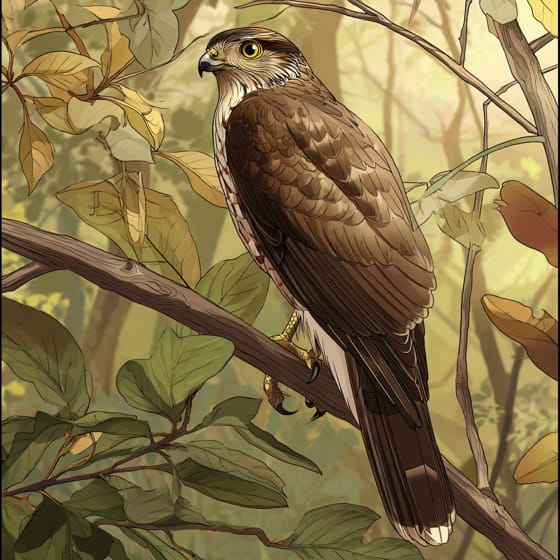
Accipiter cooperii
A common predator of small forest birds.

Megascops kennicottii
Can prey on nuthatches, especially young.
Feathered describes animals, primarily birds, possessing a covering of feathers.
Social animals live in organized groups, cooperating for survival benefits such as foraging, defense, and raising offspring.
Singing animals produce complex vocalizations, often for purposes of attracting mates, defending territory, or communicating within their species.
Arboreal animals live primarily in trees, utilizing them for shelter, food, and protection from predators.

This trait identifies organisms whose diet primarily consists of insects and other small invertebrates.

Forest habitats are terrestrial environments dominated by dense tree cover, supporting a high diversity of plant and animal life.

Diurnal animals are primarily active during daylight hours, typically resting or sleeping at night.

Pertaining to species that are significantly smaller than typical or average for their kind.
No aliases listed yet.
Danger
1/5 · Very low
Enjoy watching birds from a distance and don't try to touch them.
The easiest way to identify Pygmy Nuthatch is to use the Snappit nature identifier app.
8.5-11 cm
16-18 cm
0.007-0.012 kg
2-5 years
40 km/h
They mainly eat insects found in tree bark and also enjoy seeds from conifers.
Forests
Zoom in to split clusters and explore where this object has been snapped.

Utah, US
You might spot Common Golden-Mantled Ground Squirrel and Steller's Jay.
View guide →

Utah, US
You might spot Common Golden-Mantled Ground Squirrel and Steller's Jay.
View guide →

California, US
You might spot Western Gull, Sea Lion, and Great Blue Heron.
View guide →

California, US
You might spot Western Gull, Sea Lion, and Great Blue Heron.
View guide →

California, US
You might spot Western Gull, Great Blue Heron, and Anna's Hummingbird.
View guide →

Arizona, US
You might spot Elk, Rock Squirrel, and Common Raven.
View guide →
Take the discovery with you
Snap it with Snappit to identify it, learn what makes it special, and add the discovery to your collection.




.jpg&width=800)








