





ragged-robin
Silene flos-cuculi
Ragged-robin is a pretty flower with pink, frilly petals that look like they are dancing in the wind. It grows in meadows and wetlands, making the world a little brighter and happier.
Habitat: Wetlands
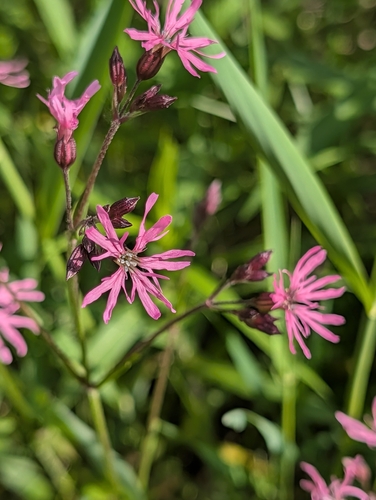
The ragged-robin has striking bright pink to magenta flowers, each petal deeply cut into four narrow, ribbon-like segments, giving it a distinctively 'ragged' or fringed appearance. Its slender, often branched stems carry multiple delicate blooms, creating a vibrant splash of color in damp landscapes.
Category
PlantsRarity
Common
Danger
1/5 · Very low
Snaps
48
Despite its delicate look, it often sways gently in strong winds without breaking, showing its resilience!
Its scientific name 'flos-cuculi' means 'cuckoo flower', hinting at its early summer bloom time!
Its tiny seeds can stay hidden in the soil for many years, patiently waiting for the best moment to grow!
Some folk tales say tiny pixies sleep nestled within the delicate, fringed petals of the ragged-robin!
ragged-robin's deeply split petals create a showy fringe that helps it stand out and attract busy pollinators from afar.
ragged-robin can thrive in damp meadows and marshy ground, thanks to roots adapted to soggy, waterlogged soil.
ragged-robin has bitter saponins in its leaves, which can deter some herbivores from munching on its foliage.
Bombus terrestris
Visits flowers for nectar and pollen.
Vanessa atalanta
Feeds on nectar, aiding flower reproduction.

Arion ater
Slugs occasionally graze on leaves and petals.
Flowering plants are any plants that produce flowers as part of their reproductive cycle.
Spring blooming plants produce their flowers during the spring season, often signifying the end of winter and the start of new growth.
Summer blooming plants produce their flowers during the summer season, often providing vibrant color when many other plants have finished.
Fragrant flowers emit a pleasant aroma, often to attract pollinators or for defense.

Colorful describes organisms or objects displaying a wide range of bright and distinct colors.

Describes plants that are particularly attractive and beneficial to a wide range of pollinating organisms.

This habitat trait identifies species found in wetlands, which are areas of land saturated with water, either permanently or seasonally, including marshes, swamps, and bogs.
Danger
1/5 · Very low
Always look but don't pick flowers, so they can keep growing for everyone to enjoy.
The easiest way to identify ragged-robin is to use the Snappit nature identifier app.
30-90 cm
20-45 cm
2-3 cm
Late spring to mid-summer
No
Mild
Perennial
Zoom in to split clusters and explore where this object has been snapped.
May 26, 2026
Canoe Meadows Wildlife SanctuaryPhoto attribution
no rights reserved
License: CC0 1.0 ↗
Image may be shown cropped inside the card frame.

Connecticut, US
You might spot Bold Jumping Spider and American Tuliptree.
View guide →

Vermont, US
You might spot Asian Bittersweet, Alder Buckthorn, and Eastern Newt.
View guide →

Connecticut, US
You might spot Green Frog and Mountain Laurel.
View guide →

New York, US
You might spot Common Eastern Bumble Bee and Ground-Ivy.
View guide →

Connecticut, US
You might spot Downy Woodpecker and Eastern Gray Squirrel.
View guide →

New Hampshire, US
You might spot Eastern White Pine and White-Tailed Deer.
View guide →
Take the discovery with you
Snap it with Snappit to identify it, learn what makes it special, and add the discovery to your collection.








.jpg&width=800)


_001.jpg&width=800)




