





red deadnettle
Lamium purpureum
Red deadnettle is a pretty plant with purple flowers that bloom in spring. It's often found in gardens and fields, and it attracts friendly bees and butterflies!
Habitat: Urban areas
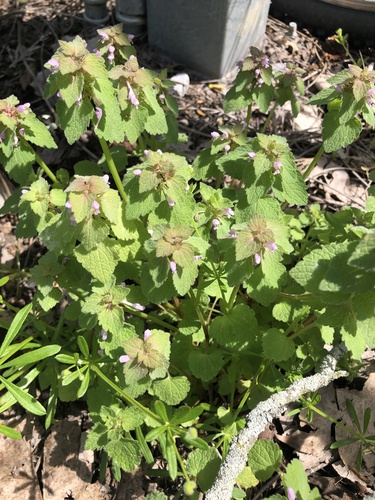
The red deadnettle has distinctive reddish-purple leaves at its top, often forming a heart shape. Its square stems hold tiny, tube-shaped pink or purplish flowers clustered in whorls around the stem. It does not have stinging hairs like true nettles.
Category
PlantsRarity
Common
Danger
1/5 · Very low
Snaps
46
Crush a leaf gently, and some say it smells a little like mushrooms!
It's a super early bird, often one of the first flowers to bloom in spring!
Its square stem helps you know it's related to mint plants!
Unlike true nettles, touching this plant won't give you a sting!
Red deadnettle can sprout and bloom very early, providing food for insects when other plants are still sleeping.
It has a unique square stem, a trait of its mint family, helping it stand tall and strong.
Red deadnettle can grow small roots from its lower stem, allowing it to spread and anchor itself easily.
Apis mellifera
Drinks nectar from its early spring flowers.
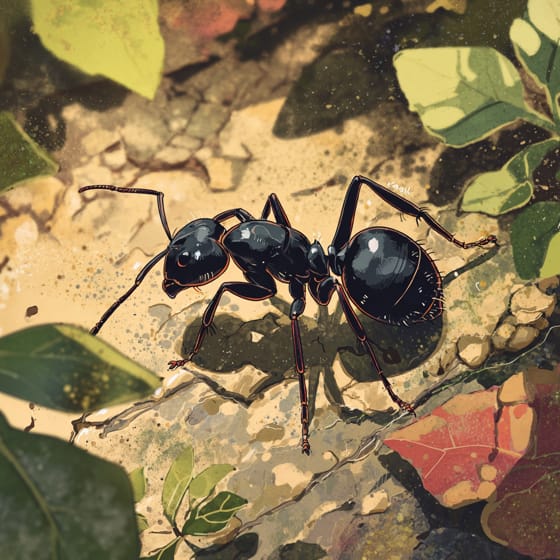
Lasius niger
Disperses its seeds which have a yummy food packet.

Arion ater
Feeds on its leaves and tender stems.
Aromatic plants produce and emit fragrant volatile organic compounds, often for defense or to attract pollinators.
Flowering plants are any plants that produce flowers as part of their reproductive cycle.
Biennial plants complete their life cycle over two growing seasons, typically forming foliage in the first year and flowering/seeding in the second.
Spring blooming plants produce their flowers during the spring season, often signifying the end of winter and the start of new growth.

Fragrant flowers emit a pleasant aroma, often to attract pollinators or for defense.

Medicinal plants possess chemical compounds that can be used for therapeutic purposes to treat illnesses or maintain health.

Edible plants are those parts of a plant that are considered safe for human consumption.

Describes plants that are particularly attractive and beneficial to a wide range of pollinating organisms.

This habitat trait indicates species that can coexist with humans in urban and suburban environments, utilizing man-made structures and green spaces.

Describes organisms that transfer pollen, enabling the fertilization and reproduction of plants.
Danger
1/5 · Very low
Always check with an adult before touching or tasting plants.
The easiest way to identify red deadnettle is to use the Snappit nature identifier app.
10-30 cm
10-25 cm
0.5-1 cm
Early spring to late fall
Yes
None
Annual
Zoom in to split clusters and explore where this object has been snapped.
Apr 26, 2026
Delphi Courthouse Square Historic DistrictPhoto attribution
(c) Y. Liu, some rights reserved (CC BY)
License: CC BY 4.0 ↗
Image may be shown cropped inside the card frame.
Jun 7, 2026

District of Columbia, US
You might spot Eastern Gray Squirrel, Duck, and House Sparrow.
View guide →

Ohio, US
You might spot Spotted Lanternfly and White-Tailed Deer.
View guide →

New York, US
You might spot Dame's Rocket, American Pokeweed, and American Toad.
View guide →
.jpg)
District of Columbia, US
You might spot Eastern Gray Squirrel, Duck, and House Sparrow.
View guide →

Iowa, US
You might spot Common Eastern Bumble Bee and Eastern Cottontail.
View guide →

Alabama, US
You might spot Eastern Box Turtle, Carolina Wren, and Field Sparrow.
View guide →
Take the discovery with you
Snap it with Snappit to identify it, learn what makes it special, and add the discovery to your collection.








.jpg&width=800)


_001.jpg&width=800)



