.jpg&width=800)





fire pink
Silene virginica
Fire pink is a beautiful flower that blooms in bright red. It loves to grow in sunny places and can often be found in meadows and along roadsides, bringing color to nature.
Habitat: Meadows
The fire pink has incredibly vibrant, star-shaped flowers with five deeply notched, fiery red petals. Its sticky stems and calyx stand out against bright green leaves, making it visually distinct in woodland undergrowth.
Category
PlantsRarity
Common
Danger
1/5 · Very low
Snaps
19
Fire pink belongs to the 'pink' family, named for the jagged edges of its petals, not its color!
Its bright red color is so intense, it can be spotted easily from far away in a forest.
Some Native American tribes traditionally used parts of this plant for medicinal purposes, like treating eye issues.
Unlike many plants, fire pink often uses sticky hairs on its stem to defend against tiny munching pests.
Fire pink has super sticky stems that can trap small crawling insects, stopping them from reaching and munching on its delicate flowers.
Its brilliant red flowers are like a bright signal, attracting hummingbirds that visit and help it spread its pollen far and wide.
The fire pink has deep roots that help it survive in dry, rocky soils where other plants might struggle to find enough water.

Archilochus colubris
visits for nectar, carrying pollen between flowers
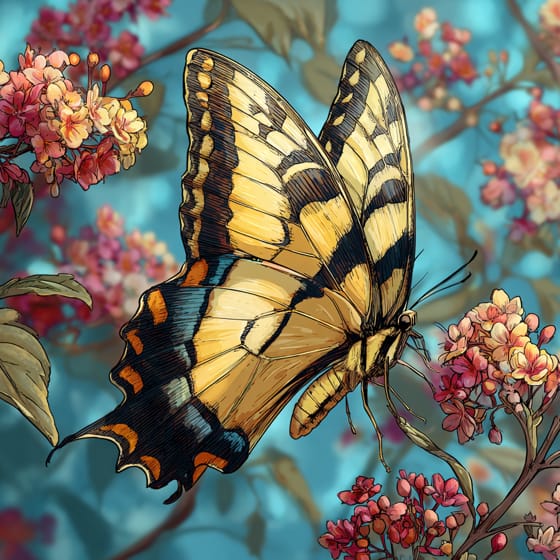
Papilio glaucus
adult butterflies drink nectar from the bright blooms

Odocoileus virginianus
deer may browse on its leaves and stems in early spring
Flowering plants are any plants that produce flowers as part of their reproductive cycle.
Summer blooming plants produce their flowers during the summer season, often providing vibrant color when many other plants have finished.
Fragrant flowers emit a pleasant aroma, often to attract pollinators or for defense.
Drought-tolerant plants can survive and flourish in conditions with limited water availability.

Colorful describes organisms or objects displaying a wide range of bright and distinct colors.

Grassland habitats are terrestrial biomes dominated by grasses and herbaceous plants, supporting a variety of grazing animals.

Describes plants that are particularly attractive and beneficial to a wide range of pollinating organisms.
No aliases listed yet.
Danger
1/5 · Very low
Always look but don't touch flowers in the wild, as some can be delicate.
The easiest way to identify fire pink is to use the Snappit nature identifier app.
30-80 cm
15-30 cm
2-3 cm
Late spring to early summer
No
Mild
Perennial
Zoom in to split clusters and explore where this object has been snapped.

Arkansas, US
You might spot Widow's-Cross, Yucca Giant-Skipper, and Outis Skipper.
View guide →

Illinois, US
You might spot Eastern Red-Backed Salamander and Blanchard's Cricket Frog.
View guide →
Illinois, US
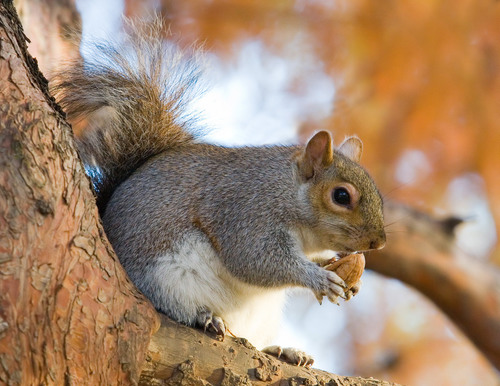
You might spot Eastern Gray Squirrel, American Robin, and Duck.
View guide →

Ohio, US
You might spot Wild Bergamot, Rattlesnake Master, and Eastern Pondhawk.
View guide →

Kentucky, US
You might spot Multiflora Rose, Eastern Newt, and American Beech.
View guide →

Missouri, US
You might spot Blackjack Oak, Bird's Foot Violet, and Starry Campion.
View guide →
Take the discovery with you
Snap it with Snappit to identify it, learn what makes it special, and add the discovery to your collection.








.jpg&width=800)


_001.jpg&width=800)




