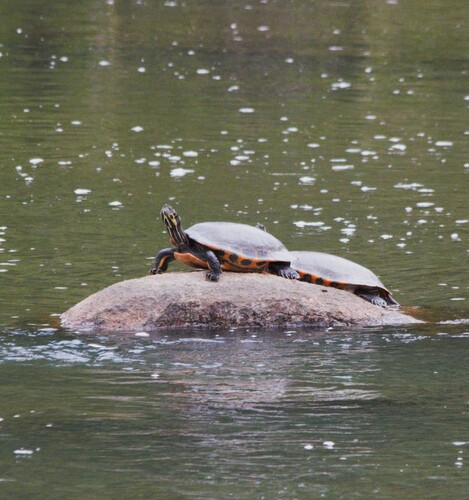
River Cooter
Pseudemys concinna
The River Cooter is a friendly turtle that loves to swim in rivers and lakes. It has a beautiful shell with bright patterns and enjoys basking in the sun on rocks or logs.
Habitat: Wetlands
The River Cooter has an olive to dark brown shell, often adorned with intricate yellow patterns that resemble a maze. Its skin is dark with bright yellow stripes on the head, neck, and limbs. The plastron (underside) is typically yellow, sometimes with dark smudges.
Category
ReptilesRarity
Common
Danger
1/5 · Very low
Snaps
15
Baby River Cooters are tiny, often no bigger than a quarter when they hatch!
Each River Cooter's shell pattern is unique, like a fingerprint!
Male River Cooters have extra-long front claws to impress females during courtship.
These turtles help keep rivers clean by munching on pesky aquatic plants and algae.
River Cooter can absorb warmth from the sun to regulate its body temperature and produce vital Vitamin D.
River Cooter has powerful webbed feet that help them glide swiftly and gracefully through the water.
River Cooter can hold its breath for a long time, allowing them to forage for food deep underwater.
Mostly munch on aquatic plants and algae, but young ones enjoy insects too!
Age differences: Juveniles are omnivores, eating more insects and small aquatic animals, while adults are primarily herbivores.
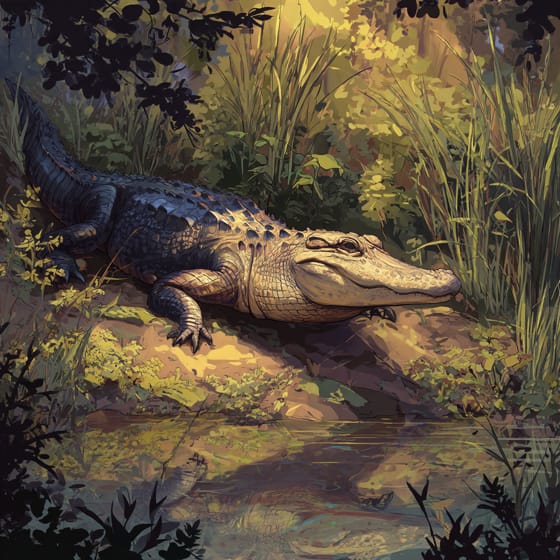
Alligator mississippiensis
Hatchlings and smaller turtles are vulnerable.

Procyon lotor
Raccoons often raid nests for eggs and prey on hatchlings.
Myriophyllum spicatum
Feeds on aquatic vegetation, helping to control growth.
Dytiscus marginalis
Juveniles will eat various aquatic insects.
Social animals live in organized groups, cooperating for survival benefits such as foraging, defense, and raising offspring.
Colorful describes organisms or objects displaying a wide range of bright and distinct colors.
This trait characterizes organisms whose diet consists entirely or primarily of plant material.
This habitat trait identifies species found in wetlands, which are areas of land saturated with water, either permanently or seasonally, including marshes, swamps, and bogs.

Armored describes animals protected by a hard, external covering or shell for defense.

Diurnal animals are primarily active during daylight hours, typically resting or sleeping at night.

Freshwater habitats include non-saline aquatic environments such as rivers, lakes, ponds, and wetlands, vital for numerous species.

Describes a species whose presence and role have a disproportionately large effect on its environment.
No aliases listed yet.
Danger
1/5 · Very low
Always watch turtles from a distance and never try to pick them up without help from an adult.
The easiest way to identify River Cooter is to use the Snappit nature identifier app.
20-40 cm
1-5 kg
15-30 years
1 km/h
Mostly munch on aquatic plants and algae, but young ones enjoy insects too!
5 km/h
Wetlands
Zoom in to split clusters and explore where this object has been snapped.
May 1, 2026
Columbia CanalPhoto attribution
(c) Raven Dandridge, some rights reserved (CC BY)
License: CC BY 4.0 ↗
Image may be shown cropped inside the card frame.

Alabama, US
You might spot Elf Orpine, Canada Goose, and Leatherleaf Mahonia.
View guide →

Tennessee, US
You might spot House Sparrow, Northern Mockingbird, and Gulf Fritillary.
View guide →

South Carolina, US
You might spot Great Blue Heron, Spanish Moss, and Cahaba Lily.
View guide →

Alabama, US
You might spot Anole, Eastern Box Turtle, and Resurrection Fern.
View guide →

New Jersey, US
You might spot Monarch, Great Blue Heron, and American Robin.
View guide →

Georgia, US
You might spot Baldcypress, Anole, and American Alligator.
View guide →
Take the discovery with you
Snap it with Snappit to identify it, learn what makes it special, and add the discovery to your collection.