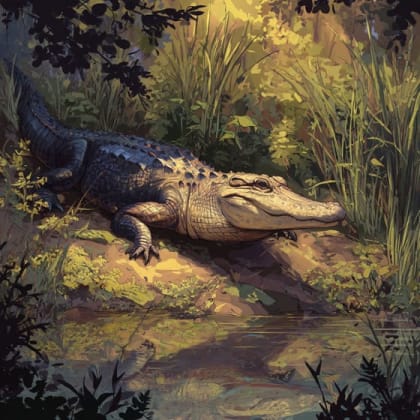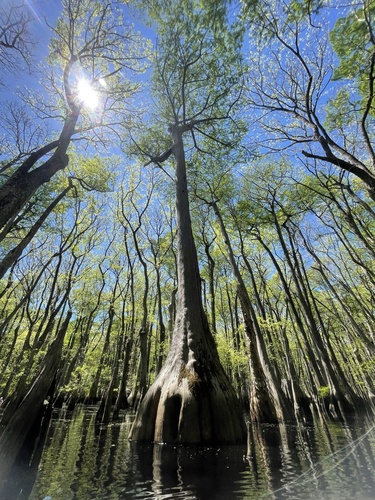





Baldcypresses

Ebenezer, Georgia offers a profound journey into early American colonial and religious history.
Ebenezer, Georgia offers a profound journey into early American colonial and religious history.
This historic district and ghost town in Effingham County, Georgia, preserves the legacy of the Salzburger emigrants who founded it in 1734, seeking religious freedom. Nestled near the scenic Ebenezer Creek and Savannah River, Ebenezer is most notably home to the venerable Jerusalem Lutheran Church, a beacon of enduring faith and one of Georgia's oldest surviving structures. As a site of immense historical significance, it provides a unique window into the challenges and triumphs of early European settlers in the New World.
The crown jewel of Ebenezer is undoubtedly the Jerusalem Lutheran Church, constructed between 1767 and 1769 from handmade bricks of local clay. This architectural marvel stands as the oldest church building in Georgia, the fourth oldest building in the state, and hosts the oldest continuously worshipping Lutheran congregation in the United States. Visitors can explore its hallowed interior, view historic church bells imported from Europe, and observe original window panes. Adjacent to the church, the historic cemetery holds the graves of original pastors and numerous unmarked burial sites, telling silent stories of the early settlers. The Georgia Salzburger Society Museum and Research Library offer deeper insights into the community's heritage, while relocated colonial structures like the 1755 Salzburger House provide tangible links to daily life centuries ago.
Visiting Ebenezer is an immersion into Georgia's foundational narrative, where the struggles of the Revolutionary War and Civil War are etched into the landscape and structures. It's a place for quiet reflection, offering a tangible connection to the unwavering spirit of those who sought a better life. From the serenity of the historic church to the tranquil beauty of Ebenezer Creek, the site promises an enriching and memorable experience for history enthusiasts and curious travelers alike. Explore the grounds like a pro—download the Snappit app to instantly identify animals and plants.
Ebenezer was established in 1734 by approximately 150 Salzburger emigrants, Protestant refugees from Salzburg, Austria, who fled religious persecution under Prince-archbishop Count Leopold Anton von Firmian. Their initial settlement, chosen with the consent of Governor James Oglethorpe, proved disastrous due to its marshy terrain, poor soil, and rampant disease, leading to many deaths within the first two years. In 1736, they were granted permission to relocate five miles away to a more suitable site at the confluence of Ebenezer Creek and the Savannah River, which they named "New Ebenezer". At New Ebenezer, the community thrived, developing silk mills, sawmills, and successful agricultural practices. They were pioneers, establishing Georgia's first Sunday school in 1734 and its first orphanage in 1737. The construction of the Jerusalem Lutheran Church between 1767 and 1769 marked a significant achievement, becoming a lasting symbol of their faith and industry. However, the town faced hardship during the American Revolutionary War when it was occupied by the British, who used the church as a hospital and stable. Although it briefly served as Georgia's capital in 1782, the town never fully recovered from the war's devastation, its importance diminished further when the county seat moved in 1799. By 1855, Ebenezer was largely abandoned, earning its designation as a "ghost town," with only the church and a few other historic structures remaining to tell its rich story.
Take a guided tour of the church and museum, read the numerous historical markers dotted around the site, and reflect on the deep history of the area. Consider a scenic paddle on Ebenezer Creek for a natural and historical perspective. Attend seasonal festivals for living history demonstrations and cultural immersion.
Summers can be hot and humid, so plan for early morning or late afternoon visits. Winters are generally mild. Special events like Landing Day (March) and the Labor Day Festival offer unique cultural experiences and enhanced access to historical areas.
The main areas around Jerusalem Lutheran Church and the museum are likely to have relatively accessible pathways. However, the site of "Old Ebenezer" can be wooded and overgrown, suggesting limited accessibility in certain areas. It is advisable to contact the Georgia Salzburger Society for specific accessibility information if needed.
Explore the oldest church building in Georgia, noting its handmade brick construction, historic interior, and centuries-old bells.
Wander among the gravestones and unmarked burial sites, including those of the first pastors, Rev. Johann Martin Boltzius and Rev. Israel Christian Gronau.
Discover artifacts, documents, and exhibits detailing the Salzburger journey and their life in Ebenezer.
View these preserved colonial-era buildings that offer a glimpse into the past.
Each card links to a full Explore page with photos, traits, and fun facts.
Start with the big picture, then zoom in to explore individual wildlife observations around this place.
Wear comfortable walking shoes
The historic district involves walking around the church grounds, cemetery, and museum, and trails along the creek may be uneven.
Check event schedules
The Georgia Salzburger Society hosts "Landing Day" in March and a Labor Day Festival in September, which often include special access, tours, and demonstrations.
Bring insect repellent
Especially during warmer months and if exploring near Ebenezer Creek, mosquitoes and other insects can be present.
Respect the sacred space
Jerusalem Lutheran Church is an active place of worship, so visitors should be mindful and respectful, especially during services.
Pack a camera
The historic architecture, serene natural landscapes, and detailed exhibits offer excellent photographic opportunities.
Consider combining with a paddle
If you enjoy kayaking or canoeing, plan to explore Ebenezer Creek for a unique historical and natural experience.
Apr 6, 2024
Photo attribution
(c) Sawyer Baran, some rights reserved (CC BY)
License: CC BY 4.0 ↗
Image may be shown cropped inside the card frame.
Apr 25, 2026
Apr 25, 2026
Apr 25, 2026
Apr 15, 2026

Maryland, US
You might spot White-Tailed Deer and Eastern Gray Squirrel.
View guide →
.jpg)
District of Columbia, US
You might spot Eastern Gray Squirrel, Duck, and House Sparrow.
View guide →

Illinois, US
You might spot American Robin, Canada Goose, and House Sparrow.
View guide →

Virginia, US
You might spot Spotted Lanternfly and Northern Cardinal.
View guide →
Take the discovery with you
Identify the wildlife you spot, learn as you go, and keep a collection of the adventure.