





Rocky Mountain maple
Acer glabrum
The Rocky Mountain maple is a small tree with beautiful leaves that change colors in the fall. It grows in the mountains and provides shade and food for many animals.
Habitat: Mountain regions
The Rocky Mountain maple is a small tree or multi-stemmed shrub with smooth, reddish-brown to gray bark. Its deeply lobed, bright green leaves resemble currant leaves and turn vibrant yellow, orange, or red in autumn. Small, yellowish-green flowers bloom before its distinctive paired 'helicopter' seeds appear.
Category
PlantsRarity
Common
Danger
1/5 · Very low
Snaps
3
High in the mountains, this tough maple often grows like a shrub, not a tall tree!
Its 'helicopter seeds' spin as they fall, letting them fly far from the parent tree!
Some Indigenous peoples used its strong wood to craft tools and bows.
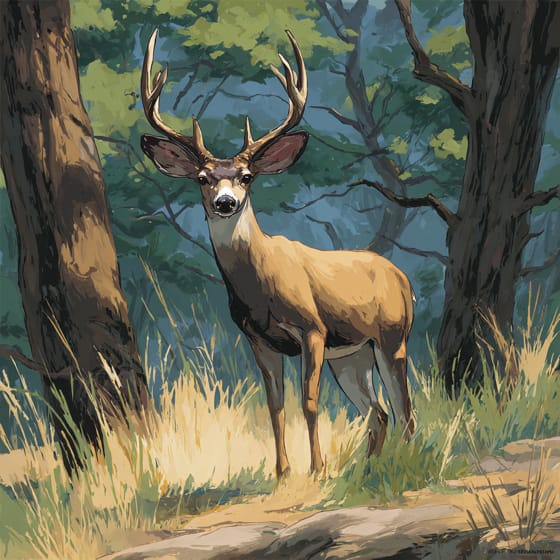
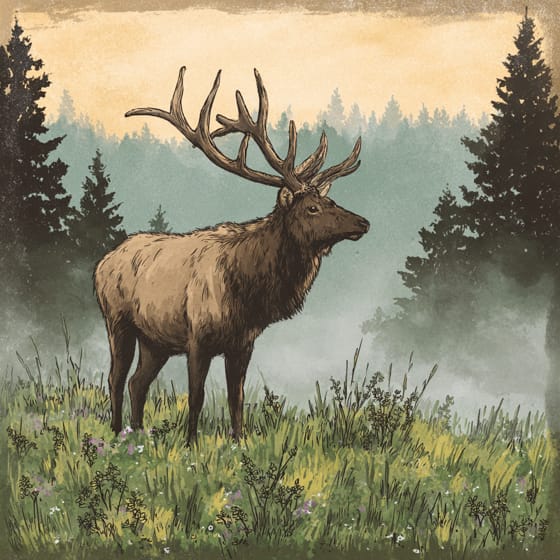
Wild animals like deer and elk munch on its tasty twigs and leaves!
Rocky Mountain maple has winged seeds that spin like tiny helicopters to travel far in the wind.
This maple can thrive in high mountain elevations where many other tree species struggle to grow.
Its smooth, thick bark helps protect the tree from harsh sun and temperature changes.
Deciduous plants periodically shed all their leaves, typically during autumn or dry seasons.
Shade tolerant plants are adapted to grow and thrive in areas with low light levels, requiring less direct sunlight.
Broadleaf trees are angiosperms characterized by flat, wide leaves that are typically shed annually in temperate climates.
Fruit-bearing plants produce fruits, which are the mature ovaries of flowering plants containing seeds.

Edible plants are those parts of a plant that are considered safe for human consumption.

Fall color refers to the seasonal change in foliage pigmentation, primarily in deciduous plants, displaying vibrant hues.

This habitat trait identifies species found in mountainous regions, characterized by high elevation, steep slopes, and varying climate zones.
No aliases listed yet.
Danger
1/5 · Very low
Be careful not to climb too high in trees, and always ask an adult for help.
The easiest way to identify Rocky Mountain maple is to use the Snappit nature identifier app.
300-900 cm
200-600 cm
0.5-1 cm
Spring
No
None
Perennial
Zoom in to split clusters and explore where this object has been snapped.

Colorado, US
You might spot Elk, Mule Deer, and Black-Billed Magpie.
View guide →

British Columbia, CA
You might spot Oregon Grape, Shinyleaf Meadowsweet, and Bush Penstemon.
View guide →

Colorado, US
You might spot Bighorn Sheep and Quaking Aspen.
View guide →

Montana, US
You might spot Thimbleberry, White-Tailed Deer, and Spreading Dogbane.
View guide →

Montana, US
You might spot Columbian Ground Squirrel, Mule Deer, and Western Redcedar.
View guide →

Colorado, US
You might spot Red Osier Dogwood and Creeping Mahonia.
View guide →
Take the discovery with you
Snap it with Snappit to identify it, learn what makes it special, and add the discovery to your collection.









.jpg&width=800)


_001.jpg&width=800)


